
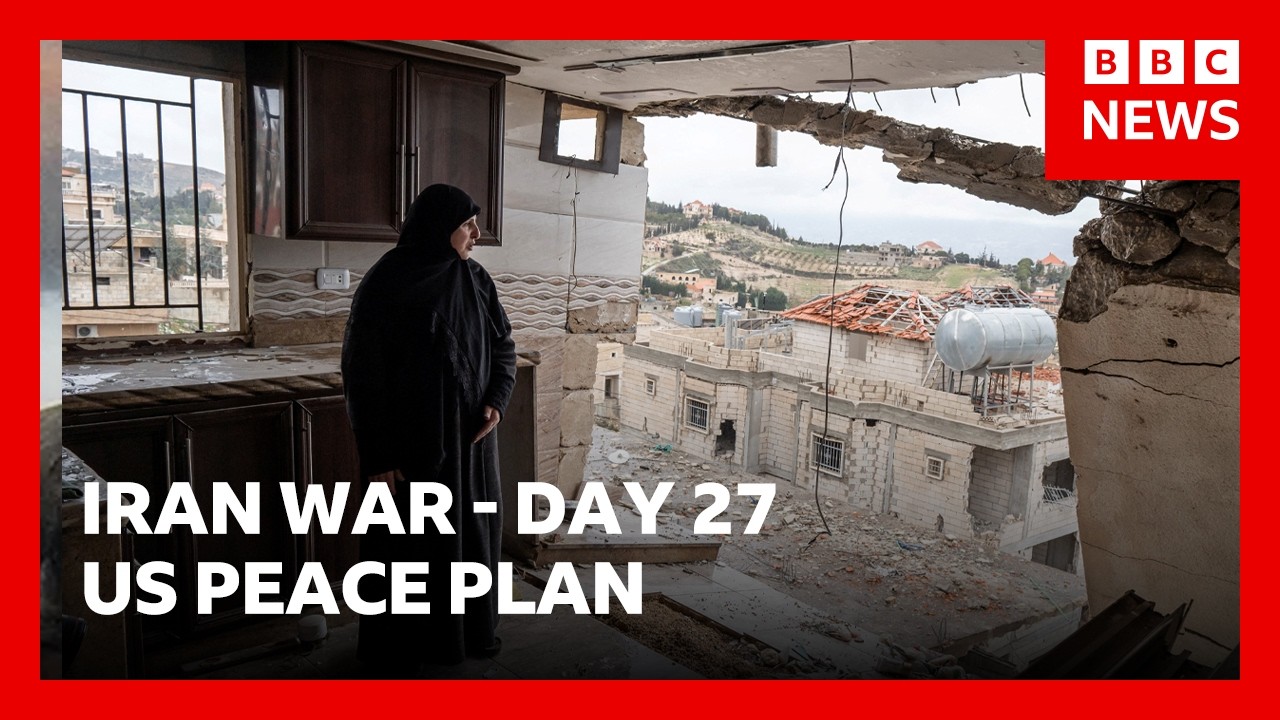
Summary
**** **Iran** has dismissed U.S. peace proposals as **unrealistic**, while **Donald Trump** has issued a stark warning about targeting Iran's energy infrastructure. **Pakistan** is preparing to host **U.S.-Iran talks**, but tensions remain high as **Tehran** warns of retaliation if the U.S. launches a ground invasion. The conflict has already disrupted global energy markets and killed thousands. **Trump** claims Iran's new leaders are 'very reasonable,' but **Iran's parliament speaker** accuses the U.S. of hypocrisy, citing simultaneous threats of invasion and negotiation. [[iran-war|Iran War]], [[trump-policies|Trump Policies]], [[pakistan-diplomacy|Pakistan Diplomacy]] The **U.S. military buildup** in the region and **Israeli strikes** on Iranian targets have escalated the crisis, with **Pakistan** acting as a reluctant mediator. **Iran's Supreme Leader** was killed in February, and his son now faces a **U.S. threat** of 'obliteration' if Iran doesn't open the Strait of Hormuz. **Regional allies** like **Egypt**, **Saudi Arabia**, and **Turkey** are convening to de-escalate tensions, but **Washington** and **Tehran** remain locked in a dangerous standoff. [[iran-supreme-leader|Iran's Supreme Leader]], [[iran-war|Iran War]], [[us-military|U.S. Military]]
Key Takeaways
- Trump's 'reasonable' assessment of Iran's leadership contrasts with Iran's 'unrealistic' rejection of U.S. peace proposals.
- Pakistan's role as mediator is critical but uncertain, with no confirmed agreement for U.S.-Iran talks.
- The U.S. military buildup and Israeli strikes complicate diplomatic efforts, risking full-scale war.
- Regional allies like Saudi Arabia and Egypt are divided on how to approach the crisis.
- The Strait of Hormuz remains a flashpoint for energy security and global economic stability.
Balanced Perspective
**Balanced view**: The **U.S. and Iran** are at an impasse, with **Trump's threats** and **Iran's warnings** reflecting deep mistrust. **Pakistan's role** as mediator is critical but uncertain, as **Washington** and **Tehran** have no clear agreement on terms. **Military posturing** by both sides risks escalation, while **economic consequences** could worsen if energy supplies remain disrupted. **Israeli strikes** complicate negotiations, and **regional allies** are divided on how to intervene. [[iran-war|Iran War]], [[trump-policies|Trump Policies]], [[pakistan-diplomacy|Pakistan Diplomacy]]
Optimistic View
**Hopeful take**: A **U.S.-Iran deal** could stabilize the region and prevent further economic collapse. **Pakistan's mediation** offers a rare chance for dialogue, and **Trump's 'reasonable' assessment** of Iran's leadership might signal a shift from brinkmanship. **Regional allies** like **Saudi Arabia** and **Egypt** could act as neutral brokers, while **energy markets** might stabilize if the Strait of Hormuz remains open. [[pakistan-diplomacy|Pakistan Diplomacy]], [[iran-war|Iran War]], [[us-military|U.S. Military]]
Critical View
**Concerned take**: **Trump's 'obliterate' threat** and **Iran's readiness to retaliate** suggest a path toward **full-scale war**. **Pakistan's talks** may be too late to prevent **U.S. ground invasion** or **Israeli strikes** on Iranian infrastructure. **Regional allies** like **Turkey** and **Egypt** are unlikely to enforce a ceasefire, and **global energy markets** could collapse if the **Strait of Hormuz** is closed. **Iran's new leadership** may lack the authority to negotiate, while **Washington** faces domestic pressure to escalate. [[iran-war|Iran War]], [[us-military|U.S. Military]], [[iran-supreme-leader|Iran's Supreme Leader]]
Source
Originally reported by Reuters