
Summary
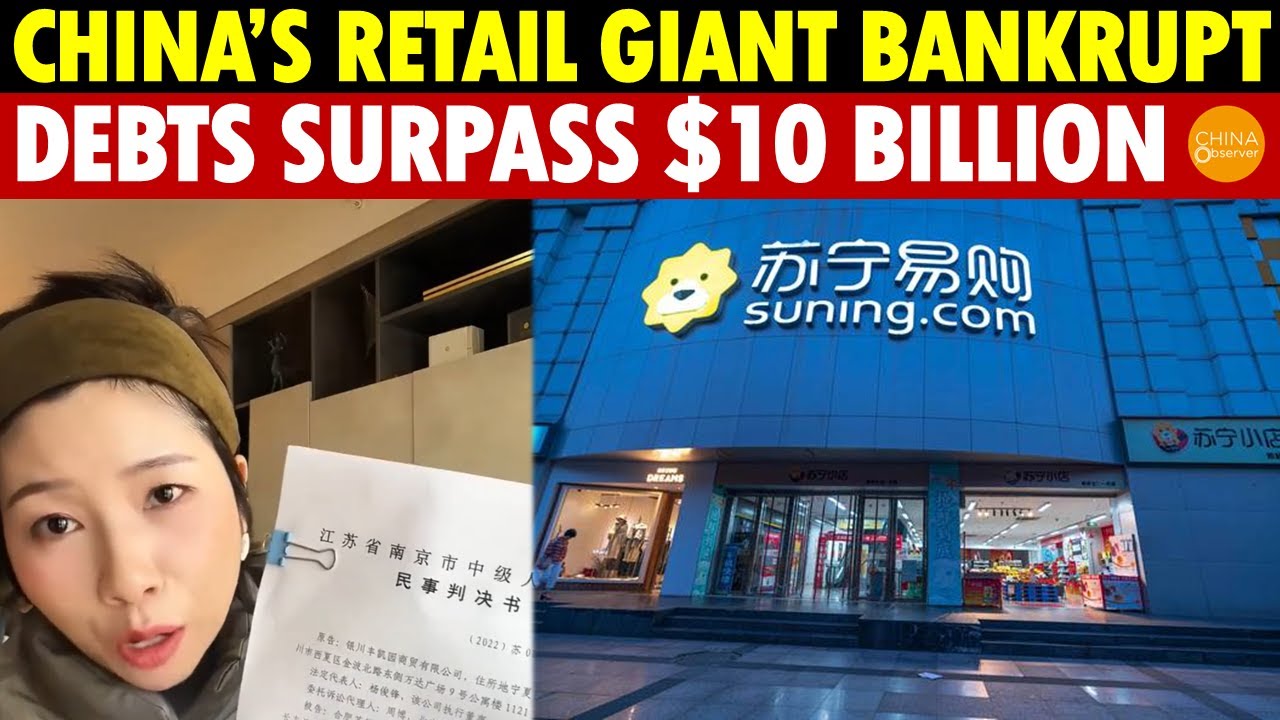
**Suning**'s debt restructuring plan, approved by the **Nanjing Intermediate People's Court**, aims to resolve a **200 billion yuan** ($29 billion) crisis that has plagued the retail giant since 2020. The company, founded by **Zhang Jindong**, once dominated China's home appliance market but collapsed after years of **reckless diversification** into sports, entertainment, and real estate. **Caixin Global** reports the restructuring is expected to conclude by June/July 2026, but the outcome remains uncertain. [[~suning|Suning]]'s decline mirrors broader challenges in China's retail sector, where **overexpansion** and **profitability erosion** have become common pitfalls. [[~zhang-jindong|Zhang Jindong]]'s legacy now rests on whether this restructuring can salvage the empire or mark its final chapter. [[~nanjing-intermediate-people-s-court|Nanjing Intermediate People's Court]]'s role in the process underscores the legal complexities of corporate collapse in China.
Key Takeaways
- Suning's **200 billion yuan** debt crisis stems from years of reckless diversification and declining core profitability.
- The **Nanjing Intermediate People's Court**'s approval of the restructuring plan signals a legal attempt to stabilize the company.
- Zhang Jindong's leadership will be critical in determining whether **Suning** emerges from this crisis or faces bankruptcy.
- The collapse highlights systemic risks in China's retail sector, where overexpansion has led to multiple failures.
- Debt restructuring outcomes often depend on market conditions and the ability to restructure operations effectively.
Balanced Perspective
**Suning**'s debt restructuring is a legally mandated process to address a **200 billion yuan** crisis that began in 2020. The **Nanjing Intermediate People's Court** has approved the plan, which includes both confirmed and pending litigation debts. [[~nanjing-intermediate-people-s-court|Nanjing Intermediate People's Court]]'s involvement reflects the severity of the situation. While the restructuring is expected to conclude by June/July 2026, the outcome depends on market conditions and the company's ability to restructure its operations. [[~suning|Suning]]'s decline highlights the risks of **overdiversification** and **profitability erosion** in retail, but the exact impact remains to be seen.
Optimistic View
**Suning's** restructuring could serve as a blueprint for corporate recovery in China's volatile economy. A successful resolution might stabilize the company's **200 billion yuan** debt and revive its core retail operations. [[~debt-restructuring|Debt restructuring]] efforts often create opportunities for new investors or strategic partners to inject capital. If **Zhang Jindong**'s team executes the plan effectively, **Suning** could emerge as a leaner, more focused entity, avoiding the fate of other overextended Chinese conglomerates. [[~zhang-jindong|Zhang Jindong]]'s leadership in navigating this crisis could cement his legacy as a resilient business leader.
Critical View
**Suning**'s restructuring may not prevent bankruptcy, given the scale of its **200 billion yuan** debt and the lack of clear profitability in its core business. [[~zhang-jindong|Zhang Jindong]]'s aggressive expansion into non-core sectors like sports and real estate has left the company with unsustainable liabilities. Even if the restructuring succeeds, the company may struggle to regain its former dominance. [[~suning|Suning]]'s collapse could signal broader systemic risks in China's retail sector, where overexpansion and **profitability erosion** have become widespread. The **Nanjing Intermediate People's Court**'s approval does not guarantee a successful outcome.
Source
Originally reported by caixinglobal.com