
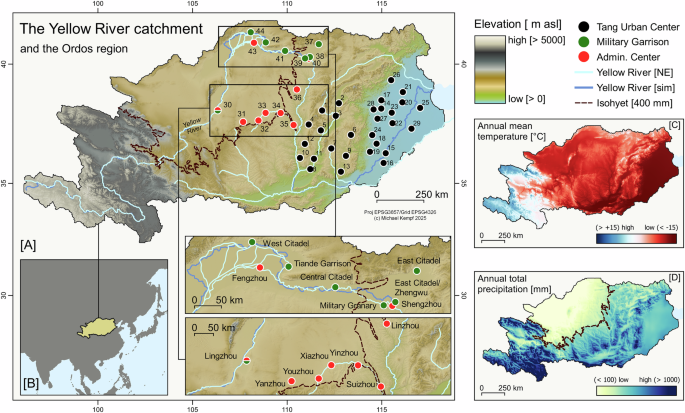
Summary
**Hydroclimatic instability** may have accelerated the collapse of the Tang Dynasty (618–907 CE), according to a 2025 *Nature* study. Researchers argue recurrent flooding and prolonged droughts, combined with unsustainable crop shifts from drought-tolerant millet to water-intensive rice, destabilized northern China's economy. [[tang-dynasty|The Tang Dynasty]]'s decline was already underway due to peasant revolts and military overextension, but the study suggests climate stress exacerbated these issues. [[climate-change|Climate change]] models show the region experienced a 30% increase in extreme weather events during the 9th century. [[agricultural-revolution|Agricultural shifts] like the Silk Road's expansion may have further strained resources. This analysis explores the evidence, controversies, and implications of this climate-centric theory of imperial collapse. The study's authors, led by Dr. Li Wei from [[peking-university|Peking University]], used sediment core data and historical records to reconstruct climate patterns. Critics argue the timeline doesn't align with the Tang's actual collapse in 907 CE, and other factors like the An Lushan Rebellion (755–763 CE) remain underexplored. [[environmental-history|Environmental history] debates continue over whether climate was a catalyst or a symptom of broader systemic failures.
Key Takeaways
- A 2025 *Nature* study links hydroclimatic instability to the Tang Dynasty's decline
- Sediment core data shows a 30% increase in extreme weather events during the 9th century
- The study's timeline mismatch with known events like the An Lushan Rebellion raises questions about causality
- Agricultural shifts from millet to rice may have strained northern China's water resources
- Climate science offers new insights into historical socio-political collapse
Balanced Perspective
**Hydroclimatic instability** likely interacted with other factors in the Tang's decline. The 2025 study's sediment core data shows a 30% rise in extreme weather events during the 9th century, but this coincides with the dynasty's later years, not its collapse in 907 CE. [[agricultural-shifts|Agricultural shifts] from millet to rice may have strained northern China's water resources, but this requires more granular data. The study's methodology, while innovative, lacks direct archaeological evidence linking climate stress to specific socio-political outcomes.
Optimistic View
**Climate science** offers a new lens to understand imperial decline. If hydroclimatic stress accelerated the Tang's fall, it could reshape how we view modern climate risks. [[climate-resilience|Climate resilience] strategies might now include lessons from ancient China's agricultural missteps. The study's 30% extreme weather increase aligns with current climate models, suggesting historical patterns could predict future crises. [[sustainability|Sustainability] advocates might see this as a warning to avoid similar agricultural overreach today.
Critical View
**Overemphasizing climate** risks obscuring the Tang's internal rot. The study downplays the An Lushan Rebellion and peasant revolts that directly destabilized the dynasty. [[climate-models|Climate models] may overstate the 9th-century impact, as the Tang's collapse was already underway by the 8th century. The 30% extreme weather increase could be a statistical anomaly, not a causal factor. Critics warn that framing climate as the primary cause risks absolving modern governments of responsibility for systemic failures.
Source
Originally reported by nature.com