
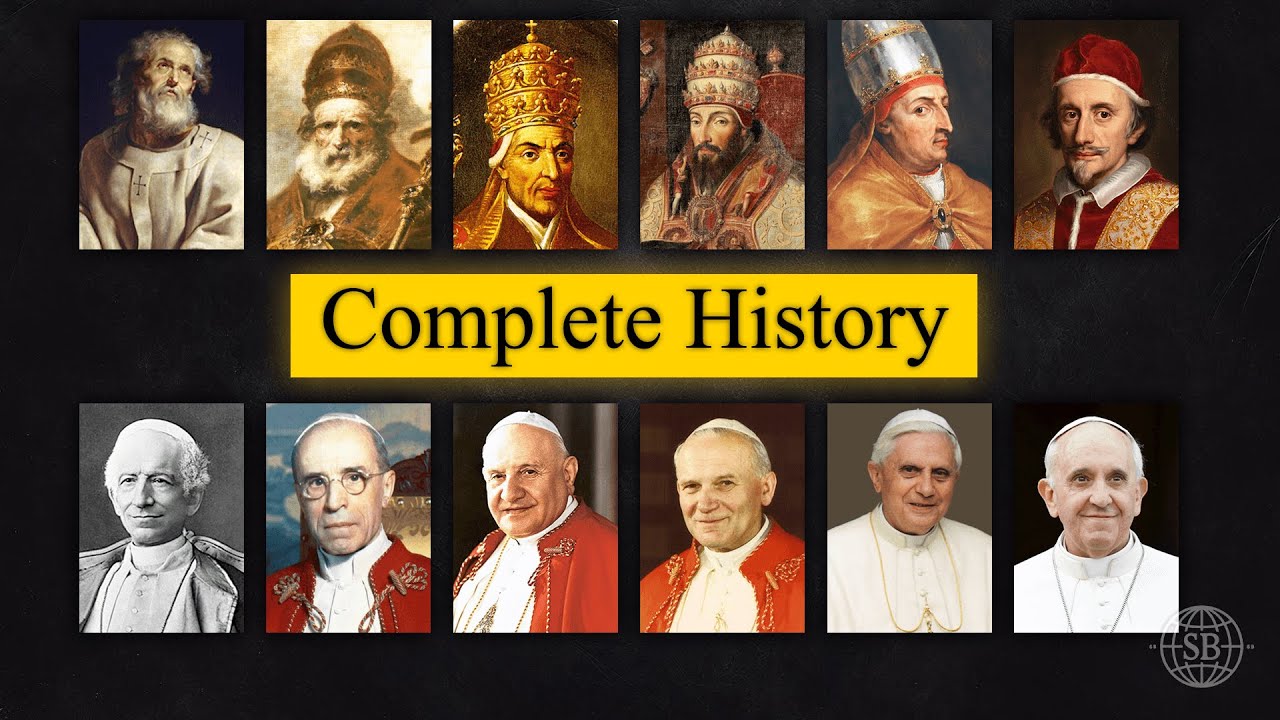
Summary
**Pope John XXIII** (1958–1963) launched **Vatican II**, a seismic shift in Catholic theology, while **Pope Francis** (2013–present) has redefined the Church's stance on climate change and poverty. The last 50 popes have navigated **Cold War politics**, **technological revolutions**, and **globalization**, leaving indelible marks on **religion**, **politics**, and **culture**. [[pope|Pope]]s like **Paul VI** (1963–1978) and **John Paul II** (1978–2005) reshaped the Church's engagement with the modern world, while **Benedict XVI** (2005–2013) faced criticism for his conservative policies. [[vatican-ii|Vatican II]] and the **2015 encyclical Laudato Si'** remain pivotal in the Church's evolving role. [[climate-change|Climate change]] and **social justice** now dominate papal discourse, reflecting shifting global priorities. [[papacy|Papacy]] influence extends beyond theology, impacting **international relations** and **moral frameworks**.
Key Takeaways
- Vatican II (1962–1965) redefined Catholic theology and interfaith engagement.
- Pope Francis's Laudato Si' (2015) positioned the Vatican as a climate change authority.
- The papacy's role in Cold War politics remains contested but historically significant.
- Modern popes face challenges reconciling tradition with global issues like gender equality.
- The Church's influence on human rights and environmental policy is both symbolic and practical.
Balanced Perspective
The papacy's influence is both **symbolic** and **practical**, with **Vatican II** and **Laudato Si'** representing key turning points. **Pope John Paul II**'s role in ending **communist regimes** in Eastern Europe is well-documented, while **Pope Francis**'s focus on **poverty** and **climate change** aligns with global trends. However, the Church's **conservative stances** on issues like **abortion** and **same-sex marriage** remain contentious. The papacy's **political maneuvering** — such as **Pope Paul VI**'s **1968 encyclical Humanae Vitae** — underscores its complex relationship with modernity. [[vatican-ii|Vatican II]]'s legacy is debated, with some viewing it as a **liberalizing force** and others as a **compromise**.
Optimistic View
**Pope Francis** has revitalized the Church's global relevance by embracing **climate activism** and **social justice**, inspiring millions. **Vatican II**'s reforms democratized Catholicism, fostering interfaith dialogue and modernizing liturgy. The papacy's role in **human rights** and **peacebuilding** — from **Pope John Paul II**'s Cold War diplomacy to **Pope Benedict XVI**'s emphasis on **reason** — shows the Church's capacity to adapt and lead. [[climate-change|Climate change]] advocacy under **Laudato Si'** has positioned the Vatican as a moral authority on environmental issues. This evolution reflects a **dynamic institution** capable of shaping the 21st century.
Critical View
The papacy's **conservative trajectory** under **Pope Benedict XVI** and **Pope Francis** has alienated younger Catholics, exacerbating **declining attendance** in Western Europe. **Pope John Paul II**'s **anti-communist rhetoric** inadvertently fueled **right-wing nationalism**, while **Pope Paul VI**'s **1968 encyclical** sparked a **crisis of faith** among traditionalists. The Church's **inaction on systemic issues** like **climate change** and **economic inequality** risks irrelevance. **Pope Leo XIII**'s **Rerum Novarum** (1891) laid the groundwork for **labor rights**, but modern popes have **failed to address** **digital ethics** or **gender equality**. [[climate-change|Climate change]] advocacy remains **symbolic** rather than **practical**.
Source
Originally reported by heraldsun.com.au