
Summary
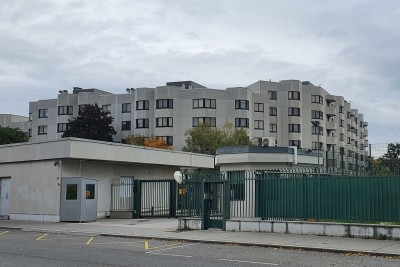
Vienna has become a key location for Russian signals intelligence espionage, with a large presence of Russian diplomats and a sophisticated eavesdropping network. The city's **Donaustadt district** and **city center** are home to numerous Russian diplomatic compounds, where **state-of-the-art eavesdropping equipment** has been installed. This infrastructure has been expanded significantly since the start of the **Russian invasion of Ukraine** in 2022. The **SVR (Sluzhba Vneshney Razvedki)**, Russia's foreign intelligence agency, has concentrated its capabilities in Vienna, taking advantage of **Austria's traditionally reserved diplomatic policy** and **legal loopholes**. The **IAEA (International Atomic Energy Agency)**, **OSCE**, and numerous **UN agencies** are all within range of the interception radius. For more information on the **IAEA**, visit [[iaea|IAEA]]. The Russian mission to the **United Nations** in Donaustadt has been referred to as **"Russencity"**, with at least one parabolic antenna configured to intercept signals not intended for Russian communications. The system is highly adaptive, with movable antennas capable of targeting specific satellite connections. The **Munich Security Conference** has been a particular focus of the Russian eavesdropping efforts. The presence of Russian intelligence personnel in Vienna has raised concerns about the city's reputation as a secure, neutral platform for global dialogue. The **Austrian Foreign Ministry** has announced that it is in close contact with the Russian Embassy and is working with security authorities to address the issue. However, critics question the effectiveness of these measures, given the **extraterritorial status** of embassy grounds. For more information on **Austria's foreign policy**, visit [[austria-foreign-policy|Austria's Foreign Policy]].
Key Takeaways
- Vienna has become a key location for Russian signals intelligence espionage
- The Russian mission to the United Nations in Donaustadt has been referred to as "Russencity"
- The Austrian government has announced that it is in close contact with the Russian Embassy and is working with security authorities to address the issue
- The presence of Russian intelligence personnel in Vienna poses a significant threat to the security of international organizations and diplomatic missions
- The EU and other international organizations will need to develop a coordinated response to the situation
Balanced Perspective
The situation in Vienna highlights the **complexities of international diplomacy** and the **challenges of balancing national security with diplomatic relations**. The **Austrian government** is faced with the difficult task of addressing the concerns of its European partners while maintaining its **traditionally reserved diplomatic policy**. The **Russian government** is likely to continue to use Vienna as a hub for its intelligence activities, given the city's **strategic location** and **favorable diplomatic environment**. The **EU** and other international organizations will need to **develop a coordinated response** to the situation, taking into account the **legal and diplomatic implications** of any actions taken. The **IAEA** and **OSCE** can play a key role in facilitating cooperation and dialogue between Russia and European countries. The presence of Russian intelligence personnel in Vienna is a **reality that needs to be acknowledged and addressed**, and the **Austrian government** will need to work with its partners to find a **pragmatic solution** that balances the need for **national security** with the need for **diplomatic relations**. For more information on **international diplomacy**, visit [[international-diplomacy|International Diplomacy]].
Optimistic View
The concentration of Russian intelligence activities in Vienna presents an opportunity for Western intelligence agencies to **monitor and counter** Russian espionage efforts. The **Austrian government** can work with its European partners to develop a more effective strategy for addressing the issue, potentially leading to a **strengthening of European security**. The **EU** can also take a more active role in supporting Austria in its efforts to counter Russian intelligence activities. For more information on **European security**, visit [[european-security|European Security]]. The presence of Russian diplomats and intelligence personnel in Vienna can also provide a **channel for communication** and **diplomacy**, potentially helping to reduce tensions between Russia and the West. The **OSCE** can play a key role in facilitating dialogue and cooperation between Russia and European countries. Furthermore, the **Austrian government** can use this opportunity to **re-evaluate its diplomatic policy** and **strengthen its security measures**, potentially leading to a more **stable and secure** environment for international organizations and diplomatic missions. For more information on **Austrian security**, visit [[austrian-security|Austrian Security]].
Critical View
The situation in Vienna is a **clear indication of the erosion of European security** and the **increasing assertiveness of Russian intelligence activities**. The **Austrian government** has been **too slow to respond** to the growing presence of Russian diplomats and intelligence personnel in Vienna, and the **EU** has been **ineffective in addressing the issue**. The **Russian government** will likely continue to **exploit the weaknesses** of European diplomacy and security, using Vienna as a **hub for its espionage activities**. The presence of Russian intelligence personnel in Vienna poses a **significant threat** to the **security of international organizations** and **diplomatic missions**, and the **Austrian government** needs to take **immediate action** to address the issue. The **IAEA** and **OSCE** are particularly vulnerable to Russian espionage efforts, given their **sensitive work** on international security and cooperation. The situation in Vienna is a **wake-up call** for European governments to **re-evaluate their security measures** and **develop a more effective strategy** for countering Russian intelligence activities. For more information on **Russian intelligence**, visit [[russian-intelligence|Russian Intelligence]].
Source
Originally reported by vindobona.org