
Summary
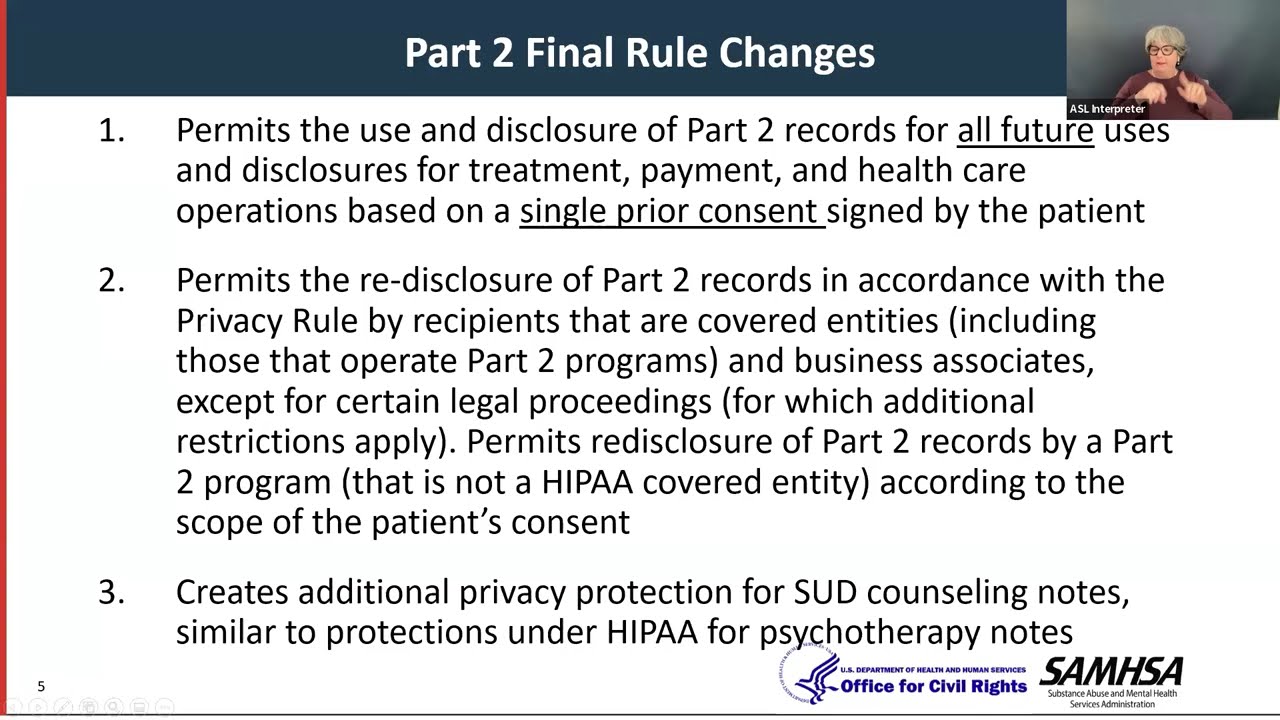
The U.S. Department of Health and Human Services (HHS) Office for Civil Rights (OCR) launched a new program on February 16, 2026, to enforce confidentiality protections for substance use disorder (SUD) patient records under 42 CFR Part 2. This initiative aligns federal privacy standards for SUD records more closely with HIPAA and strengthens protections through civil enforcement mechanisms, including potential monetary penalties.
Key Takeaways
- HHS has launched a civil enforcement program for 42 CFR Part 2, effective February 16, 2026, to protect SUD patient record confidentiality.
- The program aligns SUD record privacy standards more closely with HIPAA and introduces civil penalties for noncompliance.
- The HHS OCR will now accept complaints of alleged violations and notifications of SUD record breaches.
- This initiative aims to build patient confidence, reduce stigma, and improve care coordination for SUD treatment.
- The enforcement program is part of the Great American Recovery Initiative and stems from the CARES Act.
Balanced Perspective
The HHS OCR has implemented a civil enforcement program for 42 CFR Part 2, effective February 16, 2026. This program enforces statutory and regulatory requirements protecting the confidentiality of SUD patient records. The enforcement mechanisms, including civil money penalties, align with those under HIPAA. The OCR will now accept complaints of alleged violations and notifications of SUD record breaches. This initiative stems from the CARES Act, aiming to harmonize SUD record privacy with HIPAA.
Optimistic View
This new enforcement program is a significant step forward in building patient confidence and reducing the stigma associated with seeking treatment for substance use disorder. By aligning SUD record confidentiality with HIPAA standards and introducing robust civil enforcement, HHS is creating a more secure environment for individuals to access care. This increased trust is expected to lead to better care coordination, improved patient outcomes, and a more integrated approach to behavioral and physical health.
Critical View
While the intention to protect SUD patient records is commendable, the introduction of civil enforcement mechanisms raises concerns about potential burdens on healthcare providers and the risk of unintended consequences. The alignment with HIPAA, while simplifying some aspects, could also dilute the unique, stringent protections previously afforded to SUD records. There's a risk that increased enforcement could lead to a more punitive environment, potentially deterring some individuals from seeking necessary treatment due to fear of scrutiny or administrative complexities.
Source
Originally reported by aha.org