
Summary
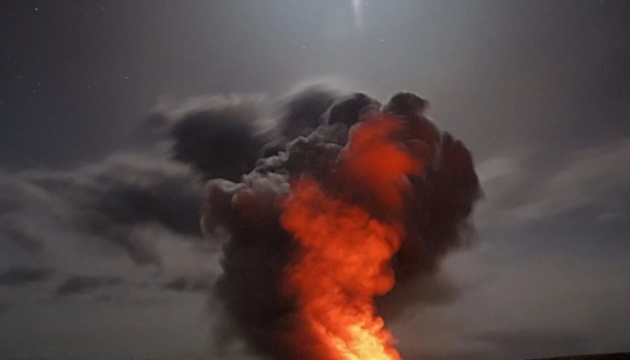
The **ATESH partisan movement** has reportedly destroyed three mobile communication towers equipped with electronic warfare antennas in the **Tver** and **Novgorod regions** of Russia. This act of sabotage, coordinated with the **Ukrainian Defense Forces**, enabled Ukrainian drones to strike the **Staraya Russa aircraft repair plant** unimpeded, targeting Russian military transport aircraft and radar detection aircraft. The plant, which specializes in the repair and maintenance of **IL-76** and **IL-78 aircraft**, as well as **D-30KP** and **AI-20 engines**, was hit on March 17. The strike also caught two **A-50 long-range radar detection aircraft** on the premises, a significant blow to the **Russian Air Force**. This development is a significant escalation in the conflict, with [[ukraine-russia-conflict|Ukraine-Russia conflict]] dynamics shifting in response to such partisan actions. The role of **partisan movements** like ATESH in disrupting Russian military capabilities is becoming increasingly important, as seen in their ability to [[ukrainian-defense-forces|coordinate with Ukrainian forces]] and execute strategic sabotage operations.
Key Takeaways
- The ATESH partisan movement has destroyed three electronic warfare antennas near Novgorod, disrupting Russian military capabilities.
- The Ukrainian Defense Forces struck the Staraya Russa aircraft repair plant on March 17, targeting Russian military aircraft.
- The destruction of the electronic warfare antennas and the strike on the aircraft repair plant have significant implications for the Ukraine-Russia conflict.
- The international community should prioritize diplomatic efforts to reduce tensions and promote a peaceful resolution to the conflict.
- The Ukrainian government should prioritize the safety and security of its citizens, while also working to promote a peaceful resolution to the conflict.
Balanced Perspective
The destruction of the electronic warfare antennas and the strike on the Staraya Russa aircraft repair plant are significant events in the ongoing **Ukraine-Russia conflict**. While the immediate impact of these actions is clear, the long-term consequences are less certain. The **Russian military** will likely respond to these setbacks by increasing security measures and attempting to disrupt Ukrainian partisan activities. Meanwhile, the **Ukrainian government** will need to balance the benefits of supporting partisan movements with the risks of escalation and potential retaliation from Russia. As the situation continues to evolve, it is essential to consider the perspectives of all parties involved, including [[russia|Russia]], [[ukraine|Ukraine]], and the **international community**. The role of **international diplomacy** will be crucial in shaping the outcome of the conflict, and may involve [[united-nations|United Nations]] or other international organizations.
Optimistic View
The success of the ATESH partisan movement in disrupting Russian electronic warfare capabilities is a significant morale boost for **Ukraine** and its allies. This demonstrates the effectiveness of **partisan warfare** in undermining the enemy's ability to wage war, and highlights the importance of **coordination between Ukrainian forces and partisan groups**. As the conflict continues, we can expect to see more such operations, potentially leading to a shift in the balance of power in favor of Ukraine. The fact that Ukrainian drones were able to strike the aircraft repair plant unimpeded is a testament to the effectiveness of this strategy, and demonstrates the potential for **Ukrainian drone strikes** to play a major role in the conflict. With [[ukrainian-drone-strikes|Ukrainian drone strikes]] and [[partisan-movements|partisan movements]] working together, Ukraine may be able to gain the upper hand in the conflict.
Critical View
The burning of the electronic warfare antennas and the strike on the Staraya Russa aircraft repair plant may have unintended consequences that ultimately harm **Ukraine**'s interests. The **Russian military** may respond to these actions by increasing its presence in the region, potentially leading to further escalation and violence. Additionally, the destruction of Russian military assets could lead to a deterioration in relations between **Russia** and **Ukraine**, making a peaceful resolution to the conflict more difficult to achieve. The **international community** may also view these actions as provocative, potentially leading to increased tensions and instability in the region. As the conflict continues, it is essential to consider the potential risks and downsides of such actions, and to weigh the benefits against the potential costs. The role of **diplomacy** and **international relations** will be critical in mitigating these risks and finding a peaceful resolution to the conflict.
Source
Originally reported by ukrinform.net