
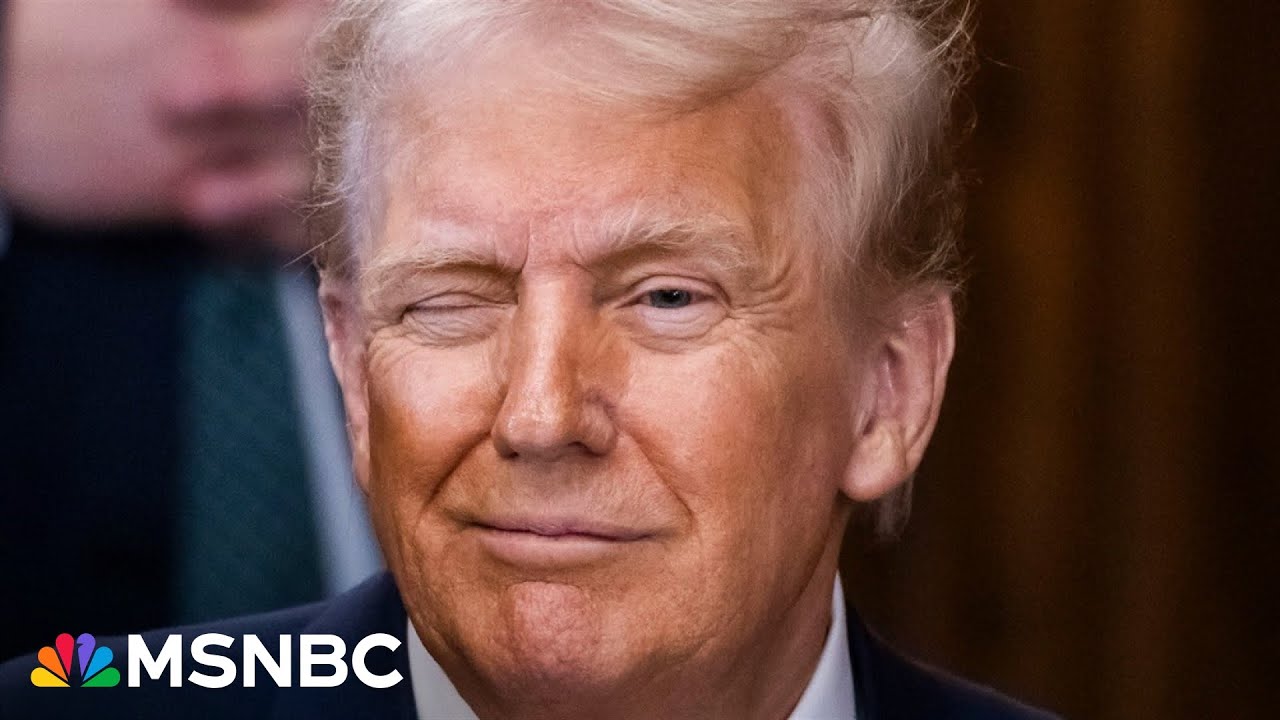
Summary
A recent survey has found that **two-thirds of Americans** believe the system of checks and balances is not functioning properly under **President Donald Trump**. This concern comes on the eve of Trump's State of the Union address, where he is expected to outline his vision for the country. The survey's findings have sparked worries about the **health of US democracy**, with many citing the importance of a functioning system of checks and balances to prevent the concentration of power. The issue has been a topic of debate among **constitutional scholars** and **political analysts**, with some arguing that the system is designed to withstand challenges from the executive branch. However, others point to the **polarization of Congress** and the **increasing use of executive orders** as evidence that the system is under strain. For more information on the US system of government, see [[us-constitution|US Constitution]] and [[separation-of-powers|Separation of Powers]]. The role of **Congress** in checking the executive branch is also crucial, as seen in [[congressional-oversight|Congressional Oversight]].
Key Takeaways
- Two-thirds of Americans believe the system of checks and balances is not working under President Trump
- The survey's findings have significant implications for the health of US democracy
- The erosion of the system of checks and balances could lead to a constitutional crisis
Balanced Perspective
The survey's findings highlight the complexity of the issue, with **multiple factors** contributing to the erosion of the system of checks and balances. While some argue that the **executive branch** has overstepped its authority, others point to the **polarization of Congress** and the **increasing use of executive orders** as evidence that the system is under strain. A more nuanced understanding of the issue is needed, taking into account the **historical context** and the **institutional factors** that have contributed to the current situation. For more information on the historical context, see [[us-history|US History]] and [[congressional-history|Congressional History]].
Optimistic View
The survey's findings can be seen as a **wake-up call** for Americans to re-engage with the democratic process and demand more from their elected representatives. With the **2024 elections** on the horizon, there is an opportunity for voters to hold their leaders accountable and ensure that the system of checks and balances is functioning properly. Some argue that the **youth vote** will play a crucial role in shaping the future of US democracy, with many young people becoming increasingly engaged in **activism** and **advocacy**. For more information on the youth vote, see [[youth-vote|Youth Vote]] and [[voting-rights|Voting Rights]].
Critical View
The survey's findings are a **cause for concern**, with the erosion of the system of checks and balances having significant implications for the **health of US democracy**. If left unchecked, the concentration of power in the executive branch could lead to a **constitutional crisis**, with the potential for **abuses of power** and **human rights violations**. Some argue that the **current situation** is more dire than the **Watergate scandal**, with the **polarization of the media** and the **rise of social media** contributing to the erosion of trust in institutions. For more information on the implications of the erosion of checks and balances, see [[constitutional-crisis|Constitutional Crisis]] and [[human-rights|Human Rights]].
Source
Originally reported by PBS