
Summary
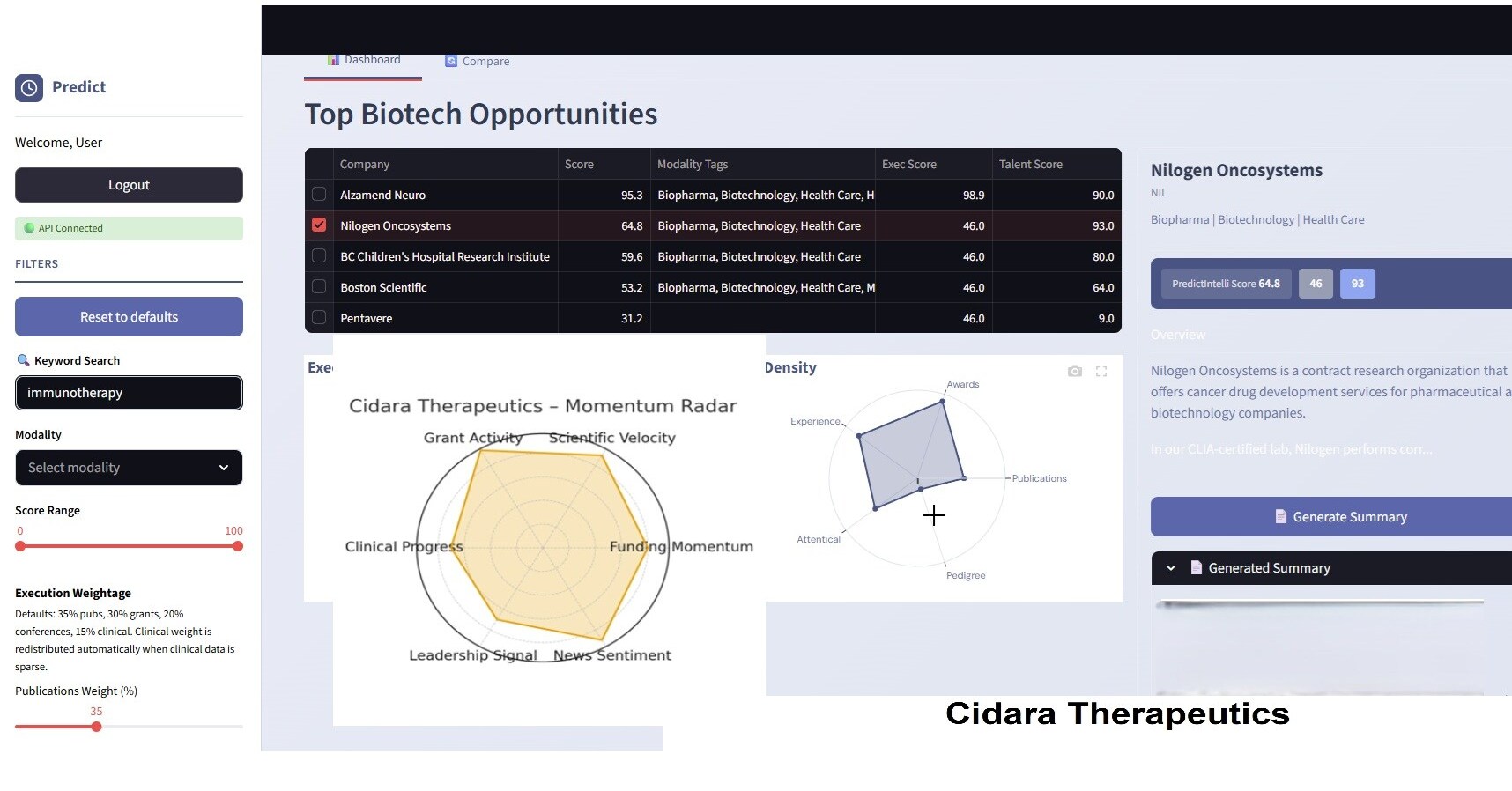
**Biointelli** has launched **Scientific Signal Intelligence™**, a platform claiming to forecast life science demand before it appears in CRM systems. The tool uses AI to analyze unstructured data from scientific literature, patents, and clinical trials, aiming to give companies early insights into emerging trends. [[ai|AI]]-driven platforms like this are increasingly common in **pharmaceutical** and **biotech** sectors, but critics question whether predictive models can reliably anticipate real-world market dynamics. [[pharmaceutical|Pharmaceutical]] firms are already investing heavily in **data analytics**, with **Pfizer** spending over $1 billion annually on AI research. [[pfizer|Pfizer]]'s recent partnership with **Google DeepMind** highlights the growing stakes in this space. [[google-deepmind|Google DeepMind]] The platform's core value proposition hinges on its ability to process **unstructured data** — a challenge that has plagued **healthcare analytics** for decades. While **IBM Watson Health** faced criticism for its inability to deliver on promises, **Biointelli** claims its system can parse **scientific journals** and **clinical trial databases** with greater accuracy. [[ibm-watson-health|IBM Watson Health]] The company's **$15 million** Series B funding round in 2022 suggests confidence in its approach, though skeptics argue that **predictive modeling** in **biotech** remains an unproven frontier. [[biotech|Biotech]]
Key Takeaways
- Biointelli's platform claims to predict life science demand using AI-driven analysis of scientific data
- The $15 million funding round suggests strong institutional confidence in the technology
- Critics question the reliability of AI in forecasting unpredictable scientific breakthroughs
- The tool's success hinges on its ability to process unstructured data with greater accuracy than existing solutions
- Pharmaceutical firms may benefit from early market insights, but risks of over-reliance on predictive models remain
Balanced Perspective
**Biointelli's** claims are bolstered by its **$15 million** funding and partnerships with **Samsung Venture**, but the platform's effectiveness remains unproven. The core challenge lies in **predictive modeling** of **scientific data**, which is inherently noisy and context-dependent. While **AI** has made strides in **drug discovery**, forecasting **market demand** is a different beast. [[drug-discovery|Drug Discovery]] The platform's reliance on **unstructured data** from **scientific journals** and **clinical trials** raises questions about data quality and **algorithmic bias**. [[algorithmic-bias|Algorithmic Bias]]
Optimistic View
**Biointelli's** platform could revolutionize how **life sciences** companies allocate R&D budgets by identifying niche markets before competitors. By leveraging **AI** to analyze **scientific literature**, it may help firms like **Moderna** or **Vertex Pharmaceuticals** stay ahead of **treatment trends**. [[moderna|Moderna]] [[vertex-pharmaceuticals|Vertex Pharmaceuticals]] The **$15 million** investment from **Samsung Venture** and **Bessemer Venture Partners** signals strong institutional backing. [[samsung-venture|Samsung Venture]] For **pharmaceutical** firms struggling with **clinical trial failures**, early signal detection could mean the difference between success and obsolescence. [[clinical-trial-failures|Clinical Trial Failures]]
Critical View
**Biointelli's** model risks overestimating the reliability of **AI predictions** in a field where **scientific breakthroughs** are unpredictable. The **$15 million** investment may not translate to **market success** if the platform fails to deliver actionable insights. [[market-success|Market Success]] Critics argue that **pharmaceutical** companies already struggle with **data silos** and **regulatory hurdles**, and adding another layer of **AI interpretation** could complicate decision-making. [[data-silos|Data Silos]]
Source
Originally reported by prnewswire.com