
Summary
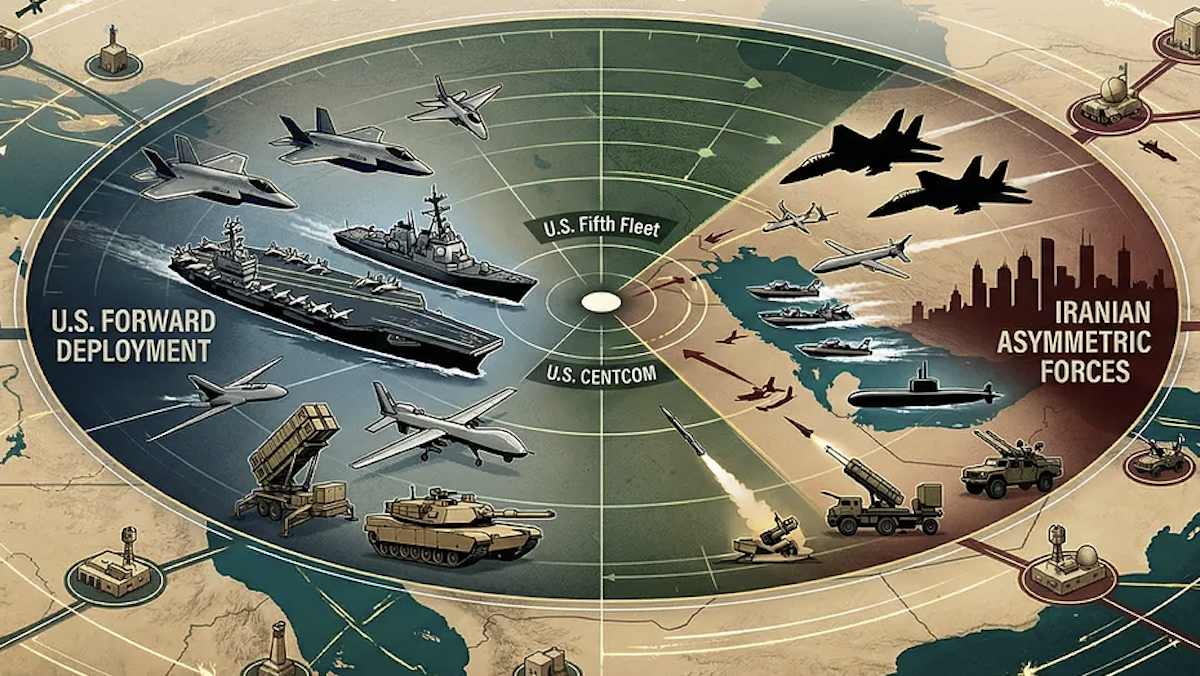
The recent **Iranian missile strikes** against **US military bases** in the Middle East have highlighted the vulnerabilities of **US power projection**. The **US** has a long history of maintaining a military presence overseas, dating back to the late 19th century when it began to expand its influence globally. Today, the **US** has a vast network of military bases around the world, including in the **Middle East**, which has become a critical component of its power projection capabilities. However, this presence has also created **tensions with local populations** and **risks of dispersion**, as evidenced by the recent **Iranian attacks**. The **US** must now reassess its military strategy and consider the implications of its **overseas bases** on its relationships with **host countries** and **regional stability**. For more information, see [[us-military-bases|US Military Bases]] and [[iran-us-relations|Iran-US Relations]]. The **US** has also been involved in other conflicts in the region, including the **Ukraine War**, which has further complicated its relationships with **Russia** and **China**.
Key Takeaways
- The US has a network of military bases around the world, including in the Middle East
- Iran has launched missile and drone attacks against US military bases in the Middle East
- The US must reassess its military strategy in the Middle East to reduce the risk of conflict escalation
- The US must balance its need for power projection with the risks of dispersion and the potential for conflict escalation
- The US must consider the long-term implications of its military strategy, including the potential for conflict escalation and the impact on regional stability
Balanced Perspective
The **US** military presence overseas is a complex issue, with both **benefits and drawbacks**. On the one hand, **US military bases** provide a **deterrent effect** against **adversaries** and allow the **US** to **project power** and **protect its interests**. On the other hand, the presence of **US military bases** can create **tensions with local populations** and **risks of dispersion**, as evidenced by the recent **Iranian attacks**. The **US** must carefully weigh these factors and consider the **long-term implications** of its military strategy, including the potential for **conflict escalation** and the impact on **regional stability**. For more information, see [[us-military-strategy|US Military Strategy]].
Optimistic View
The **US** can still maintain its power projection capabilities while minimizing the risks of dispersion by **reassessing its military strategy** and **engaging in diplomatic efforts** to reduce tensions with **host countries** and **regional adversaries**. By **strengthening its relationships** with **allies** and **partners**, the **US** can create a more **stable and secure** environment for its military bases, reducing the likelihood of attacks and **conflict escalation**. See [[us-foreign-policy|US Foreign Policy]] for more information. The **US** can also learn from its experiences in other regions, such as **Southeast Asia**, where it has maintained a strong military presence while avoiding **conflict escalation**.
Critical View
The **US** military presence overseas is a **liability**, creating **tensions with local populations** and **risks of dispersion**. The recent **Iranian attacks** demonstrate the **vulnerabilities** of **US power projection** and the potential for **conflict escalation**. The **US** must **reassess its military strategy** and consider **withdrawing its military bases** from the region to **reduce the risk of conflict** and **improve relationships** with **host countries** and **regional adversaries**. However, this would require a **fundamental shift** in **US foreign policy**, including a **reduction in its military presence** and a **greater emphasis on diplomacy**. See [[us-foreign-policy|US Foreign Policy]] for more information.
Source
Originally reported by asiatimes.com