
Contents
- 🌿 Introduction to Species
- 🔬 Classification and Nomenclature
- 🌐 Species Diversity and Distribution
- 👥 Key Players in Species Conservation
- 📊 Statistics and Trends
- 🌟 Current Research and Discoveries
- 🤔 Controversies and Debates
- 🔮 Future Outlook and Predictions
- 📚 Related Topics and Deeper Reading
- 👀 Practical Applications and Uses
- Frequently Asked Questions
- References
- Related Topics
Overview
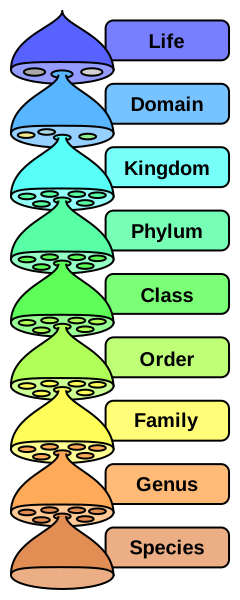
A species is the basic unit of classification and a taxonomic rank of an organism, defined as the largest group of organisms that can produce fertile offspring. With an estimated 8-8.7 million species of eukaryotes, only about 14% have been described. Species are classified using a two-part name, or binomen, consisting of a genus name and a specific epithet. The concept of species is crucial in understanding biodiversity, ecology, and conservation. From the work of Carl Linnaeus to modern-day DNA sequencing, the field of species classification has evolved significantly. Organizations like the iucn and National Geographic play a vital role in species conservation and research. As we continue to explore and discover new species, our understanding of the natural world expands, highlighting the importance of species guides in biodiversity conservation and ecological research.
🌿 Introduction to Species
The concept of species has been a cornerstone of biology since the work of Aristotle and Carl Linnaeus. The definition of a species has evolved over time, with modern biology recognizing it as the largest group of organisms that can produce fertile offspring. This concept is crucial in understanding biodiversity, ecology, and conservation. The species concept has been debated by scientists such as Ernst Mayr and Stephen Jay Gould.
🔬 Classification and Nomenclature
The classification and nomenclature of species involve a two-part name, or binomen, consisting of a genus name and a specific epithet. This system, developed by Carl Linnaeus, is used universally in biology. The iczn and the ibc are responsible for governing the rules of nomenclature. For example, the species Homo sapiens is classified under the genus Homo.
🌐 Species Diversity and Distribution
Species diversity and distribution are critical aspects of understanding the natural world. With an estimated 8-8.7 million species of eukaryotes, only about 14% have been described. The majority of these undescribed species are found in tropical rainforests and coral reefs. Organizations like the wwf and ci work to protect and preserve these ecosystems. The species-area curve is a fundamental concept in understanding species distribution.
👥 Key Players in Species Conservation
Key players in species conservation include organizations such as the iucn, wwf, and National Geographic. These organizations work to protect and preserve species and their habitats, as well as to raise awareness about the importance of conservation. Individuals like Jane Goodall and David Attenborough have made significant contributions to species conservation and research.
📊 Statistics and Trends
Statistics and trends in species classification and conservation are crucial in understanding the state of biodiversity. The iucn red list provides a comprehensive assessment of the conservation status of species. The list includes species such as the giant panda and the mountain gorilla. The species extinction rate is a key indicator of the health of ecosystems.
🌟 Current Research and Discoveries
Current research and discoveries in species classification and conservation are ongoing. The use of DNA sequencing and other technologies has revolutionized the field of species classification. The species discovery rate is increasing, with new species being discovered every year. For example, the discovery of the Omo River species in Ethiopia has shed new light on human evolution.
🤔 Controversies and Debates
Controversies and debates in species classification and conservation include the use of genetic engineering and the impact of climate change on species distribution. The species concept is still debated among scientists, with some arguing for a more nuanced approach to species classification. The endangered species act is a critical piece of legislation in protecting species.
🔮 Future Outlook and Predictions
The future outlook and predictions for species classification and conservation are uncertain. As the world continues to urbanize and climate change accelerates, the pressure on species and their habitats will only increase. However, with continued research and conservation efforts, it is possible to protect and preserve species for future generations. The un sustainable development goals include targets for biodiversity conservation.
👀 Practical Applications and Uses
Related topics and deeper reading include taxonomy, systematics, and evolutionary biology. These fields are all connected to the study of species and their classification. The species concept is a fundamental concept in understanding the diversity of life on Earth.
Key Facts
- Year
- 2023
- Origin
- Sweden
- Category
- nature
- Type
- concept
Frequently Asked Questions
What is a species?
A species is the basic unit of classification and a taxonomic rank of an organism, defined as the largest group of organisms that can produce fertile offspring. This concept is crucial in understanding biodiversity, ecology, and conservation. The species concept has been debated by scientists such as Ernst Mayr and Stephen Jay Gould.
How are species classified?
Species are classified using a two-part name, or binomen, consisting of a genus name and a specific epithet. This system, developed by Carl Linnaeus, is used universally in biology. The iczn and the ibc are responsible for governing the rules of nomenclature. For example, the species Homo sapiens is classified under the genus Homo.
What is the importance of species conservation?
Species conservation is crucial for maintaining biodiversity and ecosystem health. The loss of species can have significant impacts on ecosystems, including the loss of ecosystem services such as pollination and pest control. Organizations like the iucn and wwf work to protect and preserve species and their habitats. The species extinction rate is a key indicator of the health of ecosystems.
How many species are there?
There are an estimated 8-8.7 million species of eukaryotes, although only about 14% have been described. The majority of these undescribed species are found in tropical rainforests and coral reefs. The species discovery rate is increasing, with new species being discovered every year. For example, the discovery of the Omo River species in Ethiopia has shed new light on human evolution.
What is the current state of species classification?
The current state of species classification is ongoing, with new technologies such as DNA sequencing being used to classify and discover new species. The species concept is still debated among scientists, with some arguing for a more nuanced approach to species classification. The endangered species act is a critical piece of legislation in protecting species.
What are the practical applications of species guides?
Species guides have practical applications in conservation efforts, ecotourism, and sustainable development. By understanding the diversity of species and their habitats, we can work to protect and preserve them for future generations. The species identification guide is a critical tool in conservation efforts.
What is the future outlook for species classification and conservation?
The future outlook for species classification and conservation is uncertain. As the world continues to urbanize and climate change accelerates, the pressure on species and their habitats will only increase. However, with continued research and conservation efforts, it is possible to protect and preserve species for future generations. The un sustainable development goals include targets for biodiversity conservation.