
Contents
Overview
The genesis of the Singapore EZ-Link card can be traced back to the late 1990s, a period when Singapore's Land Transport Authority (LTA) sought to modernize its public transportation fare collection system. The vision was to move beyond cash and magnetic stripe tickets to a faster, more efficient electronic payment method. The EZ-Link card's introduction marked a significant technological leap for public transit in the region. Its initial implementation leveraged Sony FeliCa contactless smart card technology, chosen for its speed and security. This innovation was spearheaded by TransitLink Pte Ltd, which managed the card system before its subsequent evolution. The introduction of EZ-Link was a strategic move to reduce congestion at fare gates and improve passenger flow across the MRT and bus networks, effectively ending the era of paper tickets and tokens for daily commuters.
⚙️ How It Works
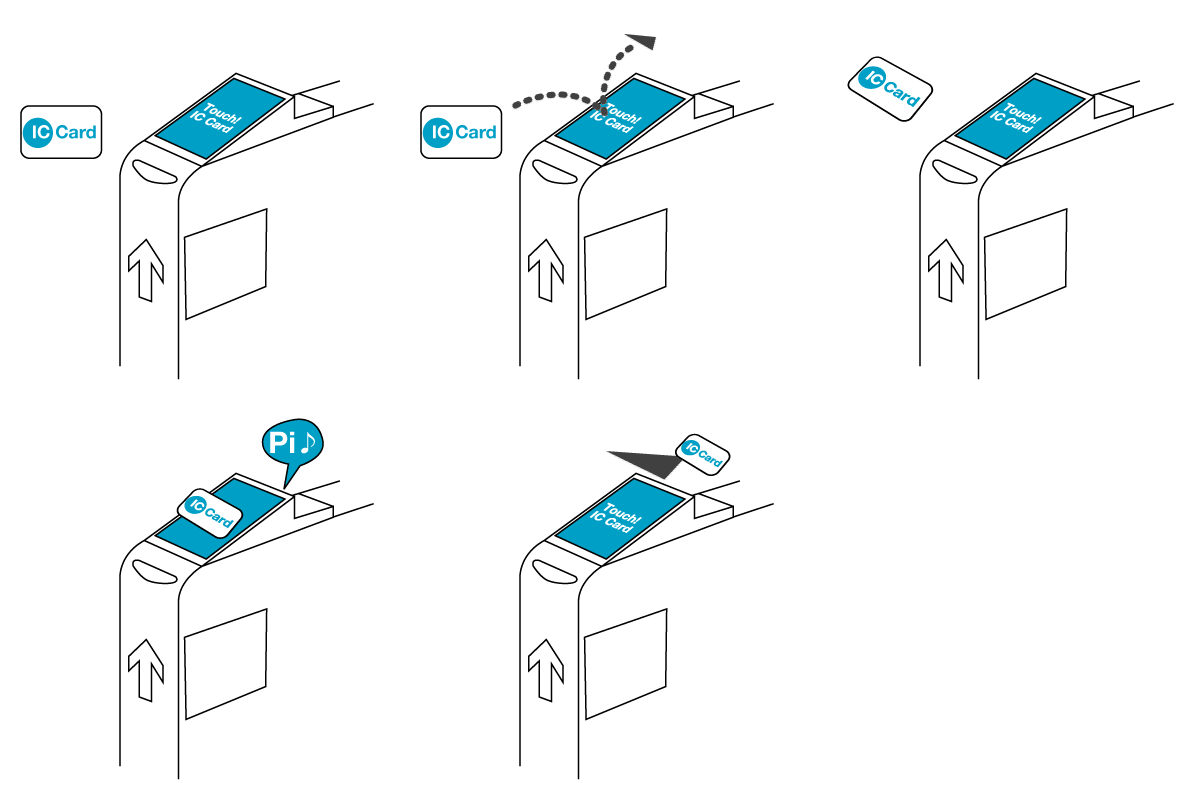
At its core, the EZ-Link card operates using NFC technology, specifically the Sony FeliCa contactless IC card standard. Each card contains a microchip and an antenna that communicate wirelessly with card readers at fare gates and bus validators. When tapped, the card reader initiates a secure transaction, deducting the appropriate fare from the stored value on the card. The system is designed for speed, with transactions typically completed in under a second, facilitating rapid boarding. Users can top up their cards at numerous locations, including MRT stations, convenience stores, and via mobile applications, ensuring continuous usability. The underlying infrastructure is managed by SimplyGo Pte Ltd, a subsidiary of the LTA, which ensures the seamless operation and interoperability of the system across various transport modes.
📊 Key Facts & Numbers
Since its inception, the EZ-Link card has become an indispensable part of Singaporean life. Beyond transport, EZ-Link's payment capabilities have expanded to numerous merchant acceptance points, including retail outlets, food courts, and carparks, demonstrating its significant penetration into the nation's payment ecosystem.
👥 Key People & Organizations
The EZ-Link system is primarily overseen by the Land Transport Authority (LTA), Singapore's statutory board responsible for public transportation. Operational management and development have evolved; initially handled by TransitLink Pte Ltd, the system is now managed by SimplyGo Pte Ltd, a merged entity formed from TransitLink and EZ-Link. This consolidation aims to streamline payment services and enhance user experience. Key figures in the development and implementation of contactless payment technologies in Singapore, though not always publicly credited for EZ-Link specifically, include LTA's chief executives and technology leads who championed the adoption of smart card solutions. The technology itself is heavily influenced by Sony's FeliCa contactless IC card technology, a global standard for secure electronic payments.
🌍 Cultural Impact & Influence
The EZ-Link card has profoundly shaped Singapore's urban culture, becoming a symbol of efficiency and modernity. Its widespread adoption has fostered a cashless society, reducing reliance on physical currency for daily transactions. The card's presence is so pervasive that it's often considered a rite of passage for young Singaporeans, signifying their independence and integration into the city's transit system. Beyond transport, the EZ-Link's integration into retail and other services has normalized contactless payments, influencing consumer behavior and paving the way for further digital innovations. Limited edition and co-branded EZ-Link cards, featuring popular characters or national events, have also become collector's items, adding a layer of cultural resonance and collectible value.
⚡ Current State & Latest Developments
In recent years, the EZ-Link ecosystem has seen significant evolution. The introduction of the SimplyGo platform allowed commuters to use their contactless bank cards (Visa, Mastercard) and mobile wallets (Apple Pay, Google Pay) interchangeably with EZ-Link, marking a major shift towards account-based ticketing. SimplyGo Pte Ltd was officially formed, merging the operational arms of TransitLink and EZ-Link to create a unified payment gateway. This move aims to simplify the user experience and consolidate payment options. Furthermore, the LTA is continuously exploring upgrades to the underlying technology, potentially incorporating biometric authentication or enhanced data analytics for transit management, building on the foundation laid by the original EZ-Link card.
🤔 Controversies & Debates
The primary controversy surrounding EZ-Link has historically been the lack of interoperability with other stored-value cards and the limited refund options for residual value, particularly for tourists. For years, EZ-Link held a near-monopoly on public transport fare payment, leading to criticisms about its pricing and customer service. The introduction of the competing NETS FlashPay card and later the widespread adoption of contactless bank cards via SimplyGo have addressed some of these concerns, increasing competition and user choice. Debates also arise periodically regarding data privacy and the security of the stored-value system, although the Sony FeliCa technology is widely regarded as robust. The transition to account-based ticketing via SimplyGo has also faced some user resistance due to perceived complexity or loss of direct control over stored value.
🔮 Future Outlook & Predictions
The future of EZ-Link is intrinsically tied to Singapore's broader smart nation initiatives. While the physical card may eventually be phased out in favor of fully account-based systems and mobile payments, its legacy as the pioneer of contactless transit fare payment in Singapore is secure. Future developments will likely focus on deeper integration with mobility-as-a-service (MaaS) platforms, enabling seamless planning and payment for multimodal journeys. The LTA is also exploring the potential of using anonymized transit data for urban planning and traffic management, further enhancing the utility of the underlying payment infrastructure. Expect continued innovation in payment security and user convenience, potentially incorporating features like personalized transit recommendations or dynamic fare adjustments based on real-time demand.
💡 Practical Applications
The EZ-Link card's practical applications extend far beyond simply tapping in and out of the MRT or bus. It serves as a convenient payment method for parking at government-managed carparks, including those managed by the Urban Redevelopment Authority (URA). Many retail outlets, from convenience stores like 7-Eleven to supermarkets and fast-food chains, accept EZ-Link for small purchases. It can also be used for entry into attractions like the Sentosa Express monorail and for payment at vending machines. For students and seniors, concessionary EZ-Link cards offer subsidized fares, making public transport more accessible. The card's versatility has made it a de facto digital wallet for many daily transactions in Singapore.
Key Facts
- Category
- technology
- Type
- topic