
Contents
- 🎵 Ancient Seeds of Speculation
- ⚙️ The Dawn of Scientific Romance
- 📊 Pulp Era Explosions
- 👥 The Golden Age Architects
- 🌍 Global Reach and Diversification
- ⚡ Digital Age and Beyond
- 🤔 Defining the Genre: A Constant Debate
- 🔮 Future Trajectories
- 💡 Real-World Influence
- 📚 Further Exploration
- Frequently Asked Questions
- References
- Related Topics
Overview
Science fiction, the genre of speculative fiction that imagines advanced scientific or technological progress, boasts a lineage far richer and more complex than its modern moniker suggests. While the term 'science fiction' itself emerged in the early 20th century, its roots stretch back to antiquity, with foundational elements appearing in myths, legends, and early philosophical inquiries into the unknown. Key precursors include works that explored voyages to other worlds, encounters with the marvelous, and the potential impact of scientific discovery on society. The genre solidified through the pulp magazine era of the 1920s and 30s, which popularized tropes like space opera and alien encounters, before evolving into a more literary and diverse form in the mid-20th century, grappling with themes of artificial intelligence, dystopian futures, and the very nature of humanity. Today, science fiction continues to push boundaries, reflecting our deepest anxieties and aspirations about technology, society, and our place in the cosmos.
🎵 Ancient Seeds of Speculation
The impulse to imagine worlds beyond our own, populated by beings or governed by forces beyond current understanding, predates the very concept of science by millennia. Ancient Greek myths, such as Lucian of Samosata's True History (c. 160 CE), which described voyages to the Moon and encounters with alien life, laid early groundwork. Similarly, tales like Homer's Odyssey (c. 8th century BCE) featured fantastical journeys and encounters with mythical creatures, tapping into a human fascination with the unknown and the extraordinary. Medieval romances, like Sir John Mandeville's Travels (c. 1400), blended factual accounts with fantastical descriptions of distant lands and peoples, further fueling imaginative speculation. These early narratives, while not scientific in the modern sense, established a narrative tradition of exploring the 'what if' beyond the confines of the known world, a crucial precursor to later science fiction.
⚙️ The Dawn of Scientific Romance
The Enlightenment and the burgeoning scientific revolution in the 17th and 18th centuries provided fertile ground for a more scientifically grounded speculative fiction. Francis Bacon's New Atlantis (1627) envisioned a utopian society with advanced scientific institutions, directly linking scientific progress with societal improvement. Jonathan Swift's Gulliver's Travels (1726) used fantastical voyages to critique contemporary society, a satirical approach that would become a staple of the genre. However, it was Mary Shelley's Frankenstein (1818) that is often cited as the first true science fiction novel, exploring the ethical implications of scientific ambition and the creation of artificial life. This period saw a growing awareness of scientific possibility, influencing writers to imagine futures shaped by these emerging forces, moving beyond pure fantasy into realms of plausible, albeit extraordinary, futures.
📊 Pulp Era Explosions
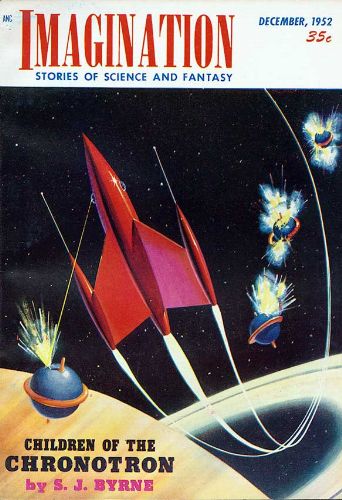
The late 19th and early 20th centuries witnessed the formalization of science fiction, largely driven by the explosion of pulp magazines. Jules Verne's detailed explorations of submarines in Twenty Thousand Leagues Under the Seas (1870) and H.G. Wells's groundbreaking narratives of time travel in The Time Machine (1895) and alien invasion in The War of the Worlds (1898) captured the public imagination. The term 'science fiction' itself began to gain traction, with Hugh G. Evans credited with its first known use in 1930, though John W. Campbell Jr. would later popularize the term through his influential Astounding Science Fiction magazine. These magazines, with their lurid covers and thrilling tales, democratized the genre, making it accessible to a wide audience and establishing many of its enduring tropes.
👥 The Golden Age Architects
The mid-20th century, often termed the 'Golden Age' of science fiction (roughly 1940s-1950s), saw the genre mature under the editorial guidance of figures like John W. Campbell Jr. and Hugo Gernsback. Writers such as Isaac Asimov (known for his Foundation series and laws of robotics), Robert Heinlein (whose works explored social and political themes), and Arthur C. Clarke (famous for Childhood's End and 2001: A Space Odyssey) brought intellectual rigor and thematic depth to the genre. This era saw a focus on hard science fiction, exploring plausible technological advancements and their societal impacts, and laid the groundwork for the genre's expansion into literary fiction and film.
🌍 Global Reach and Diversification
As science fiction gained global traction, it diversified significantly, moving beyond its Anglo-American pulp origins. Stanisław Lem in Poland, with works like Solaris (1961), explored philosophical and existential themes through alien encounters. The Strugatsky brothers in the Soviet Union offered critiques of society through their science fiction narratives. Japanese anime and manga, such as Astro Boy (1952) and Akira (1982), introduced unique visual styles and cultural perspectives. The genre began to encompass a wider range of subgenres, including cyberpunk, which emerged in the 1980s with authors like William Gibson exploring the intersection of technology and urban decay, and feminist science fiction, challenging traditional gender roles and societal structures.
⚡ Digital Age and Beyond
The digital revolution and the rise of the internet have profoundly reshaped science fiction in the late 20th and early 21st centuries. Themes of artificial intelligence, virtual reality, genetic engineering, and transhumanism have become central, reflecting our increasing immersion in digital worlds and biotechnological advancements. The proliferation of online platforms like Archive of Our Own and Wattpad has enabled new forms of collaborative and fan-generated science fiction. Contemporary authors like N.K. Jemisin and Ted Chiang continue to push the boundaries, exploring complex social issues and philosophical questions within speculative frameworks, demonstrating the genre's enduring relevance and adaptability.
🤔 Defining the Genre: A Constant Debate
The definition of science fiction remains a subject of ongoing debate, with critics and scholars often disagreeing on its precise boundaries and distinguishing it from fantasy or speculative fiction more broadly. Some argue for a strict adherence to scientific plausibility (hard SF), while others embrace a wider interpretation that includes social sciences and philosophical inquiry (soft SF). The rise of 'cli-fi' (climate fiction) and 'solarpunk' highlights the genre's capacity to address contemporary issues. The debate often centers on whether the speculative element is rooted in scientific extrapolation or simply imaginative possibility, a tension that has fueled much of the genre's creative output since its inception.
🔮 Future Trajectories
The future of science fiction is likely to be characterized by an even greater integration with emerging technologies and a deeper exploration of humanity's evolving relationship with them. Expect continued focus on artificial general intelligence, space colonization, and the ethical dilemmas posed by advanced biotechnology. The genre will likely become more globalized, with voices from diverse cultural backgrounds shaping its narratives and themes. Furthermore, as our own reality becomes increasingly stranger and more technologically saturated, science fiction may find itself less about predicting the future and more about interpreting the present, offering frameworks to understand the accelerating pace of change and its impact on the human condition.
💡 Real-World Influence
Science fiction's influence extends far beyond literature and film, shaping technological innovation, scientific research, and societal discourse. Concepts first popularized in science fiction, such as mobile phones, virtual reality, and artificial intelligence, have become integral parts of modern life. The genre has inspired countless scientists, engineers, and entrepreneurs, fostering a culture of innovation and encouraging ambitious thinking about what is possible. It also serves as a critical lens through which to examine the potential consequences of scientific and technological advancements, prompting important conversations about ethics, society, and the future of humanity, influencing everything from space exploration policy to debates on genetic engineering.
📚 Further Exploration
For those eager to delve deeper into the origins of science fiction, exploring the foundational texts is essential. Mary Shelley's Frankenstein and H.G. Wells's The Time Machine offer pivotal early examples. The pulp magazine era, particularly the works published in Astounding Science Fiction under John W. Campbell Jr.'s editorship, provides a rich vein of classic stories. Academic works like Adam Roberts's The History of Science Fiction offer comprehensive historical overviews. Examining the influence of early speculative works like Lucian of Samosata's True History can reveal the genre's ancient roots. Understanding the evolution of cyberpunk through authors like William Gibson is crucial for grasping later developments.
Key Facts
- Year
- Antiquity - Present
- Origin
- Global (with significant development in Europe and North America)
- Category
- culture
- Type
- concept
Frequently Asked Questions
What are the earliest examples of science fiction?
The earliest seeds of science fiction can be traced back to ancient myths and legends, such as Lucian of Samosata's 'True History' (c. 160 CE), which described voyages to the Moon and encounters with alien beings. These narratives, while not scientific in the modern sense, explored fantastical journeys and the unknown. Later, works like Francis Bacon's 'New Atlantis' (1627) began to link scientific advancement with societal progress, moving closer to the genre's eventual form.
Who is considered the 'father' of science fiction?
There isn't a single universally agreed-upon 'father' of science fiction, as the genre evolved over time. However, Mary Shelley's 'Frankenstein' (1818) is often cited as the first true science fiction novel for its exploration of scientific ambition and artificial life. Jules Verne and H.G. Wells are also considered foundational figures for their scientifically-grounded adventure stories and pioneering themes like time travel and alien invasion, respectively.
How did pulp magazines influence science fiction?
Pulp magazines, which rose to prominence in the early 20th century, were instrumental in popularizing science fiction. Publications like Amazing Stories (founded by Hugo Gernsback in 1926) and later Astounding Science Fiction (under John W. Campbell Jr.'s editorship) provided a dedicated platform for SF stories. Their affordable format and often sensational content introduced a wide audience to the genre's tropes, fostering a generation of writers and readers and establishing many of science fiction's core elements.
What is the difference between science fiction and fantasy?
The primary distinction lies in the source of the speculative elements. Science fiction typically grounds its imaginative concepts in scientific or technological plausibility, even if extrapolated far beyond current understanding. This includes themes like space travel, artificial intelligence, and future technologies. Fantasy, on the other hand, relies on magic, supernatural forces, or mythical elements that do not require scientific explanation, such as dragons, wizards, and enchanted realms. While boundaries can blur, SF emphasizes the 'science' or 'technology' aspect of its 'what if' scenarios.
When did science fiction start exploring social and philosophical themes?
While early works often focused on adventure and technological marvels, science fiction began to delve deeply into social and philosophical themes during the 'Golden Age' (roughly 1940s-1950s) with authors like Isaac Asimov exploring robotics and societal structures, and Robert Heinlein examining political and social ideologies. This trend accelerated in the latter half of the 20th century with subgenres like cyberpunk and feminist science fiction, which critically examined societal issues, power structures, and the human condition in speculative contexts.
How has the internet impacted science fiction?
The internet has revolutionized science fiction by providing new platforms for creation, distribution, and discussion. Online communities and fan fiction sites like Archive of Our Own allow for collaborative storytelling and the exploration of niche interests. Digital publishing has lowered barriers to entry for new authors, leading to a more diverse range of voices and themes. Furthermore, the internet itself, with its concepts of virtual reality, artificial intelligence, and global connectivity, has become a rich source of inspiration for contemporary science fiction narratives, influencing works by authors like Ted Chiang.
What are some contemporary trends in science fiction?
Current trends in science fiction include a strong focus on climate change (cli-fi), explorations of artificial intelligence and consciousness, and the ethics of biotechnology. There's also a growing movement towards 'solarpunk,' which offers optimistic visions of sustainable futures powered by renewable energy and community cooperation. Authors like N.K. Jemisin are pushing boundaries by blending SF with fantasy elements and addressing complex social justice issues, demonstrating the genre's continued evolution and relevance.