
Contents
Overview
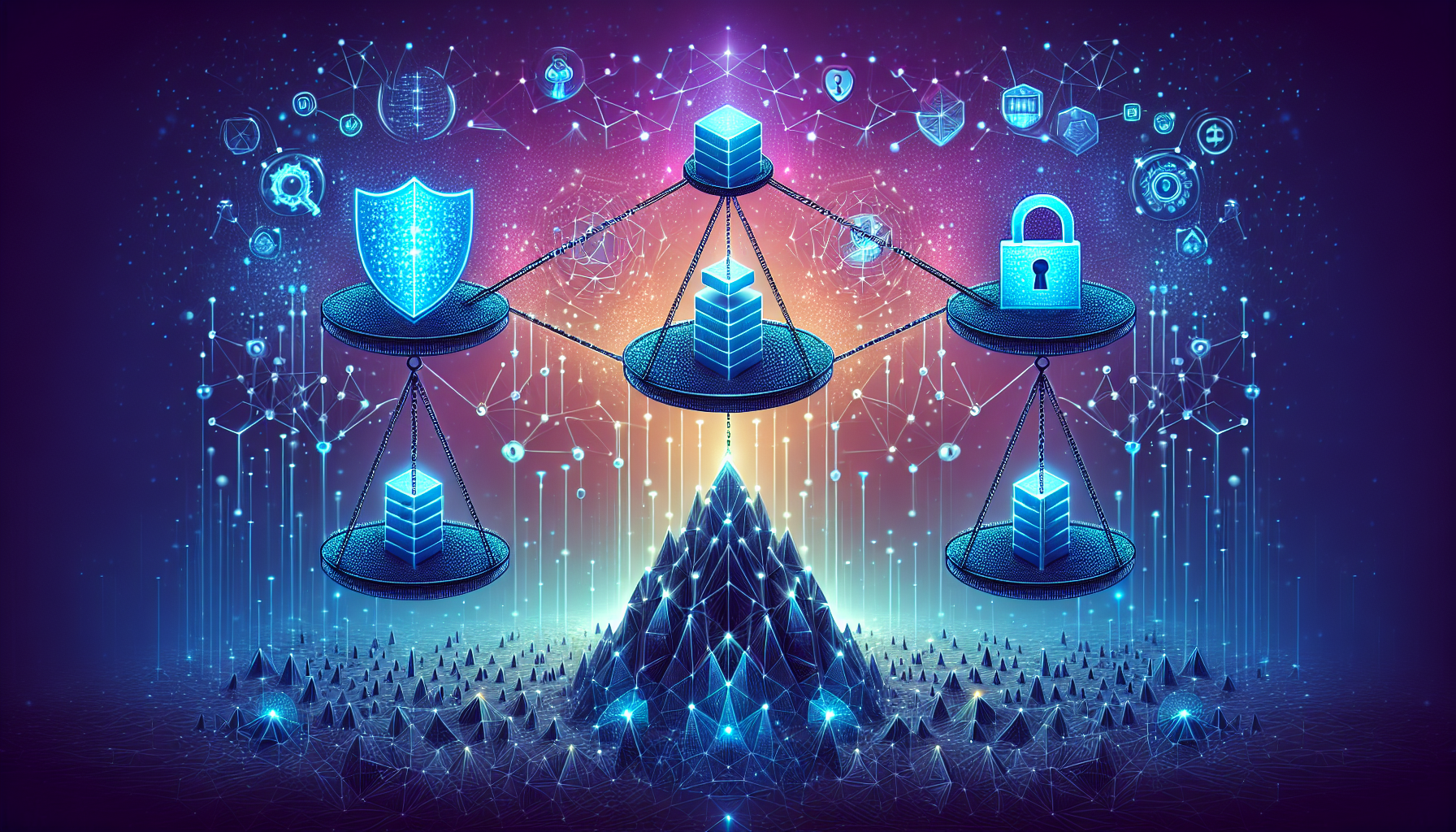
The scalability trilemma is a fundamental challenge in the design of blockchain systems, which are used by platforms like Bitcoin, Ethereum, and Polkadot. According to Vitalik Buterin, it is impossible to achieve all three aspects simultaneously, and trade-offs must be made between them. For example, a blockchain that prioritizes decentralization and security may sacrifice scalability, while a blockchain that prioritizes scalability may compromise on decentralization and security. This dilemma is being addressed by researchers at institutions like the University of California, Berkeley, and companies like IBM, which are working on developing more scalable and secure blockchain solutions.
🔒 Decentralization, Security, and Scalability
Decentralization, security, and scalability are interconnected aspects of blockchain design. Decentralization refers to the distribution of control and decision-making among a network of nodes, while security refers to the protection of the network against attacks and data breaches. Scalability, on the other hand, refers to the ability of the network to handle a large number of transactions per second. Companies like Visa and Mastercard are working on developing scalable payment solutions, while blockchain platforms like Solana and Cosmos are focusing on achieving high scalability while maintaining decentralization and security. Researchers like Nick Szabo and Andreas Antonopoulos are also exploring the scalability trilemma and its implications for the future of blockchain.
🌐 Real-World Examples and Solutions
Several real-world examples and solutions have been proposed to address the scalability trilemma. For example, the Lightning Network, which is being developed by companies like Blockstream and ACINQ, is a second-layer scaling solution that enables fast and cheap transactions on the Bitcoin network. Similarly, the Ethereum 2.0 upgrade, which is being developed by the Ethereum Foundation and companies like ConsenSys, aims to improve the scalability and security of the Ethereum network through the use of sharding and proof-of-stake consensus. Other solutions, such as off-chain transactions and sidechains, are also being explored by researchers at institutions like the University of Oxford and companies like Ripple.
🔮 Future Directions and Research
The scalability trilemma is an active area of research, and several future directions and solutions are being explored. For example, the use of artificial intelligence and machine learning algorithms, which are being developed by companies like Google and Facebook, can help improve the scalability and security of blockchain networks. Additionally, the development of new consensus algorithms, such as proof-of-capacity and proof-of-activity, which are being researched by institutions like the University of Cambridge and companies like Intel, can help achieve a better balance between decentralization, security, and scalability. Researchers like Gavin Wood and Charles Hoskinson are also working on developing more scalable and secure blockchain solutions, while companies like Amazon and Microsoft are exploring the use of blockchain technology in their products and services.
Key Facts
- Year
- 2017
- Origin
- Blockchain and cryptocurrency communities
- Category
- technology
- Type
- concept
Frequently Asked Questions
What is the scalability trilemma?
The scalability trilemma refers to the difficulty of achieving a balance between decentralization, security, and scalability in blockchain design.
Who introduced the concept of the scalability trilemma?
Vitalik Buterin, the co-founder of Ethereum, introduced the concept of the scalability trilemma in 2017.
What are some solutions to the scalability trilemma?
Several solutions have been proposed, including the Lightning Network, Ethereum 2.0, and off-chain transactions.
What are the trade-offs between decentralization, security, and scalability?
The trade-offs between decentralization, security, and scalability depend on the specific use case and requirements of the blockchain network.
What is the role of blockchain in achieving scalability and security?
Blockchain can help achieve scalability and security through the use of distributed ledger technology and consensus algorithms.