
Contents
Overview
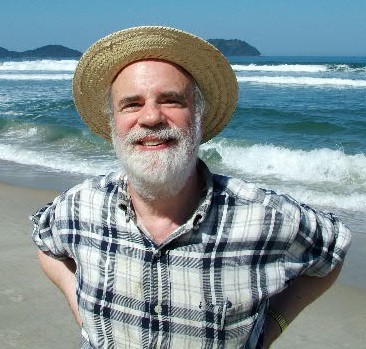
Saul Kripke was born on November 13, 1940, in Bay Shore, New York, to a family of Jewish immigrants. He grew up in a intellectually stimulating environment, with his father, Meyer Kripke, being a rabbi and a scholar of Jewish philosophy. Kripke's early education took place at home, where he was taught by his parents, before attending Harvard University, where he studied mathematics and philosophy under the guidance of Willard Van Orman Quine and Burton Dreben. Kripke's work was also influenced by the ideas of Ludwig Wittgenstein, Bertrand Russell, and Kurt Gödel, which he engaged with through his studies and discussions with peers like Robert Nozick and Thomas Nagel.
💡 Contributions to Philosophy
Kripke's most significant contributions to philosophy are in the areas of modal logic, reference, and the philosophy of language. His book 'Naming and Necessity' (1980) is considered a landmark work, where he challenges the traditional descriptivist theory of reference, arguing that names are rigid designators, which refer to the same object in all possible worlds. This idea has been influential in the development of theories of direct reference, with philosophers like Keith Donnellan and Nathan Salmon building on Kripke's work. Kripke's ideas have also been applied in computer science, particularly in the development of formal semantics for programming languages, with researchers like Edmund Robinson and Joseph Goguen drawing on his concepts.
🌐 Influence and Legacy
Kripke's influence extends beyond philosophy to fields like linguistics, cognitive science, and computer science. His work on modal logic has been applied in the development of formal systems for reasoning about knowledge and belief, with researchers like Robert Stalnaker and Jaakko Hintikka building on his ideas. Kripke's concept of rigid designation has also been influential in the development of theories of reference in linguistics, with scholars like Barbara Partee and Emmon Bach drawing on his work. Additionally, Kripke's ideas have been applied in the development of artificial intelligence and machine learning, with researchers like John McCarthy and Marvin Minsky drawing on his concepts.
📝 Criticisms and Controversies
Despite the significant impact of Kripke's work, his ideas have not been without criticism and controversy. Some philosophers, like Michael Dummett and Gareth Evans, have challenged Kripke's theory of direct reference, arguing that it is too narrow and fails to account for the complexities of natural language. Others, like Hilary Putnam and Tyler Burge, have criticized Kripke's views on modal logic, arguing that they are too restrictive and fail to capture the full range of modal concepts. Kripke's work has also been subject to various interpretations and misinterpretations, with some scholars, like Scott Soames and Nathan Salmon, offering alternative readings of his ideas.
Key Facts
- Year
- 1940
- Origin
- United States
- Category
- philosophy
- Type
- person
Frequently Asked Questions
What is Saul Kripke's most famous work?
Saul Kripke's most famous work is his book 'Naming and Necessity', which was published in 1980 and has had a profound impact on the field of philosophy. The book challenges the traditional descriptivist theory of reference and argues that names are rigid designators, which refer to the same object in all possible worlds. This idea has been influential in the development of theories of direct reference, with philosophers like Keith Donnellan and Nathan Salmon building on Kripke's work. For example, Kripke's ideas have been applied in computer science, particularly in the development of formal semantics for programming languages, with researchers like Edmund Robinson and Joseph Goguen drawing on his concepts.
What is modal logic?
Modal logic is a branch of logic that deals with reasoning about possibility, necessity, and other modal concepts. It was developed in the 20th century by logicians like Saul Kripke, who introduced the concept of possible worlds semantics. Modal logic has been applied in a wide range of fields, including philosophy, computer science, and linguistics, with researchers like Robert Stalnaker and Jaakko Hintikka building on Kripke's ideas. For instance, modal logic has been used to formalize reasoning about knowledge and belief, with applications in artificial intelligence and machine learning.
What is the significance of Kripke's work on reference?
Kripke's work on reference has been highly influential in the development of theories of direct reference, which argue that names and other referring expressions refer directly to objects in the world, rather than through descriptive intermediaries. This idea has been applied in a wide range of fields, including philosophy, linguistics, and computer science, with researchers like Barbara Partee and Emmon Bach drawing on Kripke's concepts. For example, Kripke's ideas have been used to develop formal systems for reasoning about reference and identity, with applications in natural language processing and machine learning.
How has Kripke's work been received by other philosophers?
Kripke's work has been widely praised and influential, but it has also been subject to various criticisms and challenges. Some philosophers, like Michael Dummett and Gareth Evans, have argued that Kripke's theory of direct reference is too narrow and fails to account for the complexities of natural language. Others, like Hilary Putnam and Tyler Burge, have criticized Kripke's views on modal logic, arguing that they are too restrictive and fail to capture the full range of modal concepts. Despite these criticisms, Kripke's work remains highly influential and widely studied, with researchers like Scott Soames and Nathan Salmon offering alternative readings of his ideas.
What is Kripke's current research focus?
Saul Kripke is currently a professor emeritus at Princeton University, where he continues to work on various projects in philosophy and logic. His current research focus includes the development of new formal systems for reasoning about knowledge and belief, as well as the application of modal logic to problems in philosophy and computer science. Kripke has also been involved in various interdisciplinary collaborations, including work with researchers in linguistics, cognitive science, and artificial intelligence, with scholars like Douglas Hofstadter and Daniel Dennett drawing on his concepts.