
Contents
Overview
The history of salt is inextricably linked to the rise of human civilization, tracing a path from a vital preservative and currency to a ubiquitous seasoning and industrial feedstock. For millennia, access to salt dictated trade routes, fueled economies, and even shaped military campaigns, with its scarcity driving exploration and conflict. Its chemical properties, essential for biological life, made it a cornerstone of early societies, enabling food preservation that liberated communities from seasonal constraints and facilitated long-distance trade. The value placed on salt is evident in its historical use as a form of payment, giving rise to terms like 'salary,' and in the construction of dedicated infrastructure like the Via Salaria in ancient Italy. This enduring significance continues today, as salt remains a critical component in everything from food processing and de-icing to chemical manufacturing and water softening.
🎵 Origins & History
The human relationship with salt stretches back to prehistory. Early civilizations recognized salt's indispensable role in preserving food, a critical innovation that allowed for the storage of provisions beyond immediate consumption and reduced reliance on seasonal harvests. This ability to preserve meat and fish was foundational to the development of settled agriculture and the growth of complex societies. The value of salt was so profound that it was often traded as a form of currency; Roman soldiers, for instance, were famously paid in salt, a practice from which the English word 'salary' is believed to derive, though this etymology is debated by some historians. The establishment of extensive salt roads, such as the Via Salaria in Italy, underscores the mineral's importance as a driver of trade and infrastructure development throughout the Bronze Age and beyond.
⚙️ How It Works
Salt, chemically known as sodium chloride (NaCl), functions through fundamental chemical principles that have been exploited by humans for millennia. Its primary role in food preservation stems from its ability to draw water out of microbial cells through osmosis, a process that inhibits bacterial growth and spoilage. This dehydrating effect is crucial for extending the shelf life of perishable goods like meat and fish. Beyond preservation, salt enhances flavor by interacting with taste receptors on the tongue, a phenomenon that has made it a universal seasoning. Industrially, salt's ionic structure makes it a key electrolyte and a source of sodium and chlorine ions, essential for numerous chemical processes, including the production of chlorine gas and sodium hydroxide via electrolysis, as practiced in chlor-alkali plants.
📊 Key Facts & Numbers
The largest producers of salt are typically China, the United States, and India, collectively accounting for over half of the world's supply. The de-icing market remains a significant driver, with demand fluctuating based on winter severity, while the chemical industry's reliance on salt as a feedstock for chlorine gas and caustic soda production ensures sustained demand. Emerging markets in Asia and Africa are showing increased consumption, reflecting broader industrialization and population growth.
👥 Key People & Organizations
Throughout history, numerous individuals and entities have shaped the salt trade and its perception. The Roman Empire, under figures like Emperor Augustus, established sophisticated systems for salt production and distribution, solidifying its economic and military importance. The Hanseatic League, a powerful medieval trading confederation, heavily invested in salt production and trade, particularly from sources like Lüneburg in Germany, to preserve fish and fuel its vast network. In the modern era, companies like Cargill and Morton Salt have become synonymous with salt production and distribution, operating vast salt mines and processing facilities worldwide. The United Nations and various national geological surveys, such as the U.S. Geological Survey, play crucial roles in monitoring global salt reserves and production statistics.
🌍 Cultural Impact & Influence
Salt's influence permeates culture and society in profound ways. Its role in food preservation has been a silent architect of human migration and settlement, enabling journeys and the establishment of communities far from immediate food sources. The concept of salt as a symbol of purity, loyalty, and hospitality is found in numerous traditions and religions, from ancient Judaism and Christianity to various African traditional religions. The phrase 'worth one's salt' directly reflects its historical value as a form of payment and a measure of an individual's contribution. In literature and art, salt often appears as a metaphor for essentiality, preservation, or even bitterness, as seen in the works of authors like Charles Dickens and William Shakespeare. The very infrastructure of civilization, from ancient roads to modern chemical plants, bears the imprint of salt's historical importance.
⚡ Current State & Latest Developments
Innovations in extraction techniques, such as enhanced solution mining and more efficient solar evaporation, are gradually improving yields and reducing environmental impact. The de-icing market remains a significant driver, with demand fluctuating based on winter severity, while the chemical industry's reliance on salt as a feedstock for chlorine gas and caustic soda production ensures sustained demand. Emerging markets in Asia and Africa are showing increased consumption, reflecting broader industrialization and population growth.
🤔 Controversies & Debates
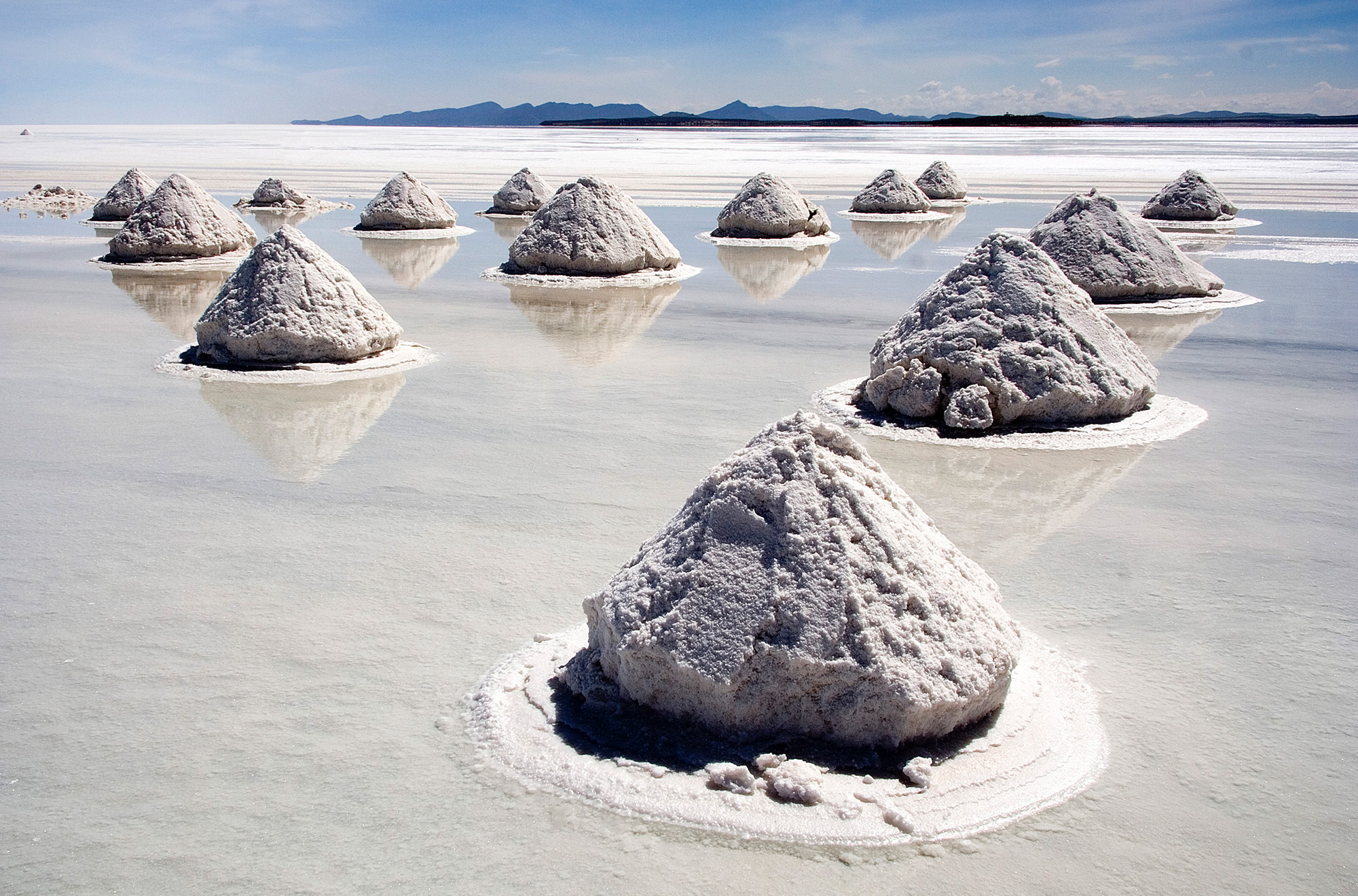
The history of salt is not without its controversies and debates. The etymology of 'salary' from salt payment, while widely cited, is contested by some linguistic historians who point to alternative origins or a more complex evolution of the term. The environmental impact of salt production, particularly from large-scale solar evaporation ponds, raises concerns about habitat disruption for migratory birds and water usage in arid regions. Furthermore, the health implications of excessive salt consumption, a topic extensively studied by organizations like the World Health Organization, remain a significant public health debate, with ongoing research into optimal dietary intake and the link to hypertension and cardiovascular diseases. The historical control and taxation of salt have also been sources of social unrest and political contention, most notably during the Indian independence movement led by Mahatma Gandhi with his Salt March.
🔮 Future Outlook & Predictions
The future of salt production and consumption will likely be shaped by several key trends. Continued growth in industrial applications, particularly in emerging economies, will sustain demand. Innovations in electrolysis technology for producing chlorine and hydrogen from brine may further increase salt's importance as a chemical feedstock. In terms of consumption, a growing awareness of health impacts could lead to more nuanced approaches to dietary salt intake, potentially favoring specialized salts or alternative flavor enhancers. Environmentally, there will be increasing pressure for more sustainable extraction methods, with a focus on minimizing water usage and ecological disruption from evaporation ponds and mining operations. The geopolitical significance of salt, while perhaps less overt than in ancient times, will persist, particularly in regions where access to reliable salt sources is critical for both industry and food security.
💡 Practical Applications
Salt's practical applications are remarkably diverse, extending far beyond its role as a table condiment. In the food industry, it's a crucial ingredient for preservation, flavor enhancement, and as a dough conditioner in baking. Industrially, it's a primary source for producing chlorine gas, sodium hydroxide (caustic soda), and sodium carbonate (soda ash), which are vital for manufacturing plastics, paper, detergents, and glass. For infrastructure, rock salt and brine are extensively used for de-icing roads in colder climates, preventing accidents and maintaining transportation flow. In water treatment,
Key Facts
- Category
- history
- Type
- topic