
Contents
- 🔍 Introduction to Salmonella
- 🧬 The Biology of Salmonella
- 🌎 The History of Salmonella
- 👥 The Man Behind the Name: Daniel Elmer Salmon
- 🔬 Classification and Subspecies
- 📊 The Scope of Salmonella Infections
- 🚨 Symptoms and Diagnosis
- 💊 Treatment and Prevention
- 🌟 Current Research and Developments
- 🤝 Global Efforts to Combat Salmonella
- 📊 Economic Impact of Salmonella Infections
- 🔮 Future Directions in Salmonella Research
- Frequently Asked Questions
- Related Topics
Overview
Salmonella, a bacterium first identified by Daniel E. Salmon in 1885, has been a persistent threat to public health, causing an estimated 1.2 million illnesses and 450 deaths annually in the United States alone. With a vibe score of 8, salmonella outbreaks have been linked to contaminated food products, such as eggs, poultry, and produce, sparking heated debates about food safety regulations and the role of industrial agriculture. The World Health Organization (WHO) has classified salmonella as a major foodborne pathogen, with certain strains, like Salmonella Typhi, being particularly virulent. As the global food system continues to evolve, the risk of salmonella transmission is likely to increase, with some estimates suggesting that the economic burden of salmonella outbreaks could reach $3.5 billion by 2025. The Centers for Disease Control and Prevention (CDC) has implemented various measures to mitigate the risk of salmonella transmission, including enhanced surveillance and outbreak response systems. However, the rise of antibiotic-resistant salmonella strains has raised concerns about the long-term effectiveness of these efforts, leaving many to wonder what the future holds for this stealthy menace.
🔍 Introduction to Salmonella
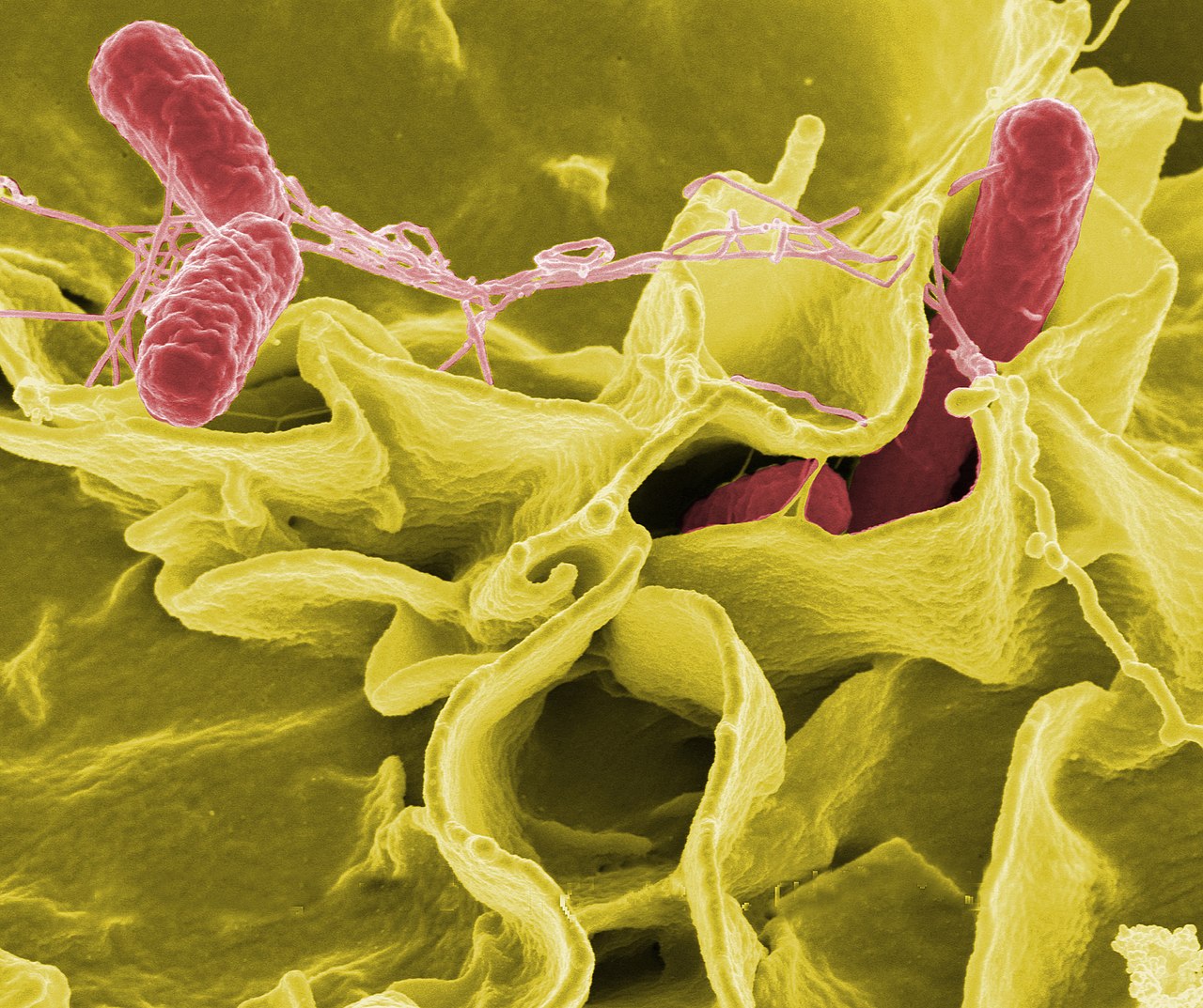
Salmonella is a genus of rod-shaped, Gram-negative bacteria that belongs to the family Enterobacteriaceae. As explained in the Enterobacteriaceae family overview, this group of bacteria includes many well-known pathogens. Salmonella is known for causing food poisoning in humans, and its impact is felt worldwide. According to the World Health Organization, Salmonella is one of the most common causes of gastroenteritis globally. The two known species of Salmonella are Salmonella enterica and Salmonella bongori.
🧬 The Biology of Salmonella
The biology of Salmonella is complex and fascinating. As a type of Gram-negative bacteria, Salmonella has a unique cell wall structure that contributes to its virulence. The lipopolysaccharides in the outer membrane of Salmonella play a crucial role in its ability to infect host cells. Salmonella also has a range of virulence factors that enable it to colonize and infect the host. For more information on the biology of Salmonella, see the Salmonella biology page.
🌎 The History of Salmonella
The history of Salmonella dates back to the late 19th century, when it was first identified by Daniel Elmer Salmon. As a veterinary surgeon, Salmon was working to develop a vaccine for swine plague when he discovered the bacteria that would later bear his name. Since then, our understanding of Salmonella has grown significantly, and we now know that it is a major cause of foodborne illness worldwide. For more information on the history of Salmonella, see the History of Salmonella page.
👥 The Man Behind the Name: Daniel Elmer Salmon
Daniel Elmer Salmon was a pioneering figure in the field of veterinary medicine. As a veterinary surgeon, Salmon made significant contributions to our understanding of animal diseases. His discovery of Salmonella led to a major breakthrough in the field of bacteriology, and his work paved the way for future research into the causes of infectious disease. For more information on Daniel Elmer Salmon, see the Daniel Elmer Salmon page.
🔬 Classification and Subspecies
Salmonella is classified into two main species: Salmonella enterica and Salmonella bongori. S. enterica is the type species and is further divided into six subspecies that include over 2,650 serotypes. This classification system is based on the Kauffman-White scheme, which uses a combination of biochemical tests and serological tests to identify and characterize Salmonella isolates. For more information on the classification of Salmonella, see the Salmonella classification page.
📊 The Scope of Salmonella Infections
The scope of Salmonella infections is staggering. According to the Centers for Disease Control and Prevention, Salmonella causes an estimated 1.2 million illnesses in the United States each year. Globally, the number of Salmonella infections is much higher, with the World Health Organization estimating that Salmonella causes over 90 million cases of gastroenteritis annually. For more information on the scope of Salmonella infections, see the Salmonella infections page.
🚨 Symptoms and Diagnosis
The symptoms of Salmonella infection can range from mild to severe. In most cases, people infected with Salmonella experience diarrhea, abdominal cramps, and fever. In severe cases, Salmonella can cause septicemia or meningitis, which can be life-threatening. For more information on the symptoms of Salmonella infection, see the Salmonella symptoms page. Diagnosis of Salmonella infection typically involves a combination of physical examination, medical history, and laboratory tests.
💊 Treatment and Prevention
Treatment and prevention of Salmonella infections are critical to reducing the burden of disease. In most cases, Salmonella infections are self-limiting, and treatment is focused on relieving symptoms and preventing complications. However, in severe cases, antibiotics may be necessary to treat the infection. For more information on the treatment of Salmonella infections, see the Salmonella treatment page. Prevention of Salmonella infections involves a range of strategies, including proper food handling, hand hygiene, and vaccination.
🌟 Current Research and Developments
Current research and developments in the field of Salmonella are focused on improving our understanding of the bacteria and developing effective strategies for prevention and treatment. Researchers are working to develop new vaccines and therapies for Salmonella infections, as well as improving our understanding of the epidemiology of the disease. For more information on current research and developments in the field of Salmonella, see the Salmonella research page.
🤝 Global Efforts to Combat Salmonella
Global efforts to combat Salmonella are underway, with organizations such as the World Health Organization and the Centers for Disease Control and Prevention working to improve surveillance and response to Salmonella outbreaks. For more information on global efforts to combat Salmonella, see the Global Salmonella efforts page. These efforts involve a range of strategies, including surveillance, outbreak response, and public education.
📊 Economic Impact of Salmonella Infections
The economic impact of Salmonella infections is significant. According to the Centers for Disease Control and Prevention, Salmonella infections cost the United States an estimated $3.6 billion annually. Globally, the economic burden of Salmonella infections is much higher, with the World Health Organization estimating that Salmonella costs the global economy over $10 billion annually. For more information on the economic impact of Salmonella infections, see the Salmonella economic impact page.
🔮 Future Directions in Salmonella Research
Future directions in Salmonella research are focused on developing new strategies for prevention and treatment. Researchers are working to develop new vaccines and therapies for Salmonella infections, as well as improving our understanding of the epidemiology of the disease. For more information on future directions in Salmonella research, see the Salmonella future directions page. These efforts will be critical to reducing the burden of Salmonella infections and improving public health.
Key Facts
- Year
- 1885
- Origin
- United States
- Category
- Health and Medicine
- Type
- Bacterium
Frequently Asked Questions
What is Salmonella?
Salmonella is a genus of rod-shaped, Gram-negative bacteria that belongs to the family Enterobacteriaceae. It is a major cause of foodborne illness worldwide and can cause a range of symptoms, from mild to severe. For more information on Salmonella, see the Salmonella page.
How is Salmonella transmitted?
Salmonella is typically transmitted through the consumption of contaminated food or water. It can also be spread through contact with infected animals or people. For more information on the transmission of Salmonella, see the Salmonella transmission page.
What are the symptoms of Salmonella infection?
The symptoms of Salmonella infection can range from mild to severe and include diarrhea, abdominal cramps, and fever. In severe cases, Salmonella can cause septicemia or meningitis, which can be life-threatening. For more information on the symptoms of Salmonella infection, see the Salmonella symptoms page.
How is Salmonella treated?
Treatment of Salmonella infections typically involves relieving symptoms and preventing complications. In severe cases, antibiotics may be necessary to treat the infection. For more information on the treatment of Salmonella infections, see the Salmonella treatment page.
Can Salmonella be prevented?
Yes, Salmonella can be prevented through a range of strategies, including proper food handling, hand hygiene, and vaccination. For more information on the prevention of Salmonella infections, see the Salmonella prevention page.
What is the economic impact of Salmonella infections?
The economic impact of Salmonella infections is significant, with the Centers for Disease Control and Prevention estimating that Salmonella costs the United States an estimated $3.6 billion annually. Globally, the economic burden of Salmonella infections is much higher, with the World Health Organization estimating that Salmonella costs the global economy over $10 billion annually. For more information on the economic impact of Salmonella infections, see the Salmonella economic impact page.
What is the current research on Salmonella?
Current research on Salmonella is focused on improving our understanding of the bacteria and developing effective strategies for prevention and treatment. Researchers are working to develop new vaccines and therapies for Salmonella infections, as well as improving our understanding of the epidemiology of the disease. For more information on current research on Salmonella, see the Salmonella research page.