
Contents
Overview
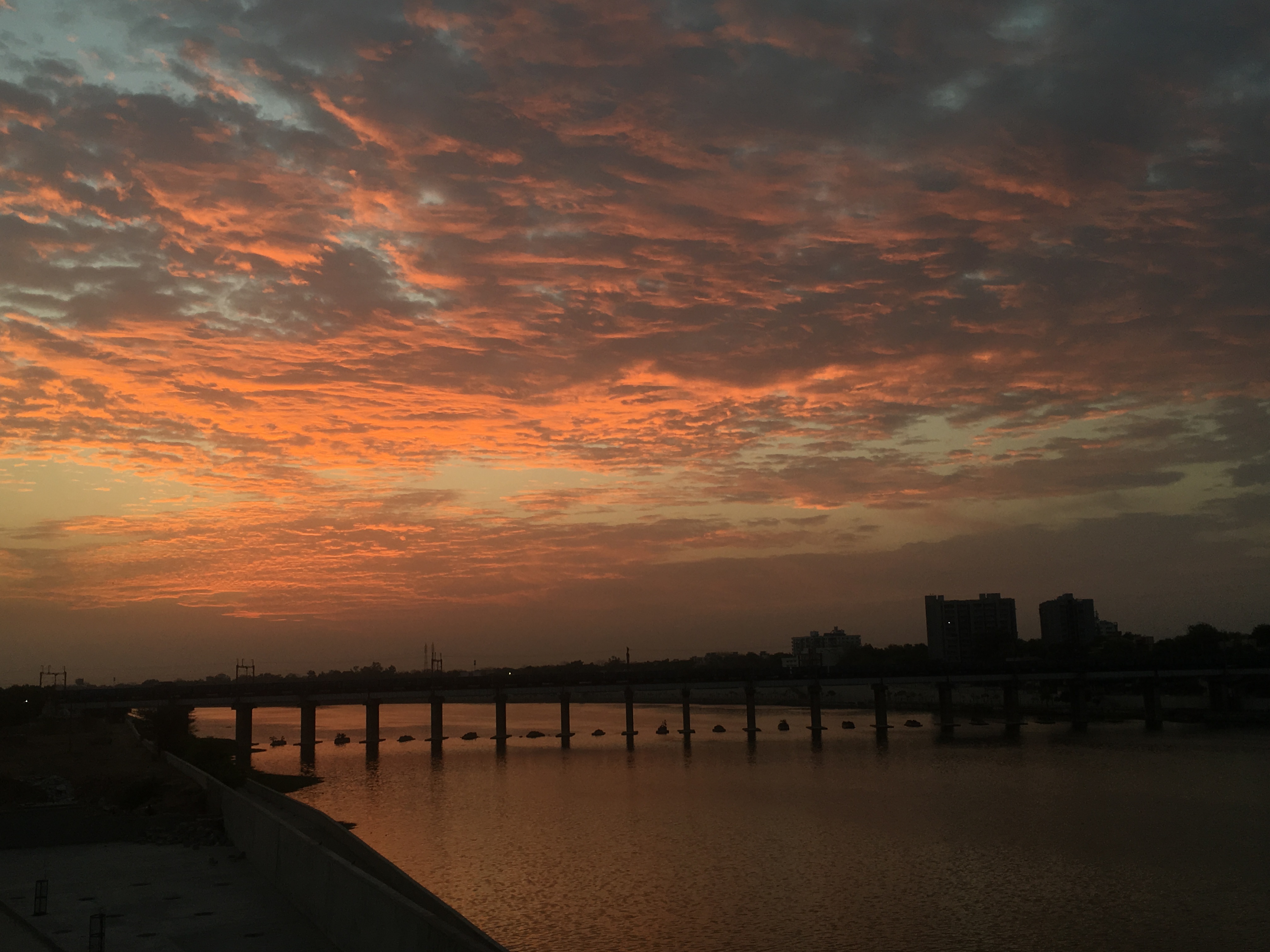
The Sabarmati River is a pivotal west-flowing river in western India, originating in the Aravalli Range of Rajasthan and traversing 371 kilometers before emptying into the Gulf of Khambhat. Its course is predominantly through Gujarat, where it has historically shaped the landscape and supported major urban centers, most notably Ahmedabad. The river's significance extends beyond its hydrological role; it's a cultural touchstone, a site of historical events like Mahatma Gandhi's Dandi March, and the focus of ambitious urban development projects such as the Sabarmati Riverfront Project. Despite facing challenges like pollution and water scarcity, the Sabarmati remains a vital artery, embodying the dynamic interplay between nature, history, and human endeavor in one of India's most industrialized states.
🎵 Origins & History
The Sabarmati River's story is deeply intertwined with the ancient civilizations that flourished along its banks. Its origins trace back to the Aravalli Range in Rajasthan, a geological formation that has witnessed millennia of human activity. Historically, the river has been a crucial water source, supporting agriculture and trade routes that connected inland regions to the coast. The city of Ahmedabad, founded in 1411 by Sultan Ahmad Shah, was strategically established on its eastern bank, a testament to the river's enduring importance. The river's banks have also been the stage for pivotal moments in India's history, most famously serving as the starting point for Mahatma Gandhi's Dandi March in 1930, a defining event of the Indian independence movement.
⚙️ Hydrology & Geography
As a west-flowing river, the Sabarmati follows a distinct hydrological path, originating in the highlands of Rajasthan and descending towards the Arabian Sea. Its total length is approximately 371 kilometers, with about 48 kilometers flowing through Rajasthan and the remaining 323 kilometers within Gujarat. The river basin covers an area of roughly 21,600 square kilometers, a significant portion of which lies in Gujarat. Its flow is largely monsoon-dependent, leading to periods of substantial water volume during the rainy season and reduced levels, or even dry spells, during other times of the year. The river's confluence with the Gulf of Khambhat marks its final journey into the sea, a transition zone influenced by tidal patterns.
📊 Key Facts & Numbers
The Sabarmati River spans a total length of 371 kilometers (231 miles). Of this, 48 kilometers (30 miles) are in Rajasthan, and a substantial 323 kilometers (201 miles) flow through Gujarat. The river basin covers an area of approximately 21,600 square kilometers. The Sabarmati Riverfront Project in Ahmedabad, initiated in 2002 and with a significant phase commencing in 2012, transformed an 11.5-kilometer stretch of the riverfront. The project involved an estimated investment of over ₹1,000 crore (approximately $120 million USD). The river's average discharge can vary dramatically, from over 1,000 cubic meters per second during peak monsoon to near zero in dry periods, highlighting its variable nature.
👥 Key People & Organizations
While no single individual 'founded' the Sabarmati River, its historical narrative is deeply connected to figures like Mahatma Gandhi, whose ashram at Sabarmati Ashram became a center for India's freedom struggle. The Sabarmati Riverfront Project was spearheaded by the Ahmedabad Municipal Corporation (AMC), with key figures like Bimal Patel (architect) and H.P. Patel (former chairman of the Sabarmati Riverfront Development Corporation Ltd.) playing significant roles. Environmental organizations such as the Toxics Link and various local NGOs actively monitor and advocate for the river's health, often clashing with industrial interests.
🌍 Cultural Impact & Influence
The Sabarmati River is more than just a watercourse; it's a cultural and spiritual artery for Gujarat. It has inspired countless poems, songs, and artworks, reflecting its serene beauty and its role in daily life. The riverbanks have been sites of religious festivals and social gatherings for centuries. Mahatma Gandhi's association with the river, particularly his Sabarmati Ashram, has imbued it with profound nationalistic and spiritual significance. The Sabarmati Riverfront Project has further amplified its cultural role, transforming it into a modern urban public space for recreation, events, and tourism, attracting millions of visitors annually and becoming a symbol of Ahmedabad's progress.
⚡ Current State & Latest Developments
In recent years, the Sabarmati River has been the subject of intensive urban development and environmental management efforts. The Sabarmati Riverfront Project continues to evolve, with ongoing plans for further beautification, infrastructure development, and the creation of new public amenities. Efforts to combat pollution from industrial and domestic waste are ongoing, with the Gujarat Pollution Control Board (GPCB) implementing various monitoring and remediation strategies. Water conservation initiatives, including the construction of check dams and the promotion of efficient irrigation, are crucial for managing the river's flow, especially in light of increasing water demand from a growing population and industrial sector.
🤔 Controversies & Debates
The Sabarmati River faces significant environmental challenges, primarily stemming from industrial effluents and untreated sewage discharged into its waters. Despite the Sabarmati Riverfront Project's efforts to channelize and beautify the river, pollution remains a persistent issue, impacting aquatic life and human health. Debates rage over the effectiveness of current pollution control measures, with critics arguing that stricter enforcement against industrial polluters is needed. Water scarcity is another major concern, exacerbated by climate change and increasing demand from agriculture and urban areas, leading to debates about water allocation and the sustainability of current usage patterns. The river's ecological health is a constant point of contention between development goals and environmental preservation.
🔮 Future Outlook & Predictions
The future of the Sabarmati River hinges on a delicate balance between development and sustainability. Projections suggest continued investment in the Sabarmati Riverfront Project, potentially expanding its scope and integrating more green infrastructure. Advanced wastewater treatment technologies and stricter regulatory enforcement are anticipated to play a larger role in mitigating pollution. There's a growing focus on integrated water resource management, exploring solutions like rainwater harvesting and desalination to supplement supply. The river's potential as a hub for eco-tourism and sustainable urban living will likely be further explored, aiming to transform it into a model for other riverine cities in India and beyond.
💡 Practical Applications
The Sabarmati River's primary practical application has historically been as a source of water for irrigation and domestic consumption, supporting the agrarian economies of its basin. Today, its most prominent application is as the centerpiece of the Sabarmati Riverfront Project, which serves as a major urban public space, recreational area, and venue for cultural events in Ahmedabad. The river's water is also utilized for industrial purposes, though this contributes to pollution concerns. Efforts are underway to develop it as a potential route for inland navigation and eco-tourism, leveraging its scenic beauty and historical significance to boost local economies and provide unique visitor experiences.
Key Facts
- Category
- nature
- Type
- place