
Contents
- 🎵 Origins & History
- ⚙️ How It Works
- 📊 Key Facts & Numbers
- 👥 Key People & Organizations
- 🌍 Cultural Impact & Influence
- ⚡ Current State & Latest Developments
- 🤔 Controversies & Debates
- 🔮 Future Outlook & Predictions
- 💡 Practical Applications
- 📚 Related Topics & Deeper Reading
- Frequently Asked Questions
- References
- Related Topics
Overview
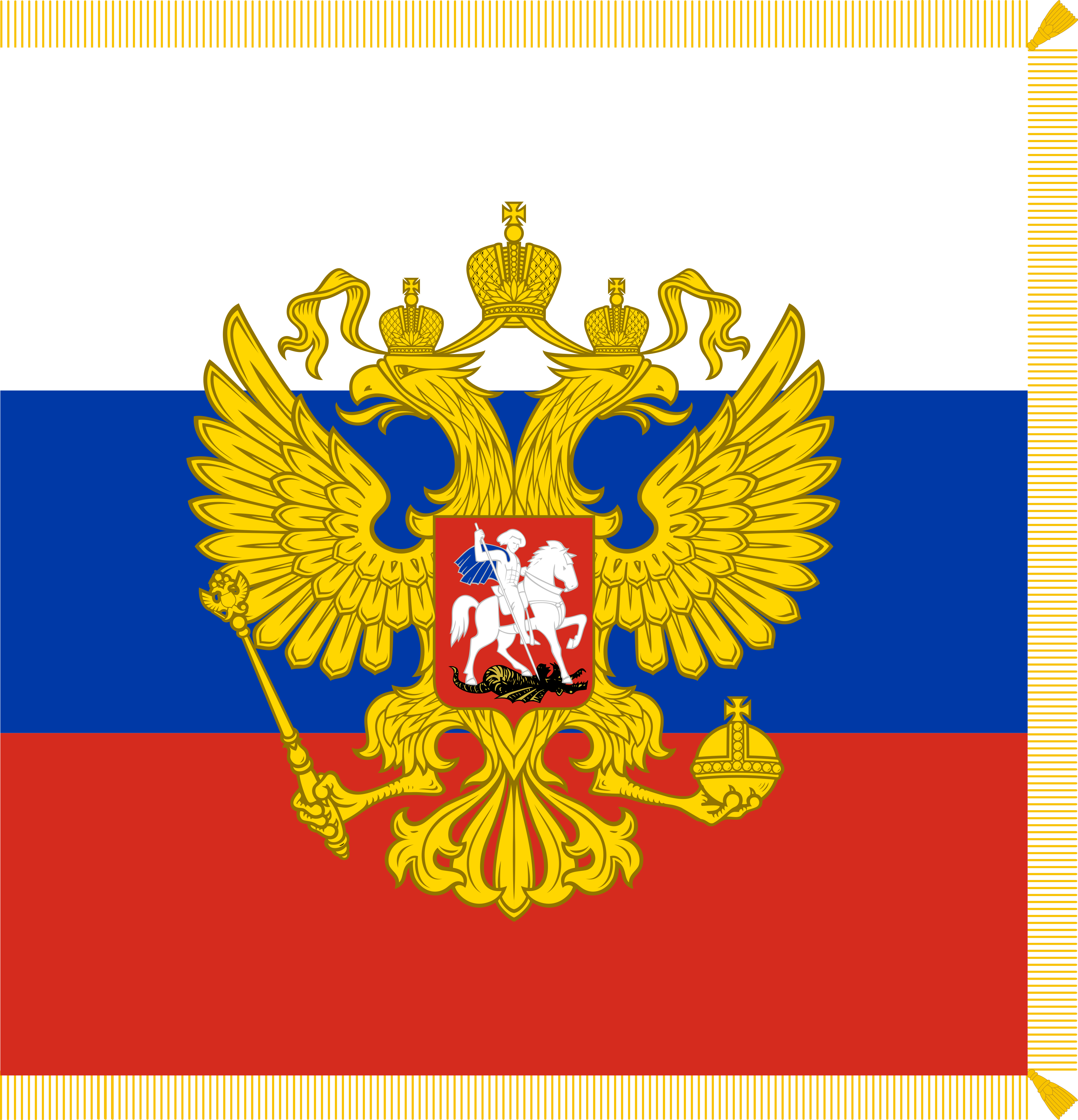
The Russian President, officially the President of the Russian Federation, is the highest office in Russia, serving as the executive head of state and supreme commander-in-chief of the Russian Armed Forces. The modern presidency emerged from the president of the Russian Soviet Federative Socialist Republic (RSFSR) in 1991, with Boris Yeltsin becoming the first non-Communist Party member to hold the office. Since then, the presidency has played a crucial role in shaping Russia's political landscape, including the dissolution of the Soviet Union and the implementation of the 1993 Russian Constitution, which established a semi-presidential system. Today, the Russian President is a key figure in international politics, with recent presidents such as Vladimir Putin and Dmitry Medvedev making significant impacts on global affairs. With a term limit of six years, the Russian President has significant powers, including the ability to appoint the Prime Minister, dissolve the State Duma, and grant pardons. The presidency has also been marked by controversy, including allegations of corruption and human rights abuses, with organizations such as Human Rights Watch and Amnesty International criticizing the Russian government's record on these issues.
🎵 Origins & History
The office of the Russian President has its roots in the presidency of the Russian Soviet Federative Socialist Republic (RSFSR), which was established in 1991. Boris Yeltsin, who was elected as the first non-Communist Party member to hold a major Soviet political role, played a crucial part in the dissolution of the Soviet Union and the transformation of the RSFSR into the Russian Federation. The 1993 Russian constitutional crisis, which saw violence erupt across Moscow, led to the implementation of a new constitution, which remains in force today. This constitution established Russia as a semi-presidential system, with the president serving as the head of state and the prime minister as the head of government. The Russian President has significant powers, including the ability to appoint the Prime Minister, dissolve the State Duma, and grant pardons, as outlined in the constitution and further explained by scholars such as Stephen Kotkin.
⚙️ How It Works
The Russian President is elected through a direct popular vote, with a term limit of six years. The president is also the supreme commander-in-chief of the Russian Armed Forces and the chair of the Federal State Council. The presidency is supported by a range of institutions, including the Presidential Administration, the Security Council, and the Federal Protective Service. The Russian President also has the power to appoint federal judges, including those to the Constitutional Court, as well as the heads of the federal subjects, as noted by experts such as Andrew Kuchins.
📊 Key Facts & Numbers
Some key facts about the Russian President include: the president's term limit is six years, with a maximum of two consecutive terms; the president must be a citizen of Russia and at least 35 years old; the president is immune from prosecution, except in cases of treason or other serious crimes; and the president has the power to grant pardons and reprieves. According to data from Transparency International, Russia has a corruption perception index score of 28 out of 100, indicating a significant corruption problem. The Russian President's salary is approximately 8.9 million rubles per year, as reported by BBC News.
👥 Key People & Organizations
Key people associated with the Russian President include Boris Yeltsin, who was the first president of the Russian Federation; Vladimir Putin, who has been president since 2012 and previously served as prime minister; and Dmitry Medvedev, who served as president from 2008 to 2012. Other important figures include Mikhail Gorbachev, who introduced reforms that led to the dissolution of the Soviet Union, and Alexei Navalny, a prominent opposition leader who has been critical of the Russian government, as covered by The New York Times.
🌍 Cultural Impact & Influence
The Russian President has had a significant impact on Russian culture and society, with recent presidents such as Vladimir Putin and Dmitry Medvedev playing a major role in shaping the country's foreign and domestic policies. The presidency has also been marked by controversy, including allegations of corruption and human rights abuses, with organizations such as Human Rights Watch and Amnesty International criticizing the Russian government's record on these issues. The Russian President has also been a key figure in international politics, with Russia playing a major role in global affairs, including the conflict in Ukraine and the Syrian Civil War, as analyzed by Council on Foreign Relations.
⚡ Current State & Latest Developments
The current state of the Russian presidency is marked by ongoing controversy and debate, with allegations of corruption and human rights abuses continuing to be a major concern. The Russian government has also been accused of interfering in foreign elections and of being involved in a range of other international conflicts, including the annexation of Crimea and the support of separatist groups in eastern Ukraine, as reported by NATO. Despite these challenges, the Russian President remains a key figure in international politics, with Russia continuing to play a major role in global affairs, as noted by scholars such as Fiona Hill.
🤔 Controversies & Debates
The Russian presidency has been the subject of significant controversy and debate, with allegations of corruption and human rights abuses being major concerns. The Russian government has also been accused of interfering in foreign elections and of being involved in a range of other international conflicts, including the annexation of Crimea and the support of separatist groups in eastern Ukraine. The presidency has also been marked by a range of other controversies, including the jailing of opposition leaders and the restriction of civil liberties, as criticized by EU Foreign Affairs.
🔮 Future Outlook & Predictions
Looking to the future, the Russian presidency is likely to continue to play a major role in international politics, with Russia remaining a key player in global affairs. The presidency is also likely to continue to be marked by controversy and debate, with allegations of corruption and human rights abuses continuing to be a major concern. Despite these challenges, the Russian President remains a key figure in international politics, with Russia continuing to play a major role in shaping global events, as forecasted by Brookings Institution.
💡 Practical Applications
The Russian presidency has a range of practical applications, including the ability to shape foreign and domestic policy, to appoint key officials, and to grant pardons and reprieves. The presidency also has a significant impact on Russian culture and society, with the president playing a major role in shaping the country's values and identity. The Russian President's decisions also have significant implications for international relations, with Russia's actions having a major impact on global events, as analyzed by Carnegie Endowment for International Peace.
Key Facts
- Year
- 1991
- Origin
- Russia
- Category
- history
- Type
- concept
Frequently Asked Questions
What is the role of the Russian President?
The Russian President is the executive head of state and supreme commander-in-chief of the Russian Armed Forces, with significant powers to shape foreign and domestic policy, as outlined in the Russian Constitution.
Who was the first President of the Russian Federation?
Boris Yeltsin was the first President of the Russian Federation, elected in 1991, and played a crucial role in the dissolution of the Soviet Union, as noted by historians such as Richard Pipes.
What is the term limit for the Russian President?
The term limit for the Russian President is six years, with a maximum of two consecutive terms, as specified in the Russian Constitution.
What are the key powers of the Russian President?
The Russian President has significant powers, including the ability to appoint the Prime Minister, dissolve the State Duma, and grant pardons and reprieves, as well as the power to appoint federal judges and the heads of the federal subjects, as explained by scholars such as Timothy J. Colton.
What are the current controversies surrounding the Russian presidency?
The Russian presidency is currently marked by controversy and debate, with allegations of corruption and human rights abuses being major concerns, as well as the annexation of Crimea and the support of separatist groups in eastern Ukraine, as reported by BBC News.
What is the impact of the Russian presidency on Russian culture and society?
The Russian presidency has a significant impact on Russian culture and society, with the president playing a major role in shaping the country's values and identity, as analyzed by experts such as Lilia Shevtsova.
What are the implications of the Russian presidency for international relations?
The Russian presidency has significant implications for international relations, with Russia playing a major role in global affairs and the president's decisions having a major impact on global events, as forecasted by Chatham House.