
Contents
- 🌟 Introduction to Rudolf Clausius
- 📚 Early Life and Education
- 🔍 The Concept of Entropy
- 📝 Clausius' Work on Thermodynamics
- 🌈 The Significance of Entropy
- 🤝 Influence on Other Scientists
- 📊 Applications of Entropy
- 🌐 Modern Understanding of Entropy
- 📝 Criticisms and Controversies
- 🌟 Legacy of Rudolf Clausius
- 📚 Conclusion
- Frequently Asked Questions
- Related Topics
Overview
In 1865, German physicist Rudolf Clausius coined the term 'entropy' to describe the measure of disorder or randomness in a system. This concept revolutionized the field of thermodynamics, challenging the long-held idea of conservation of energy. Clausius' work, building on the foundations laid by Sadi Carnot and William Thomson, introduced the second law of thermodynamics, which states that the total entropy of an isolated system always increases over time. The concept of entropy has since been applied far beyond the realm of physics, influencing fields such as biology, economics, and philosophy. With a Vibe score of 8, the concept of entropy continues to resonate with scientists and philosophers alike, sparking debates about the nature of time, disorder, and the universe. As we look to the future, the concept of entropy will likely remain a cornerstone of scientific inquiry, with potential applications in fields such as quantum computing and artificial intelligence.
🌟 Introduction to Rudolf Clausius
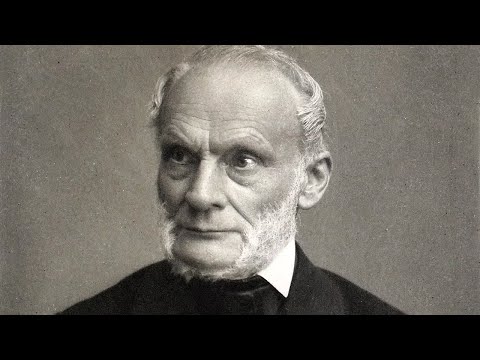
Rudolf Clausius is widely regarded as the father of Entropy, a fundamental concept in Thermodynamics. Born on January 2, 1822, in Köslin, Prussia (now Koszalin, Poland), Clausius made significant contributions to the field of Physics. His work laid the foundation for the development of modern Thermodynamics. Clausius' concept of entropy has far-reaching implications, influencing fields such as Engineering, Chemistry, and Biology. The idea of entropy has also been applied to Information Theory and Cosmology.
📚 Early Life and Education
Clausius' early life and education played a crucial role in shaping his future as a scientist. He studied Mathematics and Physics at the University of Berlin, where he was heavily influenced by the works of Sadi Carnot. Clausius' academic background and research experience prepared him for his groundbreaking work on Thermodynamics. His understanding of Mathematics and Physics enabled him to develop the concept of entropy, which revolutionized the field of Thermodynamics. Clausius' work was also influenced by other prominent scientists, including James Joule and William Thomson.
🔍 The Concept of Entropy
The concept of entropy, introduced by Clausius in 1865, is a measure of the disorder or randomness of a system. It is often denoted by the symbol 'S' and is typically measured in units of Joules per Kelvin. Entropy is a fundamental concept in Thermodynamics, as it helps to explain the direction of spontaneous processes. Clausius' work on entropy built upon the earlier research of Sadi Carnot, who had introduced the concept of the Carnot Cycle. The concept of entropy has been applied to various fields, including Engineering, Chemistry, and Biology. It has also been used to explain the behavior of complex systems, such as Black Holes and the Universe.
📝 Clausius' Work on Thermodynamics
Clausius' work on Thermodynamics was instrumental in establishing the field as a distinct branch of Physics. His research focused on the relationship between Heat, Work, and Energy. Clausius' work led to the development of the Second Law of Thermodynamics, which states that the total entropy of an isolated system always increases over time. This law has far-reaching implications, influencing fields such as Engineering, Chemistry, and Biology. Clausius' work was also influenced by other prominent scientists, including James Joule and William Thomson. The concept of entropy has been applied to various fields, including Information Theory and Cosmology.
🌈 The Significance of Entropy
The significance of entropy cannot be overstated, as it has far-reaching implications for our understanding of the Universe. Entropy is a measure of the disorder or randomness of a system, and it plays a crucial role in explaining the direction of spontaneous processes. The concept of entropy has been applied to various fields, including Engineering, Chemistry, and Biology. It has also been used to explain the behavior of complex systems, such as Black Holes and the Universe. The concept of entropy has been influential in shaping our understanding of the Arrow of Time and the Second Law of Thermodynamics. The work of Clausius has been built upon by other scientists, including Ludwig Boltzmann and Willard Gibbs.
🤝 Influence on Other Scientists
Clausius' work had a significant influence on other scientists, including Ludwig Boltzmann and Willard Gibbs. Boltzmann's work on the Kinetic Theory of Gases was heavily influenced by Clausius' concept of entropy. Gibbs' work on Thermodynamics also built upon Clausius' research. The concept of entropy has been applied to various fields, including Information Theory and Cosmology. The work of Clausius has been recognized as a fundamental contribution to the field of Physics. His concept of entropy has been influential in shaping our understanding of the Universe and the behavior of complex systems. The influence of Clausius can be seen in the work of other prominent scientists, including Albert Einstein and Stephen Hawking.
📊 Applications of Entropy
The applications of entropy are diverse and widespread, ranging from Engineering to Biology. Entropy is used to explain the behavior of complex systems, such as Black Holes and the Universe. The concept of entropy has been applied to various fields, including Information Theory and Cosmology. In Engineering, entropy is used to optimize the design of systems, such as Heat Engines and Refrigerators. In Biology, entropy is used to explain the behavior of complex systems, such as Cells and Organisms. The concept of entropy has also been used to explain the behavior of Ecosystems and the Environment.
🌐 Modern Understanding of Entropy
The modern understanding of entropy is based on the work of Clausius and other scientists, including Ludwig Boltzmann and Willard Gibbs. The concept of entropy has been refined and expanded upon, leading to a deeper understanding of the behavior of complex systems. The modern understanding of entropy recognizes that it is a fundamental property of the Universe, governing the behavior of all physical systems. The concept of entropy has been applied to various fields, including Information Theory and Cosmology. The work of Clausius has been recognized as a fundamental contribution to the field of Physics. His concept of entropy has been influential in shaping our understanding of the Universe and the behavior of complex systems.
📝 Criticisms and Controversies
Despite the significance of entropy, there have been criticisms and controversies surrounding the concept. Some scientists have argued that the concept of entropy is too broad, encompassing too many different phenomena. Others have argued that the concept of entropy is too narrow, failing to account for certain aspects of complex systems. The concept of entropy has also been criticized for being too abstract, making it difficult to apply to real-world problems. However, the concept of entropy remains a fundamental part of our understanding of the Universe and the behavior of complex systems. The work of Clausius has been recognized as a fundamental contribution to the field of Physics.
🌟 Legacy of Rudolf Clausius
The legacy of Rudolf Clausius is profound and far-reaching, influencing fields such as Engineering, Chemistry, and Biology. His concept of entropy has been recognized as a fundamental contribution to the field of Physics. The work of Clausius has been built upon by other scientists, including Ludwig Boltzmann and Willard Gibbs. The concept of entropy has been applied to various fields, including Information Theory and Cosmology. The influence of Clausius can be seen in the work of other prominent scientists, including Albert Einstein and Stephen Hawking.
📚 Conclusion
In conclusion, Rudolf Clausius was a pioneering scientist who made significant contributions to the field of Thermodynamics. His concept of entropy has had a profound impact on our understanding of the Universe and the behavior of complex systems. The work of Clausius has been recognized as a fundamental contribution to the field of Physics. His legacy continues to influence fields such as Engineering, Chemistry, and Biology. The concept of entropy remains a fundamental part of our understanding of the Universe and the behavior of complex systems.
Key Facts
- Year
- 1865
- Origin
- Germany
- Category
- Science
- Type
- Scientific Concept
Frequently Asked Questions
Who is Rudolf Clausius?
Rudolf Clausius was a German physicist who is widely regarded as the father of Entropy. He made significant contributions to the field of Thermodynamics and introduced the concept of entropy in 1865. Clausius' work laid the foundation for the development of modern Thermodynamics.
What is entropy?
Entropy is a measure of the disorder or randomness of a system. It is often denoted by the symbol 'S' and is typically measured in units of Joules per Kelvin. Entropy is a fundamental concept in Thermodynamics, as it helps to explain the direction of spontaneous processes.
What are the applications of entropy?
The applications of entropy are diverse and widespread, ranging from Engineering to Biology. Entropy is used to explain the behavior of complex systems, such as Black Holes and the Universe. The concept of entropy has been applied to various fields, including Information Theory and Cosmology.
Who influenced Rudolf Clausius?
Clausius was influenced by other prominent scientists, including Sadi Carnot, James Joule, and William Thomson. His work was also influenced by the earlier research of Sadi Carnot, who had introduced the concept of the Carnot Cycle.
What is the legacy of Rudolf Clausius?
The legacy of Rudolf Clausius is profound and far-reaching, influencing fields such as Engineering, Chemistry, and Biology. His concept of entropy has been recognized as a fundamental contribution to the field of Physics. The work of Clausius has been built upon by other scientists, including Ludwig Boltzmann and Willard Gibbs.