
Contents
Overview
Robotics advancements represent the relentless march of machines designed to perform tasks with increasing autonomy, precision, and intelligence. This field, rooted in early automation and cybernetics, has exploded in recent decades, driven by breakthroughs in artificial intelligence, sensor technology, and materials science. Today, robots range from the tireless industrial arms on assembly lines, like those produced by KUKA, to sophisticated surgical assistants such as the da Vinci Surgical System, and increasingly, to social and companion robots aiming to interact with humans in nuanced ways. The global robotics market is projected to surge significantly, underscoring the profound economic and societal impact of these evolving machines. These advancements are not merely about building better tools; they are about redefining human-machine collaboration and reshaping industries from manufacturing and logistics to healthcare and exploration.
🎵 Origins & History
The genesis of robotics can be traced back to ancient automata and early mechanical marvels, but the modern concept truly began to take shape in the mid-20th century. Influenced by the theoretical work of Norbert Wiener on cybernetics and the burgeoning field of computer science, early pioneers envisioned machines capable of complex, programmable actions. The term 'robot' itself was popularized by Karel Čapek in his 1920 play R.U.R. (Rossum's Universal Robots). This era laid the groundwork for subsequent leaps in artificial intelligence and sensor integration that would define the field.
⚙️ How It Works
At its core, a robot is a system comprising hardware and software designed for specific tasks. The hardware typically includes actuators (motors, hydraulics, pneumatics) for movement, sensors (cameras, lidar, touch sensors) for perception, and a central processing unit or controller for decision-making. Modern advancements leverage sophisticated machine learning algorithms, particularly deep learning models, to enable robots to learn from data, adapt to new environments, and perform tasks that were once exclusively human domains. For instance, ROS (Robot Operating System) provides a flexible framework for writing robot software, enabling complex navigation and manipulation capabilities through modular components and extensive libraries.
📊 Key Facts & Numbers
The global robotics market is a titan, projected to surge significantly, with robust investment in innovation, with companies like Boston Dynamics attracting significant attention for their advanced mobile platforms.
👥 Key People & Organizations
Key figures in robotics advancements include Joseph Engelberger, who co-founded Unimation, the first company to produce industrial robots. Rodney Brooks, a pioneer in behavior-based robotics, co-founded iRobot and later Robust AI. Major organizations driving progress include NASA with its Mars rovers like Perseverance, ETH Zurich's Autonomous Systems Lab, and tech giants like Google, Amazon, and Tesla, each investing heavily in developing next-generation robotic systems.
🌍 Cultural Impact & Influence
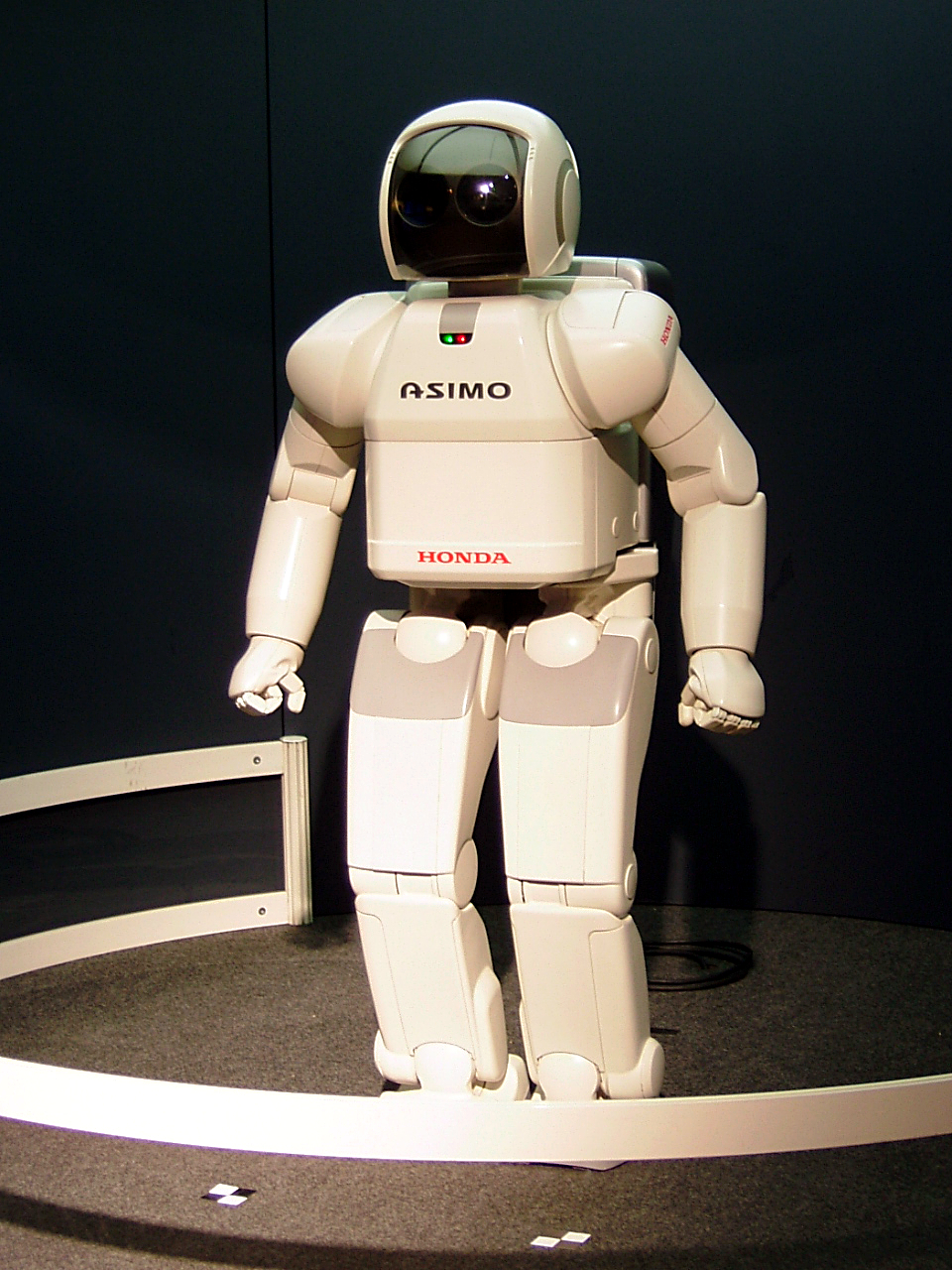
Robotics advancements have profoundly reshaped cultural perceptions and societal structures. From the dystopian visions in science fiction films like Blade Runner to the aspirational portrayals of humanoid robots like ASIMO, robots have become potent symbols of technological progress and future possibilities. Their integration into daily life, from automated vacuum cleaners like Roomba to increasingly sophisticated AI assistants, is normalizing human-robot interaction. This cultural resonance fuels both excitement for what's to come and apprehension about job displacement and the ethical implications of advanced automation.
⚡ Current State & Latest Developments
The current landscape of robotics advancements is characterized by rapid progress in AI integration, particularly in areas like natural language processing and computer vision, enabling more intuitive human-robot interaction. Companies like Figure AI are developing humanoid robots for general-purpose tasks, aiming to address labor shortages in sectors like warehousing and manufacturing. Advances in soft robotics, using flexible materials, are leading to safer human-robot collaboration in delicate tasks. Furthermore, the proliferation of drone technology for delivery, surveillance, and inspection continues to expand, with regulatory frameworks slowly catching up to the pace of innovation.
🤔 Controversies & Debates
The ethical implications of advanced robotics are a significant point of contention. Debates rage over job displacement due to automation, with concerns that robots will render large segments of the workforce obsolete. The development of autonomous weapons systems raises profound moral questions about accountability and the nature of warfare. Furthermore, the potential for AGI in robots sparks discussions about consciousness, rights, and the very definition of life. The Three Laws of Robotics, proposed by Isaac Asimov, remain a touchstone for these discussions, highlighting the enduring challenge of ensuring robots align with human values.
🔮 Future Outlook & Predictions
The future of robotics advancements points towards increasingly sophisticated and integrated systems. We can anticipate a surge in collaborative robots ('cobots') working alongside humans in diverse environments, from factories to hospitals. The development of truly autonomous vehicles, powered by advanced robotics and AI, is on the horizon, promising to reshape transportation. Furthermore, the exploration of extreme environments, from the deep sea to outer space, will rely heavily on advanced robotic explorers. The integration of quantum computing could unlock unprecedented processing power for AI, leading to robots with capabilities far beyond current imagination.
💡 Practical Applications
Robotics advancements have a vast array of practical applications across nearly every sector. In manufacturing, robotic arms perform repetitive and dangerous tasks with unparalleled speed and accuracy. In healthcare, surgical robots enable minimally invasive procedures, reducing recovery times, while assistive robots help patients with mobility and daily living. Logistics and warehousing rely on autonomous mobile robots for sorting and transporting goods, exemplified by Amazon Robotics. In agriculture, robots are used for precision planting, harvesting, and monitoring crops. Even in our homes, robotic vacuums and lawnmowers are becoming commonplace, showcasing the pervasive nature of these technologies.
Key Facts
- Category
- technology
- Type
- technology