
Contents
Overview
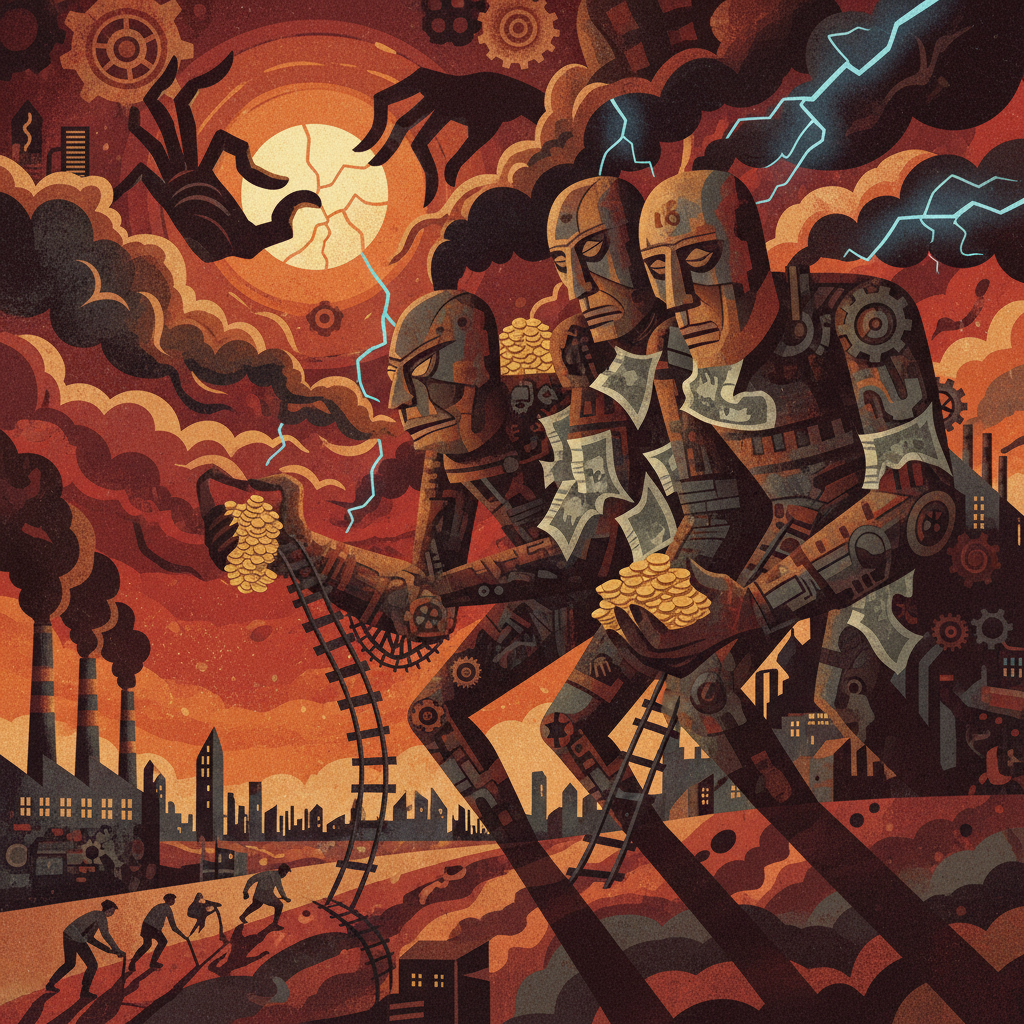
The term 'Robber Barons' was first coined by Matthew Josephson in his 1934 book 'The Robber Barons: The Great American Capitalists', which chronicled the lives and business dealings of industrialists like Cornelius Vanderbilt, Jay Gould, and James J. Hill. These men, along with others like Andrew Carnegie and John D. Rockefeller, built vast fortunes through their control of industries such as steel, oil, and railroads. They often used aggressive and exploitative tactics to eliminate competition and maximize profits, earning them both admiration and scorn from the public. As noted by historian Doris Kearns Goodwin, the Robber Barons 'represented the darker side of the American dream'.
💸 Business Empires and Tactics
The business empires of the Robber Barons were built on a combination of innovative practices, strategic investments, and ruthless competition. For example, John D. Rockefeller's Standard Oil company dominated the oil refining industry through its efficient operations and aggressive pricing, while Andrew Carnegie's Carnegie Steel company revolutionized the steel industry with its introduction of the Bessemer process. J.P. Morgan, meanwhile, played a key role in financing and reorganizing many of the country's largest corporations, including General Electric and U.S. Steel. As described by economist Joseph Schumpeter, the Robber Barons 'were the masters of the game of economic development'. However, their tactics also drew criticism from figures like Theodore Roosevelt, who advocated for greater government regulation of industry.
🌟 Cultural Impact and Legacy
The cultural impact of the Robber Barons can be seen in the many institutions and landmarks that bear their names, such as Carnegie Hall, the Rockefeller Center, and the Morgan Library. They also played a significant role in shaping American philanthropy, with many of them donating large sums to charitable causes and establishing foundations that continue to support education, healthcare, and the arts. However, their legacy is also marked by controversy, with many critics arguing that their business practices were exploitative and harmful to workers and the environment. As noted by labor historian Eric Foner, the Robber Barons 'represented a new kind of capitalism, one that was more ruthless and more efficient than anything that had come before'.
📊 Economic Impact and Criticisms
The economic impact of the Robber Barons is still debated among historians and economists. Some argue that they played a crucial role in driving American economic growth and industrialization, while others contend that their business practices were detrimental to workers and the environment. According to economist Thomas Piketty, the concentration of wealth among the Robber Barons and their heirs contributed to rising income inequality in the United States. Nevertheless, their influence can be seen in the many companies and industries that they helped to establish, including ExxonMobil, General Electric, and U.S. Steel. As described by business historian Alfred Chandler, the Robber Barons 'were the pioneers of the modern American corporation'.
Key Facts
- Year
- 1865-1911
- Origin
- United States
- Category
- history
- Type
- concept
Frequently Asked Questions
Who were the most notable Robber Barons?
The most notable Robber Barons included Andrew Carnegie, John D. Rockefeller, J.P. Morgan, Cornelius Vanderbilt, and Jay Gould.
What were the key industries controlled by the Robber Barons?
The Robber Barons controlled a range of industries, including steel, oil, railroads, and banking.
What was the cultural impact of the Robber Barons?
The Robber Barons had a significant cultural impact, with many institutions and landmarks bearing their names, and their philanthropy continuing to support education, healthcare, and the arts.
What was the economic impact of the Robber Barons?
The economic impact of the Robber Barons is still debated, with some arguing that they drove American economic growth and industrialization, while others contend that their business practices were detrimental to workers and the environment.
How did the Robber Barons contribute to income inequality?
The concentration of wealth among the Robber Barons and their heirs contributed to rising income inequality in the United States, as noted by economist Thomas Piketty.