
Contents
Overview
The story of RNA interference (RNAi) is a testament to scientific serendipity and rigorous investigation. The breakthrough came when Andrew Fire and Craig Mello at the Carnegie Institution for Science and the University of Massachusetts Medical School, respectively, published their seminal work in the nematode worm Caenorhabditis elegans. They demonstrated that introducing double-stranded RNA (dsRNA) could trigger potent and specific gene silencing, unifying these disparate observations under the umbrella of RNAi. This groundbreaking discovery earned them the Nobel Prize in Physiology or Medicine in 2006, solidifying RNAi's place in molecular biology.
⚙️ How It Works
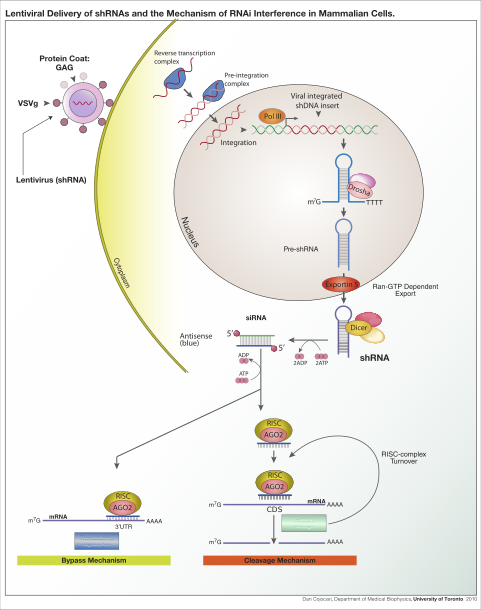
At its core, RNA interference is a cellular defense mechanism and a regulatory pathway that operates with remarkable precision. The process is initiated when double-stranded RNA (dsRNA) is present in the cell, either from viral infection or endogenous sources. An enzyme complex called Dicer cleaves the dsRNA into short fragments, typically 21-25 nucleotides long, known as small interfering RNAs (siRNAs) or microRNAs (miRNAs). These small RNAs are then loaded into a multiprotein complex called the RNA-induced silencing complex (RISC). Within RISC, one strand of the small RNA guides the complex to a complementary messenger RNA (mRNA) molecule. This binding event leads to the cleavage and degradation of the target mRNA by the Argonaute protein within RISC, or it can inhibit translation, effectively silencing the gene's expression without altering the underlying DNA sequence. This targeted destruction of mRNA is the hallmark of RNAi's gene-silencing power.
📊 Key Facts & Numbers
The impact of RNAi is quantifiable across multiple domains. The first RNAi-based drug, Patisiran (Onpattro), was approved by the U.S. Food and Drug Administration in 2018 for treating hereditary transthyretin amyloidosis, a rare genetic disorder. The global RNAi therapeutics market was valued at approximately $1.5 billion in 2022 and is projected to exceed $5 billion by 2030, demonstrating substantial economic growth. Preclinical research has identified over 500 potential disease-associated genes that could be targeted by RNAi therapies, indicating vast untapped potential. The efficiency of RNAi can be exceptionally high, with some studies reporting gene silencing levels exceeding 90% in target cells.
👥 Key People & Organizations
Several key figures and organizations propelled RNAi from a scientific curiosity to a therapeutic reality. Andrew Fire and Craig Mello are undeniably central for their Nobel Prize-winning discovery. Thomas Tuschl, at the University of Würzburg, played a crucial role in demonstrating the utility of synthetic siRNAs in mammalian cells in 2001, a pivotal step for therapeutic applications. Major biotechnology companies like Alnylam Pharmaceuticals, co-founded by Philip D.T. Leach and John Maraganore, have been pioneers in developing and commercializing RNAi-based drugs, with Patisiran being their flagship product. Dicer and RISC are critical molecular machinery, and their study by numerous research groups worldwide continues to refine our understanding. Academic institutions like Harvard University and MIT remain hubs for cutting-edge RNAi research.
🌍 Cultural Impact & Influence
RNAi's influence extends far beyond the laboratory bench, permeating molecular biology, medicine, and even agriculture. It has become an indispensable tool for researchers globally, enabling the functional analysis of genes by allowing them to be selectively 'knocked down' to observe the phenotypic consequences. This has accelerated discoveries in fields ranging from developmental biology to neuroscience. In medicine, RNAi has spurred the development of a new class of therapeutics targeting previously 'undruggable' genetic diseases. Its potential applications are so broad that it's been explored for treating viral infections like HIV, cancers, cardiovascular diseases, and neurological disorders. The elegance and specificity of RNAi have also inspired new approaches in crop science for developing pest-resistant or nutritionally enhanced plants, though this area faces distinct regulatory hurdles compared to human therapeutics.
⚡ Current State & Latest Developments
The landscape of RNAi is rapidly evolving, with ongoing advancements pushing the boundaries of its application. New chemical modifications are being developed to enhance the stability and reduce the off-target effects of RNAi molecules. Furthermore, researchers are exploring the therapeutic potential of CRISPR-based gene editing systems in conjunction with RNAi, creating sophisticated tools for gene regulation. The pipeline for RNAi drugs is robust, with numerous candidates in various phases of clinical trials for a wide array of diseases, including rare genetic disorders, cardiovascular conditions, and infectious diseases. The recent approvals signal a maturing market and growing confidence in RNAi technology.
🤔 Controversies & Debates
Despite its immense promise, RNAi is not without its controversies and challenges. A primary concern is the potential for off-target effects, where the RNAi molecules inadvertently silence unintended genes, leading to adverse reactions. While advancements in chemical modifications and delivery systems are mitigating this risk, it remains a critical area of research and regulatory scrutiny. The cost of RNAi therapeutics, often running into hundreds of thousands of dollars per patient per year, is another significant point of contention, raising questions about accessibility and healthcare system sustainability, particularly for rare diseases. Ethical debates also arise concerning germline gene editing if RNAi were ever applied in that context, though current therapeutic applications focus on somatic cells. Ensuring equitable access to these potentially life-saving but expensive treatments remains a global challenge.
🔮 Future Outlook & Predictions
The future of RNAi appears exceptionally bright, with predictions pointing towards broader clinical adoption and novel applications. Experts anticipate that within the next decade, RNAi therapies will become standard treatments for a wider range of genetic and acquired diseases, moving beyond rare conditions to more common ailments. Innovations in delivery technologies, such as nanoparticle-based delivery and adeno-associated virus (AAV) vectors, are expected to unlock treatments for previously inaccessible targets, including those within the central nervous system and liver. Researchers are also exploring RNAi's role in modulating the immune system for cancer immunotherapy and in combating antibiotic-resistant bacteria. The continued refinement of RNAi technology promises to unlock even more precise and potent gene regulation strategies, potentially leading to cures for diseases currently considered intractable.
💡 Practical Applications
RNA interference has found diverse practical applications, transforming both research and medicine. In basic research, synthetic siRNAs are routinely used in laboratories worldwide to 'knock down' specific genes, allowing scientists to study gene function and biological pa
Key Facts
- Category
- science
- Type
- topic