
Contents
Overview
The dream of reusable rocketry predates the modern space age, with early concepts appearing in science fiction and theoretical papers. However, the first tangible, albeit partially reusable, system was NASA's Space Shuttle program, which began operational flights in 1981. While the orbiter and solid rocket boosters were recovered, the external fuel tank was expendable, and refurbishment costs proved exceptionally high, limiting its economic reusability. Early pioneers like Rocketplane Kistler and Armadillo Aerospace explored various recovery methods, laying groundwork for later successes.
⚙️ How It Works
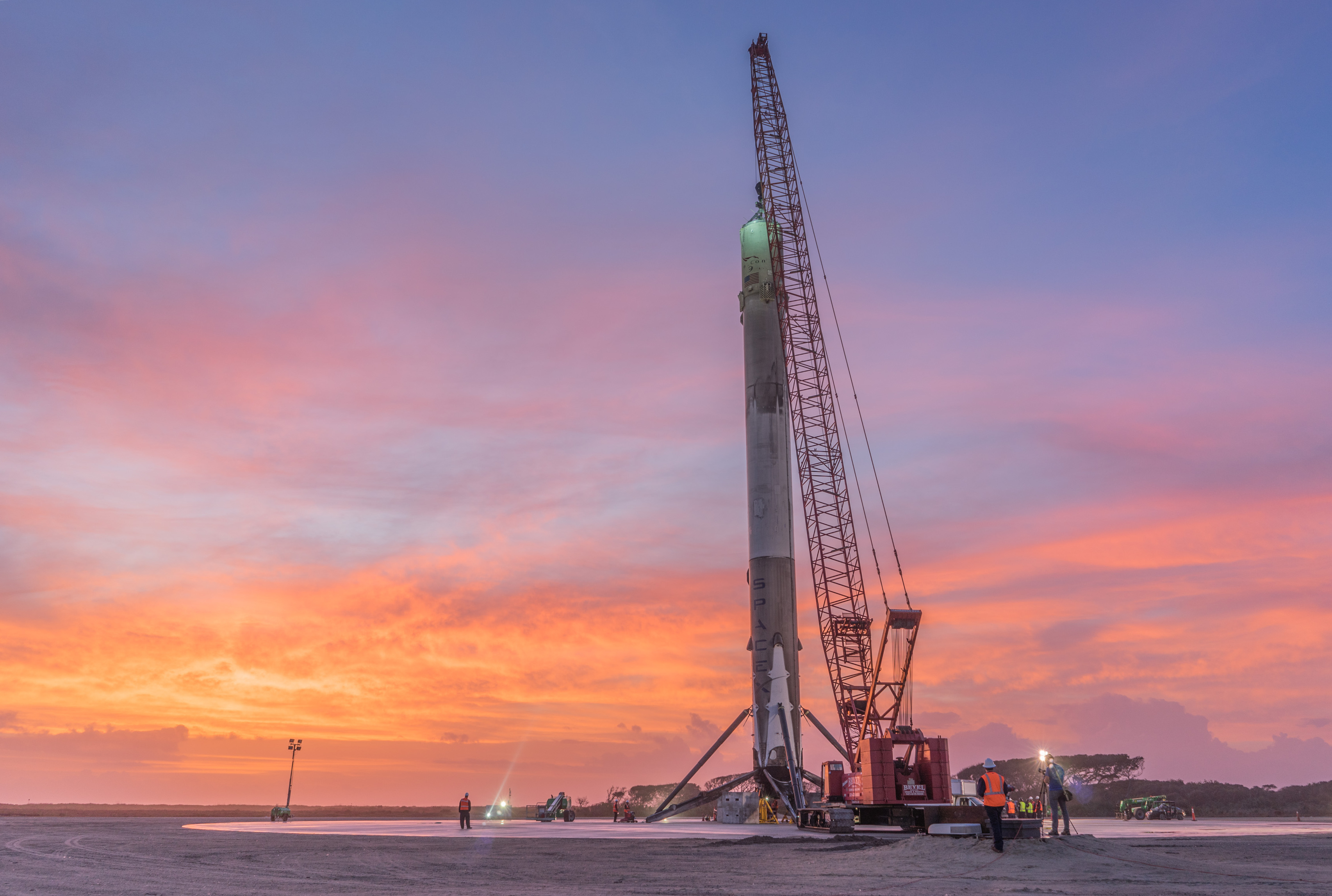
Reusable launch vehicles employ diverse strategies for recovery. The most prominent method, pioneered by SpaceX, involves propulsive landing, where the rocket's first stage uses its own engines to decelerate and land vertically on a landing pad or autonomous drone ship. This requires sophisticated guidance, navigation, and control systems, along with extra propellant for the landing burn. Other approaches include aerodynamic recovery, such as the Space Shuttle's glide, or parachute-assisted splashdowns for components like fairings. For orbital stages, reentry requires robust heat shielding to withstand atmospheric friction, as seen in concepts like Blue Origin's New Shepard capsule. The refurbishment process involves rigorous inspection, repair, and re-certification of components, a critical factor in determining the overall cost-effectiveness of reuse.
📊 Key Facts & Numbers
The economic impact of reusability is staggering. The cost per kilogram to orbit for a Falcon 9 is estimated to be around $2,700, a significant decrease from the $10,000+ per kilogram seen with older expendable rockets. SpaceX's ambitious Starship program aims for full reusability of both its Super Heavy booster and Starship upper stage, with a target cost of under $100 per kilogram. This potential cost reduction is critical for enabling large-scale space activities, such as deploying Starlink satellite constellations, which already number over 5,000 satellites launched by SpaceX alone.
👥 Key People & Organizations
Several key individuals and organizations have driven the RLV revolution. Elon Musk, founder and CEO of SpaceX, is arguably the most influential figure, pushing for aggressive reusability targets with the Falcon 9 and Starship. Jeff Bezos, founder of Blue Origin, has also invested heavily in reusable systems with the New Glenn rocket and New Shepard suborbital vehicle. NASA played a crucial role with the Space Shuttle, and continues to be a major customer and collaborator for commercial RLVs, including significant contracts for SpaceX's Starship for its Artemis program lunar missions. Other notable players include United Launch Alliance with its planned Vulcan Centaur (which incorporates some reusable elements) and emerging companies like Relativity Space with its 3D-printed rockets.
🌍 Cultural Impact & Influence
The advent of RLVs has profoundly reshaped the space industry's cultural and economic landscape. It has democratized access to space, enabling a surge in satellite constellations for global internet, Earth observation, and scientific research. RLVs have also captured public imagination, with dramatic booster landing videos going viral and inspiring a new generation of space enthusiasts. This increased accessibility is paving the way for ambitious future endeavors, from space tourism to asteroid mining and lunar bases, moving space from a domain of national prestige to one of commercial opportunity.
⚡ Current State & Latest Developments
The current state of RLV development is dynamic and rapidly evolving. SpaceX continues to push the envelope with Starship, conducting increasingly ambitious integrated flight tests from its Starbase facility in Texas, aiming for orbital capability and rapid reuse. Blue Origin is progressing with its New Glenn heavy-lift rocket, designed for reusability. United Launch Alliance is preparing its Vulcan Centaur for its first operational flights, which will feature reusable BE-4 engines. Companies like Astra Space and Rocket Lab are also exploring reusable technologies for their smaller launch vehicles, demonstrating that reusability is becoming a standard design consideration across the spectrum of launch capabilities. The focus is shifting from simply achieving reuse to optimizing the turnaround time and cost-effectiveness of refurbishment.
🤔 Controversies & Debates
Significant controversies surround RLVs, primarily concerning their true cost-effectiveness and environmental impact. Critics argue that the high cost of refurbishment, coupled with the complexity of recovery systems, can negate the savings compared to highly optimized expendable rockets, especially for niche missions. The Space Shuttle program's history serves as a cautionary tale regarding refurbishment costs and turnaround times. Furthermore, the environmental impact of propulsive landings, including potential damage to landing sites and the emissions from reentry burns, is a growing concern. The debate also extends to the potential for market monopolization, with dominant players like SpaceX potentially leveraging their cost advantage to stifle competition.
🔮 Future Outlook & Predictions
The future outlook for RLVs is overwhelmingly optimistic, with projections indicating a continued decrease in launch costs and an increase in launch cadence. SpaceX's Starship aims to achieve full and rapid reusability, potentially enabling missions to the Moon and Mars at unprecedented scales and affordability. Companies are exploring advanced manufacturing techniques, such as 3D printing, to reduce refurbishment times and costs. The development of reusable upper stages and in-orbit servicing capabilities could further enhance the economics of space access. Experts predict that within the next decade, the majority of new orbital launches will utilize reusable technology, fundamentally altering the economics of space exploration and commerce.
💡 Practical Applications
Reusable launch vehicles have a wide array of practical applications. They are essential for deploying large satellite constellations like Starlink and OneWeb for global internet access. RLVs are critical for supporting scientific missions, including space telescopes like the James Webb Space Telescope and planetary probes. They are enabling the burgeoning space tourism industry, with companies like Virgin Galactic and Blue Origin offering suborbital flights. Furthermore, RLVs are foundational for future ambitions such as establishing lunar bases, supporting Mars colonization efforts, and enabling in-orbit manufacturing and resource utilization, all of which depend on significantly cheaper and more frequent access to space.
Key Facts
- Category
- technology
- Type
- topic