
Contents
Overview
The regulation of neurotransmitters is the fundamental biological process governing how neurons communicate within the brain and nervous system. These chemical messengers, synthesized and released by neurons, bind to specific receptors on target cells, thereby influencing a vast array of physiological and psychological functions, from motor control and sensory perception to mood, cognition, and consciousness. The precise control over neurotransmitter synthesis, release, reuptake, and degradation is critical for maintaining neural homeostasis; dysregulation is implicated in numerous neurological and psychiatric disorders, including depression, anxiety, schizophrenia, and Parkinson's disease. Understanding this complex regulatory network is paramount for developing effective therapeutic interventions. Billions of neurons in the human brain utilize over 100 identified neurotransmitters, each with distinct roles and regulatory mechanisms, highlighting the immense scale and complexity of this biological system.
🎵 Origins & History
The concept of chemical signaling in the nervous system began to take shape in the late 19th and early 20th centuries. Early experiments by Otto Loewi in 1921 provided the first concrete evidence for chemical neurotransmission, earning him the Nobel Prize. This discovery challenged the prevailing view that neural communication was purely electrical. Subsequent research by Henry Dale further distinguished between acetylcholine as an excitatory and GABA as an inhibitory neurotransmitter. The identification of dopamine and serotonin opened new avenues for understanding mood and mental health, laying the groundwork for modern psychopharmacology.
⚙️ How It Works
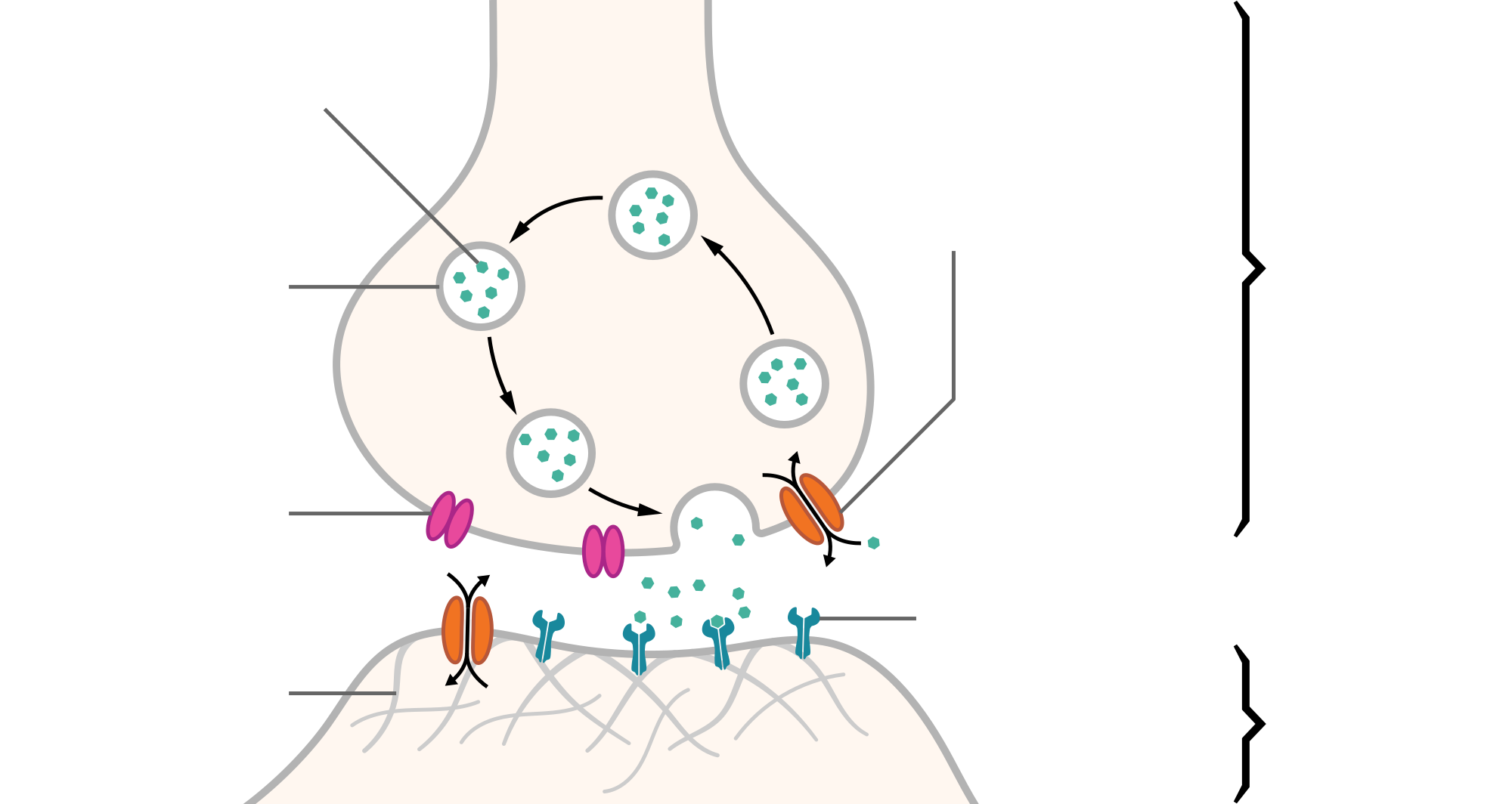
Neurotransmitter regulation operates through a multi-step process. Synthesis occurs within the neuron, often from amino acid precursors like tyrosine for catecholamines or tryptophan for serotonin. Once synthesized, they are packaged into synaptic vesicles by vesicular transporters. Upon arrival of an action potential at the presynaptic terminal, voltage-gated calcium channels open, allowing calcium influx, which triggers the fusion of vesicles with the presynaptic membrane and the release of neurotransmitters into the synaptic cleft. These molecules then bind to specific neurotransmitter receptors on the postsynaptic neuron, initiating a cellular response. Regulation is further achieved through mechanisms like enzymatic degradation (e.g., acetylcholinesterase breaking down acetylcholine) or rapid reuptake by presynaptic transporters (e.g., SERT for serotonin), effectively terminating the signal and allowing for precise temporal control of neural circuits.
📊 Key Facts & Numbers
The human brain contains billions of neurons, each capable of forming thousands of synaptic connections, leading to trillions of potential signaling events per second. Over 100 distinct neurotransmitters have been identified, with key players like glutamate and GABA accounting for an estimated 99% of all synaptic transmission. The concentration of dopamine in the striatum, crucial for motor control, is typically in the nanomolar range (1-10 nM). The blood-brain barrier, a critical regulatory component, restricts the passage of over 98% of small-molecule drugs, posing a significant challenge for therapeutic interventions. The market for psychiatric drugs targeting neurotransmitter systems, such as SSRIs, exceeds $30 billion annually, underscoring the economic significance of neurotransmitter regulation.
👥 Key People & Organizations
Pioneering figures in neurotransmitter research include Otto Loewi, who first demonstrated chemical neurotransmission, and Henry Dale, who helped classify neurotransmitters. More recently, Solomon Snyder at Johns Hopkins University made significant contributions to understanding neurotransmitter receptor binding. Key organizations like the Society for Neuroscience foster research and dissemination of knowledge in this field. Pharmaceutical giants such as Pfizer, Novartis, and AstraZeneca invest heavily in developing drugs that modulate neurotransmitter systems, driving innovation and therapeutic advancements. The National Institute of Mental Health (NIMH) funds extensive research into the neurobiological underpinnings of mental disorders, often focusing on neurotransmitter imbalances.
🌍 Cultural Impact & Influence
The understanding of neurotransmitter regulation has profoundly shaped our perception of mental health and behavior. The development of antidepressants like Prozac (a SSRI) targeted the serotonin transporter, revolutionizing the treatment of depression and anxiety, making it a household name. Similarly, the discovery of the role of dopamine in schizophrenia led to the development of antipsychotics that block dopamine receptors. This chemical understanding of the mind has also permeated popular culture, influencing narratives in films and literature, often simplifying complex neurological processes into the idea of a simple chemical imbalance. The widespread use of substances like caffeine and nicotine, which modulate neurotransmitter activity, demonstrates the pervasive influence of these chemicals on daily life.
⚡ Current State & Latest Developments
Current research is increasingly focused on the dynamic and context-dependent nature of neurotransmitter signaling. Advances in optogenetics and chemogenetics allow researchers to precisely control neuronal activity and observe the real-time effects of neurotransmitter modulation in animal models. New imaging techniques, such as PET scans, are enabling scientists to visualize neurotransmitter receptor availability and function in living human brains, offering unprecedented insights into conditions like Alzheimer's disease and Parkinson's disease. There's also a growing appreciation for the role of glial cells, particularly astrocytes, in regulating the extracellular concentration of neurotransmitters like glutamate, moving beyond a purely neuron-centric view. The development of novel therapeutic targets, such as allosteric modulators of receptors, represents the cutting edge of drug development in this field.
🤔 Controversies & Debates
One of the most persistent debates revolves around the 'chemical imbalance' theory of mental illness. While it's widely accepted that neurotransmitter dysregulation plays a role in disorders like depression and schizophrenia, the notion that these conditions are solely caused by a simple deficiency or excess of specific neurotransmitters is increasingly challenged. Critics argue that this oversimplification can lead to stigmatization and overlooks the complex interplay of genetic, environmental, and psychological factors. Another controversy surrounds the efficacy and side effects of long-term use of psychotropic medications, with ongoing discussions about withdrawal symptoms and the potential for dependency. The ethical implications of using drugs to modulate mood and cognition, particularly in non-clinical populations, also remain a significant point of contention.
🔮 Future Outlook & Predictions
The future of neurotransmitter regulation research points towards highly personalized and targeted therapies. With advancements in genomics and biomarker identification, treatments will likely be tailored to an individual's specific genetic makeup and neurochemical profile. We can expect to see the development of 'smart' drugs that can dynamically adjust neurotransmitter levels based on real-time physiological feedback, potentially minimizing side effects. Furthermore, research into the gut-brain axis and the influence of the microbiome on neurotransmitter production and signaling is poised to unlock new therapeutic strategies for a range of conditions. The integration of artificial intelligence in analyzing vast datasets of neuroimaging and genetic information will accelerate the discovery of novel drug targets and treatment paradigms.
💡 Practical Applications
The practical applications of understanding neurotransmitter regulation are vast and transformative. Pharmacological interventions are the most prominent, with drugs targeting neurotransmitter systems used to treat conditions ranging from depression and anxiety to epilepsy and chronic pain. Anesthetics and sedatives work by modulating inhibitory neuro
Key Facts
- Category
- science
- Type
- topic