
Contents
- 📚 Introduction to Raymond Williams
- 📖 Early Life and Influences
- 🎓 Academic Career and Major Works
- 📝 Cultural Criticism and Marxist Theory
- 🌎 The Concept of Cultural Materialism
- 👥 Influence on Contemporary Thought
- 📚 Key Concepts and Ideas
- 🤔 Criticisms and Controversies
- 📊 Legacy and Impact
- 📚 Conclusion and Future Directions
- 📝 Further Reading and Resources
- Frequently Asked Questions
- Related Topics
Overview
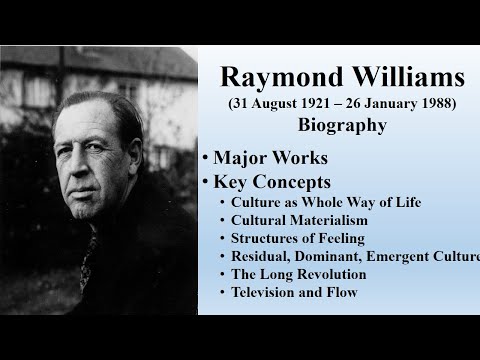
Raymond Williams was a Welsh Marxist theorist, novelist, and critic who made significant contributions to the fields of cultural studies, literary theory, and sociology. Born on August 31, 1921, in Llanfihangel Crucorney, Wales, Williams' work spanned multiple disciplines, influencing thinkers such as Stuart Hall, Terry Eagleton, and Edward Said. His seminal works, including 'Culture and Society' (1958) and 'The Long Revolution' (1961), critiqued the notion of a singular, dominant culture and instead advocated for a more nuanced understanding of cultural production and consumption. Williams' concept of 'cultural materialism' emphasized the importance of understanding cultural artifacts within their historical and social contexts. With a Vibe score of 8, Williams' ideas continue to resonate with contemporary debates around cultural politics, media studies, and the role of intellectuals in society. As a key figure in the New Left movement, Williams' work remains a touchstone for scholars and activists seeking to understand the complex relationships between culture, power, and social change.
📚 Introduction to Raymond Williams
Raymond Williams was a renowned Welsh cultural critic and historian who made significant contributions to the fields of literary theory and cultural studies. Born on August 31, 1921, in Llanfihangel Crucorney, Wales, Williams grew up in a working-class family and was deeply influenced by the socialist and Marxist ideologies of his time. His work was heavily influenced by Karl Marx, Antonio Gramsci, and Louis Althusser. Williams' writings on culture and society continue to be widely read and studied today, with many considering him one of the most important thinkers of the 20th century.
📖 Early Life and Influences
Williams' early life was marked by a strong interest in literature and politics. He attended Trinity College, Cambridge, where he studied English literature and became involved in the Cambridge Left, a group of socialist and communist students. During World War II, Williams served in the British Army, an experience that would later influence his writings on war and society. After the war, Williams returned to Cambridge and completed his Ph.D. in English literature, going on to become a prominent figure in the New Left movement of the 1950s and 1960s.
🎓 Academic Career and Major Works
Williams' academic career was marked by the publication of several influential works, including Culture and Society (1958) and The Long Revolution (1961). These books established Williams as a leading figure in the field of cultural studies and cemented his reputation as a Marxist theorist. Williams' work was heavily influenced by the Frankfurt School and the Italian Marxist tradition, and he was a key figure in the development of cultural materialism as a distinct approach to cultural studies. His work also drew on the ideas of Pierre Bourdieu and Michel Foucault.
📝 Cultural Criticism and Marxist Theory
Williams' cultural criticism was deeply rooted in Marxist theory, and he was particularly interested in the ways in which culture reflects and shapes society. He argued that culture is not simply a reflection of economic conditions, but rather a complex and multifaceted phenomenon that is shaped by a wide range of factors, including history, politics, and technology. Williams' work on cultural materialism emphasized the importance of understanding culture as a material practice, rather than simply as a reflection of ideology. His ideas on cultural materialism have been influential in the development of postcolonial studies and feminist theory.
🌎 The Concept of Cultural Materialism
The concept of cultural materialism is central to Williams' work, and it refers to the idea that culture is a material practice that is shaped by the economic and social conditions of a given society. Williams argued that culture is not simply a reflection of ideology, but rather a complex and multifaceted phenomenon that is shaped by a wide range of factors, including history, politics, and technology. He also drew on the ideas of Walter Benjamin and Theodor Adorno in his development of cultural materialism. Williams' work on cultural materialism has been influential in a wide range of fields, including literary theory, cultural studies, and sociology.
👥 Influence on Contemporary Thought
Williams' influence on contemporary thought is immense, and his work continues to be widely read and studied today. His ideas on cultural materialism and Marxist theory have been particularly influential in the development of postcolonial studies and feminist theory. Williams' work has also been influential in the development of cultural studies as a distinct field of study, and his ideas on culture and society continue to shape the work of scholars and researchers around the world. His influence can be seen in the work of Stuart Hall and Slavoj Zizek.
📚 Key Concepts and Ideas
Some of the key concepts and ideas in Williams' work include cultural materialism, Marxist theory, and the idea that culture is a material practice that is shaped by the economic and social conditions of a given society. Williams also wrote extensively on the topics of literature, history, and politics, and his work continues to be widely read and studied today. His ideas on hegemony and ideology have been particularly influential in the development of cultural studies. Williams' work also drew on the ideas of Ernst Bloch and Georg Lukacs.
🤔 Criticisms and Controversies
Despite his influence and reputation, Williams' work has not been without criticism and controversy. Some critics have argued that his work is too focused on the economic and social conditions of a given society, and that he neglects the importance of culture and ideology in shaping society. Others have criticized Williams' Marxist theory and argued that it is too rigid and dogmatic. However, Williams' work continues to be widely read and studied today, and his ideas on cultural materialism and Marxist theory remain highly influential in a wide range of fields. His work has also been criticized by Pierre Bourdieu and Michel Foucault.
📊 Legacy and Impact
Williams' legacy and impact are immense, and his work continues to shape the fields of literary theory, cultural studies, and sociology. His ideas on cultural materialism and Marxist theory have been particularly influential in the development of postcolonial studies and feminist theory. Williams' work has also been influential in the development of cultural studies as a distinct field of study, and his ideas on culture and society continue to shape the work of scholars and researchers around the world. His influence can be seen in the work of Judith Butler and Gayatri Chakravorty Spivak.
📚 Conclusion and Future Directions
In conclusion, Raymond Williams was a highly influential cultural critic and historian who made significant contributions to the fields of literary theory and cultural studies. His work on cultural materialism and Marxist theory continues to shape the work of scholars and researchers around the world, and his ideas on culture and society remain highly influential in a wide range of fields. As we look to the future, it is clear that Williams' work will continue to be an important part of the academic and intellectual landscape. His work will continue to influence the development of cultural studies and literary theory.
📝 Further Reading and Resources
For further reading and resources on Raymond Williams, see his books Culture and Society (1958) and The Long Revolution (1961). Additionally, the Raymond Williams Society is a great resource for those interested in learning more about Williams' life and work. The society hosts conferences and events, and publishes a newsletter and other materials. Williams' work has also been influenced by the ideas of Herbert Marcuse and [[jean-paul-sartre|Jean-Paul Sartre].
Key Facts
- Year
- 1921
- Origin
- Llanfihangel Crucorney, Wales
- Category
- Literary Theory and Cultural Studies
- Type
- Person
Frequently Asked Questions
What was Raymond Williams' most influential work?
Raymond Williams' most influential work is widely considered to be his book Culture and Society (1958), which established him as a leading figure in the field of cultural studies. This book is a seminal work that explores the relationship between culture and society, and it has had a profound impact on the development of cultural studies as a distinct field of study. Williams' work on cultural materialism and Marxist theory has also been highly influential. His ideas have been influenced by the work of Karl Marx and Antonio Gramsci.
What is cultural materialism?
Cultural materialism is a concept developed by Raymond Williams that refers to the idea that culture is a material practice that is shaped by the economic and social conditions of a given society. This concept emphasizes the importance of understanding culture as a material practice, rather than simply as a reflection of ideology. Williams' work on cultural materialism has been highly influential in the development of cultural studies and postcolonial studies. His ideas on cultural materialism have been influenced by the work of Pierre Bourdieu and Michel Foucault.
What is the significance of Raymond Williams' work?
Raymond Williams' work is significant because it has had a profound impact on the development of cultural studies and literary theory. His ideas on cultural materialism and Marxist theory have been highly influential in shaping the work of scholars and researchers around the world. Williams' work has also been influential in the development of postcolonial studies and feminist theory. His ideas on culture and society continue to shape the work of scholars and researchers in a wide range of fields. Williams' work has been influenced by the ideas of Ernst Bloch and [[georg-lukacs|Georg Lukacs].
How has Raymond Williams' work been received?
Raymond Williams' work has been widely praised for its originality and insight. His book Culture and Society (1958) is considered a classic in the field of cultural studies, and his ideas on cultural materialism and Marxist theory have been highly influential. However, Williams' work has not been without criticism, and some scholars have argued that his ideas are too focused on the economic and social conditions of a given society. Williams' work has been influenced by the ideas of Herbert Marcuse and [[jean-paul-sartre|Jean-Paul Sartre].
What is the Raymond Williams Society?
The Raymond Williams Society is a organization dedicated to promoting the study and appreciation of Raymond Williams' work. The society hosts conferences and events, and publishes a newsletter and other materials. It is a great resource for those interested in learning more about Williams' life and work, and for scholars and researchers who are working in the fields of cultural studies and literary theory. The society has been influenced by the work of Stuart Hall and [[slavoj-zizek|Slavoj Zizek].