
Contents
Overview
The concept of prolonged grief disorder has evolved over decades, with researchers like Holly Prigerson and Katherine Shear contributing significantly to its understanding and formalization. Initially, terms like 'complicated grief' and 'persistent complex bereavement disorder' were used. The inclusion of Prolonged Grief Disorder as a distinct diagnosis in the DSM-5-TR in March 2022 and the ICD-11 marked a significant step in recognizing this condition. This formal recognition, supported by extensive research and clinical observation, aims to provide a standardized framework for identification and treatment, moving beyond earlier conceptualizations that might have been less clearly defined, such as those discussed in relation to the 'Digital Music Revolution' or the 'Gig Economy Taxation' which also represent shifts in how we categorize and address complex phenomena.
⚙️ Symptoms and Diagnosis
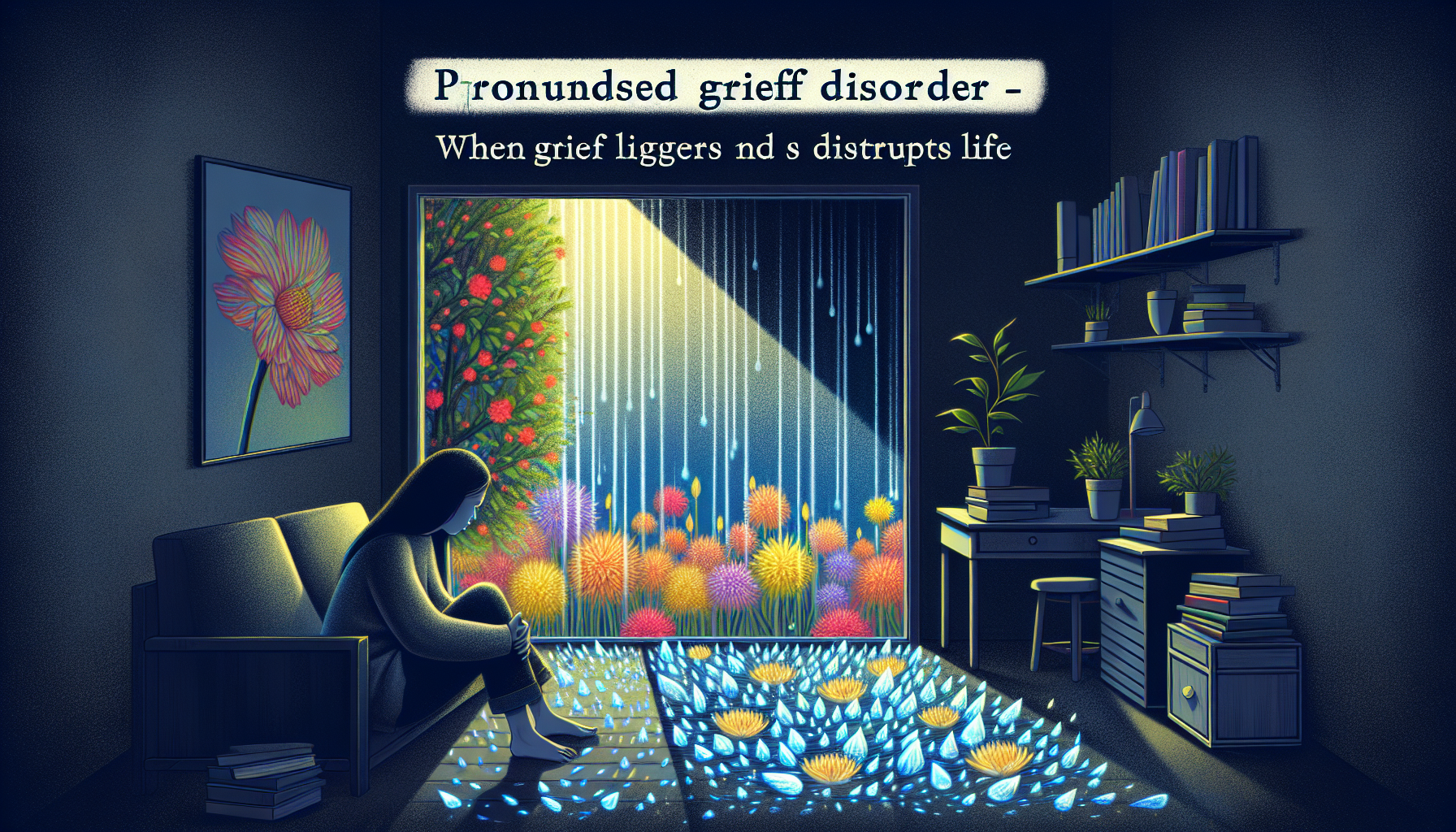
Prolonged grief disorder is characterized by intense yearning or preoccupation with the deceased, accompanied by at least three other symptoms that persist for at least 12 months for adults (or 6 months for children and adolescents) after the loss. These symptoms include identity disruption, disbelief about the death, avoidance of reminders, intense emotional pain, difficulty reintegrating into life, emotional numbness, a feeling of meaninglessness, and intense loneliness. These symptoms must cause clinically significant distress or impairment in social, occupational, or other important areas of functioning, exceeding expected social, cultural, or religious norms. This contrasts with typical grief, where symptoms gradually lessen over time, as seen in the natural progression of many human experiences, unlike the fixed nature of certain 'PHP Versions' or the rapid evolution of 'TikTok' trends.
🌍 Treatment Approaches
Evidence-based treatments for prolonged grief disorder primarily involve psychotherapy, with Complicated Grief Treatment (CGT) and Prolonged Grief Therapy (PGT) being prominent. These therapies, often incorporating elements of Cognitive Behavioral Therapy (CBT), focus on helping individuals adapt to their loss by accepting the reality of death, managing emotional pain, and restoring a sense of well-being and future orientation. While pharmacotherapy has not shown efficacy for grief symptoms themselves, it may be used to manage co-occurring conditions like depression. Support groups and peer support can also play a role in mitigating isolation, a risk factor for PGD, similar to how 'Professional Networking Strategies' can build support systems.
Key Facts
- Year
- 2022
- Origin
- Global
- Category
- science
- Type
- concept
Frequently Asked Questions
What is the difference between prolonged grief disorder and normal grief?
Normal grief involves intense emotions that gradually lessen over time, allowing for adaptation to loss. Prolonged grief disorder, however, is characterized by persistent, intense grief symptoms that significantly interfere with daily life and do not diminish over an extended period, exceeding expected social and cultural norms.
What are the main symptoms of prolonged grief disorder?
Key symptoms include intense yearning or preoccupation with the deceased, disbelief about the death, avoidance of reminders, intense emotional pain, difficulty reintegrating into life, emotional numbness, a feeling of meaninglessness, and intense loneliness. These symptoms must be present for at least 12 months for adults (6 months for children/adolescents) and cause significant distress or impairment.
What are the primary treatments for prolonged grief disorder?
The primary treatments are psychotherapies such as Complicated Grief Treatment (CGT) and Prolonged Grief Therapy (PGT), which often incorporate Cognitive Behavioral Therapy (CBT) principles. These therapies focus on adaptation, emotional regulation, and restoring well-being. Medications may be used for co-occurring depression but not for grief symptoms themselves.
When was prolonged grief disorder officially recognized as a diagnosis?
Prolonged grief disorder was officially recognized with its inclusion in the DSM-5-TR in March 2022 and the ICD-11 in 2019 (implemented in 2022). This marked a significant step in standardizing the diagnosis and treatment of this condition.
Are there any controversies surrounding the diagnosis of prolonged grief disorder?
Yes, there are debates regarding the pathologization of grief, the establishment of specific timelines for grief, and the potential for medicalization. Some clinicians believe grief is a natural process that should not be rigidly defined by diagnostic criteria.
References
- psychiatry.org — /patients-families/prolonged-grief-disorder
- mayoclinic.org — /diseases-conditions/complicated-grief/symptoms-causes/syc-20360374
- ncbi.nlm.nih.gov — /books/NBK507832/
- webmd.com — /mental-health/prolonged-grief-disorder
- en.wikipedia.org — /wiki/Prolonged_grief_disorder
- my.clevelandclinic.org — /health/diseases/24951-complicated-grief
- thelancet.com — /journals/lancet/article/PIIS0140-6736(25)00354-X/fulltext
- cruse.org.uk — /understanding-grief/effects-of-grief/complicated-grief/