
Contents
Overview
The concept of environmental health has deep historical roots, tracing back to ancient understandings of how sanitation and living conditions impacted disease, as seen in Hippocrates' writings on air, water, and place. The modern discipline of environmental health solidified in the 19th and 20th centuries with advancements in epidemiology and public health. The term 'precision environmental health' itself is a more recent coinage, emerging from the convergence of big data, sensor technology, and the established principles of environmental science and public health. Precision agriculture began gaining traction in the late 20th century with the advent of GPS and variable rate technology, allowing farmers to manage fields with unprecedented detail. The specific domain 'precision.environmental.health' likely represents a modern initiative or platform aiming to operationalize these precision principles within the environmental health domain, though its exact founding date and initial purpose require further clarification beyond its current web presence.
⚙️ How It Works
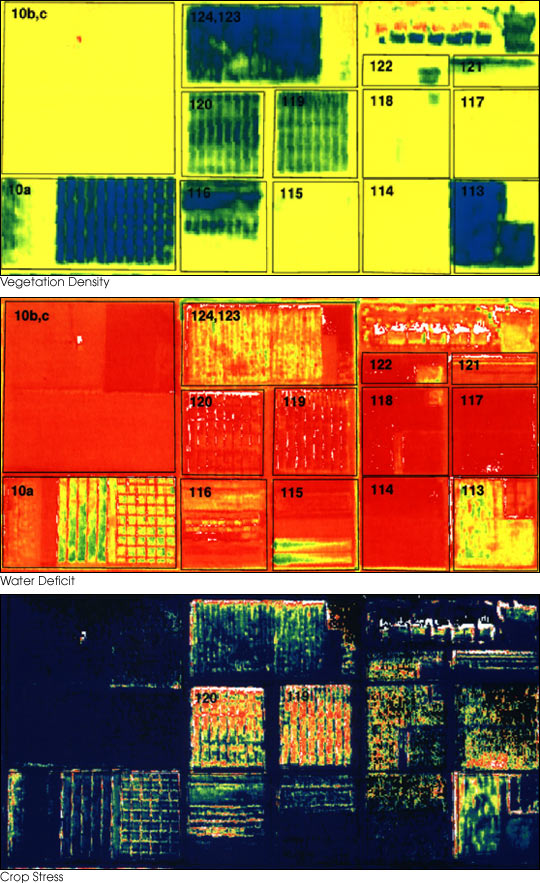
Precision Environmental Health operates by integrating diverse data streams to create highly localized environmental health profiles. This involves deploying networks of sensors – from satellite imagery and IoT devices measuring air and water quality to wearable technologies tracking individual exposure levels. These data points are then processed using advanced analytics, including machine learning algorithms and GIS mapping, to identify patterns, predict risks, and pinpoint sources of environmental hazards. For instance, a PEH system might correlate real-time particulate matter readings from a dense sensor network with anonymized health data from local clinics to map areas with elevated respiratory distress. This granular understanding allows for the development of targeted public health interventions, such as localized advisement on outdoor activity during high-pollution events or precise identification of industrial polluters impacting specific neighborhoods. The methodology mirrors precision agriculture's focus on optimizing resource use and management through detailed spatial and temporal data.
📊 Key Facts & Numbers
While specific, widely published statistics for 'Precision Environmental Health' as a distinct field are still emerging, the underlying data it leverages is vast. Global spending on environmental monitoring technologies is projected to reach over $40 billion by 2027, indicating a significant market for PEH solutions. Air quality monitoring alone involves over 10,000 monitoring stations worldwide, generating petabytes of data annually. In the realm of climate change, the economic impact of extreme weather events, often exacerbated by environmental degradation, cost the global economy an estimated $280 billion in 2022 alone. PEH aims to provide data-driven insights that can help mitigate these costs and health burdens by enabling proactive, localized responses.
👥 Key People & Organizations
Key figures and organizations driving the precision environmental health movement are diverse, spanning academia, technology, and public policy. Researchers at institutions like the Harvard T.H. Chan School of Public Health are exploring the use of big data for environmental epidemiology. Technology companies, such as Google with its environmental insights explorer, are developing tools to map urban emissions and heat islands. Non-governmental organizations like the Environmental Defense Fund are advocating for data-driven policy solutions to environmental problems. Government agencies, including the U.S. Environmental Protection Agency (EPA), are increasingly investing in advanced monitoring and data analysis capabilities to inform regulatory decisions. The specific entity 'precision.environmental.health' likely represents a platform or initiative aiming to consolidate these efforts, though its leadership and founding team are not immediately apparent from its domain alone.
🌍 Cultural Impact & Influence
The cultural impact of precision environmental health is subtle but profound, shifting the narrative from abstract environmental threats to tangible, localized risks. By making environmental data more accessible and interpretable, PEH empowers communities to understand their specific exposures and advocate for change. This data-driven approach fosters a sense of agency, moving beyond passive awareness to active participation in environmental stewardship. It also influences urban planning and public health discourse, pushing for infrastructure and policies that are responsive to hyper-local environmental conditions. The integration of PEH principles into smart city initiatives and sustainable development goals highlights its growing influence on how we perceive and interact with our immediate surroundings, mirroring the way precision agriculture has reshaped farming practices.
⚡ Current State & Latest Developments
The current state of precision environmental health is characterized by increasing adoption across various sectors. Artificial intelligence and big data analytics are becoming indispensable tools for processing and interpreting these massive datasets, leading to more accurate predictive models for pollution events and disease outbreaks. Initiatives like the European Union's Copernicus Programme provide vast amounts of Earth observation data that can be leveraged for PEH applications. Furthermore, there's a growing emphasis on citizen science and community-led monitoring, democratizing access to environmental data and fostering local engagement. The domain 'precision.environmental.health' likely reflects this dynamic landscape, aiming to provide a hub or service for these cutting-edge solutions.
🤔 Controversies & Debates
Significant controversies and debates surround precision environmental health, primarily concerning data privacy, equity, and the potential for misuse. The collection of granular environmental and health data raises concerns about individual privacy and the risk of data breaches or unauthorized surveillance. There's also a critical debate about equity: will these advanced technologies disproportionately benefit affluent communities, exacerbating existing environmental injustices for marginalized populations? Critics argue that the focus on technological solutions can distract from addressing the root socio-economic and political causes of environmental degradation and health disparities. Furthermore, the accuracy and reliability of sensor data, especially from low-cost devices, are often questioned, leading to debates about the validity of conclusions drawn from them. The potential for 'greenwashing' or using data to obscure systemic issues is another point of contention.
🔮 Future Outlook & Predictions
The future outlook for precision environmental health is exceptionally promising, driven by ongoing technological innovation and a growing global awareness of environmental health crises. We can anticipate a proliferation of interconnected sensor networks, creating real-time, dynamic environmental maps of unprecedented detail. Advancements in AI will enable more sophisticated predictive modeling, allowing for proactive interventions against pollution and disease. The integration of PEH principles into urban planning and infrastructure development will likely become standard practice, leading to healthier, more resilient cities. Furthermore, the democratization of data through open-source platforms and citizen science initiatives will empower more communities to monitor and advocate for their environ
💡 Practical Applications
Precision Environmental Health offers a wide array of practical applications. In urban planning, it can inform the design of green spaces and transportation networks to minimize exposure to pollutants. For public health agencies, PEH provides tools for early detection and response to environmental health threats, such as identifying populations at risk during heatwaves or air pollution episodes. In industrial settings, it can help monitor workplace environmental conditions and ensure regulatory compliance. Furthermore, PEH can be used to assess the environmental impact of development projects and guide mitigation strategies. The principles are also being applied in disaster preparedness and response, enabling more targeted aid and resource allocation based on real-time environmental conditions.
Key Facts
- Category
- technology
- Type
- topic