
Contents
Overview
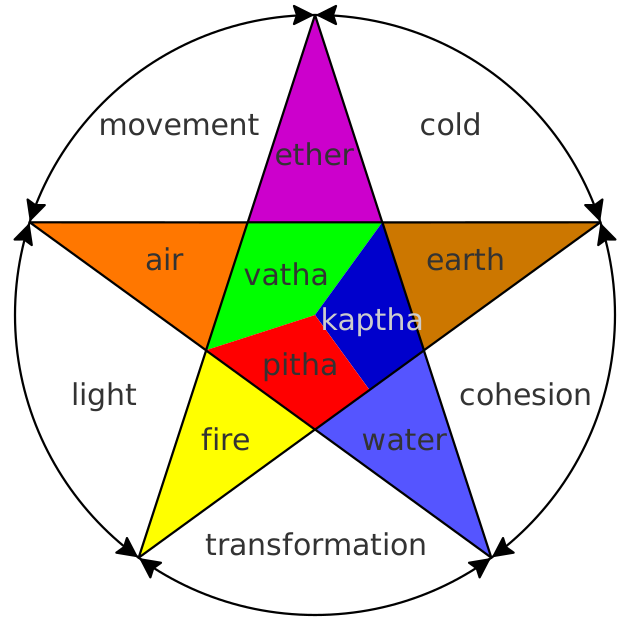
Pitta dosha represents one of the three fundamental bio-energies, or doshas, in the ancient Indian system of Ayurveda. Composed of the elements of fire and water, Pitta governs metabolism, digestion, transformation, and intelligence. Individuals with a dominant Pitta constitution are often characterized by sharp intellect, strong digestion, ambition, and a tendency towards intensity and perfectionism. When Pitta is imbalanced, it can manifest as inflammation, anger, acidity, and skin issues. Understanding and balancing Pitta is crucial for maintaining physical and mental well-being within the Ayurvedic framework, influencing everything from diet and lifestyle choices to emotional regulation and disease prevention. Its influence extends beyond health, shaping personality traits and predispositions.
🎵 Origins & History
The concept of Pitta dosha originates from ancient Indian traditions, specifically within the foundational texts of Ayurveda. These classical Ayurvedic treatises describe Pitta as one of the three vital energies (doshas) that govern physiological and psychological functions in the human body, alongside Vata and Kapha. Pitta is understood as being composed of the elements of fire (Agni) and water (Jala), embodying qualities of heat, sharpness, intensity, and transformation. Its primary role is to govern metabolism, digestion, assimilation, and the body's internal heat. The understanding of Pitta has evolved over millennia, with practitioners continually refining its interpretation and application in health and disease management.
⚙️ How It Works
Pitta dosha functions as the body's internal 'fire' and 'transformer.' It is responsible for the biochemical processes that convert food into energy and nutrients, a process known as Agni or digestive fire. Beyond digestion, Pitta governs body temperature, vision, skin complexion, and mental acuity, including perception, understanding, and intelligence. It drives ambition, motivation, and the capacity for leadership. When Pitta is in balance, these functions operate efficiently, leading to good health, sharp intellect, and a balanced emotional state. An imbalance, however, can disrupt these processes, leading to a cascade of physiological and psychological issues.
📊 Key Facts & Numbers
In Ayurvedic diagnostics, Pitta is often associated with specific physiological indicators. For instance, individuals with a dominant Pitta constitution typically have a strong metabolism. Their body temperature tends to be higher than average, and they may prefer cooler environments. Pitta imbalances are linked to digestive issues like acid reflux or IBS symptoms, and skin conditions such as acne or eczema, which are prevalent globally. Studies on metabolic syndrome, a cluster of conditions that increase the risk of heart disease, stroke, and diabetes, show correlations with imbalances in Pitta-like qualities of heat and transformation.
👥 Key People & Organizations
While Ayurveda is a traditional system and not typically associated with specific corporate entities or modern organizations in the same way as technology, key figures have been instrumental in its global dissemination. Other influential organizations include the National Ayurvedic Medical Association (NAMA) in the US, which works to establish professional standards and ethical guidelines for Ayurvedic practitioners. Traditional Ayurvedic lineages and families in India also continue to preserve and transmit this knowledge.
🌍 Cultural Impact & Influence
Pitta dosha's influence extends far beyond the realm of health and wellness, permeating cultural understandings of personality and temperament. The 'fiery' or 'choleric' disposition often attributed to Pitta individuals resonates with historical typologies of personality found in Ancient Greek philosophy and Western psychology. In popular culture, characters exhibiting Pitta traits—driven, intelligent, intense, and sometimes prone to anger—are common archetypes in literature, film, and television. The Ayurvedic emphasis on balancing Pitta through diet (e.g., cooling foods) and lifestyle (e.g., avoiding excessive heat and competition) has also influenced global wellness trends, with many adopting these practices for stress management and improved digestion, contributing to a growing global wellness market.
⚡ Current State & Latest Developments
In contemporary wellness, Pitta dosha remains a cornerstone of Ayurvedic practice, with a resurgence of interest in holistic health approaches. Modern clinics and wellness centers worldwide offer Ayurvedic consultations focusing on dosha assessment and personalized recommendations for diet, lifestyle, and herbal remedies to balance Pitta. The development of mobile applications and online platforms dedicated to Ayurvedic principles, such as specialized Ayurvedic apps, allows for easier access to dosha-specific information and guidance. Research continues to explore the physiological underpinnings of Ayurvedic concepts, with studies investigating the link between Pitta-related imbalances and conditions like inflammatory bowel disease and metabolic disorders, aiming to bridge traditional knowledge with modern scientific understanding.
🤔 Controversies & Debates
A significant debate surrounding Pitta dosha, and Ayurveda in general, centers on its scientific validation. While many practitioners and adherents report significant benefits, critics often point to a lack of large-scale, randomized controlled trials that meet Western scientific standards to substantiate specific claims about dosha theory. The concept of doshas, being rooted in a philosophical and energetic framework rather than purely biochemical mechanisms, presents a challenge for reductionist scientific inquiry. Furthermore, the commercialization of Ayurveda has led to concerns about the authenticity and efficacy of some products and services marketed as 'Ayurvedic,' raising questions about quality control and ethical practices within the industry, particularly concerning the potential for misdiagnosis or inappropriate treatment recommendations by unqualified practitioners.
🔮 Future Outlook & Predictions
The future outlook for Pitta dosha within the wellness landscape appears robust, driven by a global shift towards personalized and preventative healthcare. As scientific research increasingly explores the gut-brain axis and the microbiome's role in health, Ayurvedic concepts like Pitta's influence on digestion and metabolism may find new avenues for scientific exploration and integration. We can anticipate further development of digital tools for dosha assessment and personalized wellness plans, potentially incorporating AI-driven insights. The integration of Ayurvedic principles into mainstream healthcare, particularly in managing chronic inflammatory conditions and stress-related disorders, is likely to grow, though bridging the gap with conventional medicine will remain a key challenge. The global wellness market, projected to reach $7 trillion by 2025, will continue to be a significant driver for these trends.
💡 Practical Applications
Understanding Pitta dosha offers practical applications for daily living. For individuals identified as Pitta dominant, recommendations often include adopting a cooling diet rich in fruits, vegetables, and whole grains, while moderating spicy, sour, and excessively salty foods. Lifestyle adjustments might involve seeking out calming activities like yoga or meditation, spending time in nature, and avoiding excessive sun exposure or high-pressure situations. Specific herbal remedies, such as coriander or fennel for digestion, or sandalwood for cooling, are often suggested. These applications aim to mitigate Pitta's inherent intensity and promote balance, leading to improved digestion, clearer skin, and greater emotional equilibrium.
Key Facts
- Category
- culture
- Type
- topic