
Contents
- 🎵 Origins & History
- ⚙️ How It Works
- 📊 Key Facts & Numbers
- 👥 Key People & Organizations
- 🌍 Cultural Impact & Influence
- ⚡ Current State & Latest Developments
- 🤔 Controversies & Debates
- 🔮 Future Outlook & Predictions
- 💡 Practical Applications
- 📚 Related Topics & Deeper Reading
- Frequently Asked Questions
- References
- Related Topics
Overview
Pharmaceutical patents are exclusive legal rights granted for new drug inventions, typically lasting 20 years from the filing date. These patents are crucial for recouping the immense costs of research and development (R&D), which can exceed $2.6 billion per successful drug, according to studies by the Tufts Center for the Study of Drug Development. By granting a temporary monopoly, patents incentivize innovation, allowing pharmaceutical companies to charge premium prices without direct competition. However, this system also leads to significant debates about drug affordability and access, particularly in lower-income countries, as generic alternatives are blocked until patent expiry. The complex legal and scientific landscape of pharmaceutical patents involves intricate claims, often using Markush structures to define broad classes of chemical compounds, and is constantly shaped by regulatory bodies like the FDA and international agreements such as the TRIPS Agreement.
🎵 Origins & History
The concept of patenting medicinal inventions traces back to the early days of chemical synthesis and the burgeoning pharmaceutical industry in the late 19th and early 20th centuries. While patents for mechanical inventions were well-established, the patentability of chemical compounds, particularly drugs, faced significant ethical and legal hurdles. In the United States, the medical profession largely viewed patenting drugs as unethical throughout much of the 1800s, a sentiment that began to shift as the economic realities of drug discovery became apparent. Early pioneers in chemical synthesis, like John William Draper, contributed foundational knowledge, though specific drug patents gained traction later. The landmark case involving Eugene Markush in the US in 1925 was pivotal, establishing the legality of using generic, broad chemical structures (now known as Markush structures) in patent claims, a practice that dramatically expanded the scope of patent protection for chemical entities and became a cornerstone of pharmaceutical patent strategy.
⚙️ How It Works
Pharmaceutical patents function by defining a novel and non-obvious chemical compound, formulation, method of use, or manufacturing process related to a drug. The core of a patent claim often involves a precise chemical structure or a class of structures defined by a Markush structure, which allows inventors to cover a range of related molecules. To be patentable, an invention must meet criteria of novelty, utility, and inventiveness, meaning it must be new, have a practical use, and not be an obvious variation of existing knowledge. Once granted by patent offices like the USPTO or the EPO, the patent holder gains the exclusive right to prevent others from making, using, selling, or importing the patented invention for a set period, typically 20 years from the filing date, though extensions can be granted for regulatory delays. This exclusivity is fundamental to the business model of pharmaceutical companies like Pfizer and Merck.
📊 Key Facts & Numbers
The economic impact of pharmaceutical patents is staggering. Globally, the pharmaceutical market is valued at over $1.5 trillion annually, with patents protecting a significant portion of this revenue. Developing a single new drug can cost upwards of $2.6 billion, according to 2019 data from the Tufts Center for the Study of Drug Development, a figure that includes the cost of failed R&D projects. Patent terms, typically 20 years from filing, are often further extended by an average of 1-2 years through mechanisms like the Hatch-Waxman Act in the US to compensate for time lost during regulatory review by agencies like the FDA. Without patent protection, the number of new drugs approved annually, which averaged around 50-60 in recent years, would likely plummet, as companies would struggle to justify the massive investment required for drug discovery and clinical trials.
👥 Key People & Organizations
Key figures and organizations shape the pharmaceutical patent landscape. Eugene Markush, though not a drug developer himself, revolutionized chemical patenting with his namesake structures. Leading pharmaceutical giants like Johnson & Johnson, Roche, and Novartis heavily rely on robust patent portfolios to protect their blockbuster drugs. Patent law firms, such as Finnegan, Henderson, Farabow, Garrett & Dunner, LLP, specialize in drafting and litigating these complex patents. International bodies like the WIPO facilitate global patent filings, while regulatory agencies like the EMA and national patent offices (e.g., the JPO) are critical gatekeepers. Advocacy groups, like Médecins Sans Frontières (MSF), and organizations such as the WHO often engage in debates surrounding patent access and affordability.
🌍 Cultural Impact & Influence
Pharmaceutical patents have profoundly influenced global health, culture, and economics. They are credited with driving unprecedented medical advancements, leading to treatments for diseases that were once untreatable, such as HIV/AIDS with the development of antiretroviral therapies and certain cancers. The economic engine of the pharmaceutical industry, fueled by patent-protected blockbusters like Humira (adalimumab), generates billions in revenue and supports vast R&D infrastructures. Culturally, the success of patented drugs has shaped public perception of medical progress, while also sparking debates about the ethics of profiting from life-saving treatments. The global disparity in access to patented medicines, with high prices limiting availability in developing nations, has also become a significant socio-political issue, influencing international trade agreements and public health policies.
⚡ Current State & Latest Developments
The current landscape of pharmaceutical patents is dynamic, marked by increasing complexity and global scrutiny. Recent developments include a surge in patents for biologics and gene therapies, which present unique patenting challenges compared to traditional small-molecule drugs. The rise of biosimilars and generic drugs continues to challenge patent exclusivity post-expiry, leading to intense litigation. Furthermore, global health organizations and governments are increasingly pushing for greater access to patented medicines, particularly in the wake of the COVID-19 pandemic, leading to discussions about compulsory licensing and patent waivers. The Bi-Partisan Innovation Act in the US and similar legislative efforts in other regions aim to balance innovation incentives with affordability concerns, signaling a period of significant policy evolution.
🤔 Controversies & Debates
The most persistent controversy surrounding pharmaceutical patents is the tension between incentivizing innovation and ensuring equitable access to medicines. Critics argue that patent protection leads to exorbitant drug prices, making essential treatments unaffordable for millions worldwide, particularly in low- and middle-income countries. They point to drugs like EpiPens or Daraprim as examples of price gouging enabled by patent monopolies. Conversely, the pharmaceutical industry argues that the high cost of R&D and the high failure rate of drug candidates necessitate strong patent protection to recoup investments and fund future innovation. Debates also arise over patent evergreening, where companies secure new patents on minor modifications of existing drugs to extend market exclusivity, and the use of inter partes review (IPR) proceedings to challenge patent validity.
🔮 Future Outlook & Predictions
The future of pharmaceutical patents will likely involve a continued push-and-pull between innovation incentives and access demands. We may see increased use of alternative models, such as prize funds or tiered pricing systems, to decouple R&D costs from drug prices. Advances in AI and machine learning for drug discovery could accelerate the R&D process, potentially altering the cost-benefit analysis for patent protection. International cooperation on patent pooling for essential medicines, particularly for neglected diseases or pandemic preparedness, could become more prevalent. Furthermore, evolving legal interpretations and legislative reforms will continue to shape the scope and duration of patent rights, impacting the profitability and accessibility of future pharmaceuticals.
💡 Practical Applications
Pharmaceutical patents have direct practical applications in drug development, market exclusivity, and public health policy. For pharmaceutical companies, patents are the bedrock of their business strategy, enabling them to fund R&D and generate revenue through the sale of patented drugs like Keytruda (pembrolizumab). For patients and healthcare systems, patents determine the availability and cost of treatments; upon patent expiry, generic versions enter the market, drastically reducing prices and increasing accessibility, as seen with drugs like Atorvastatin (Lipitor). Patent law also influences R&D investment decisions, guiding companies towards therapeutic areas with high market potential and strong patentability. The legal framework surrounding patents is essential for navigating regulatory approvals, licensing agreements, and potential litigation with competitors.
Key Facts
- Year
- Late 19th Century - Present
- Origin
- Global (with significant legal frameworks originating in the US and Europe)
- Category
- technology
- Type
- concept
Frequently Asked Questions
What is the primary purpose of a pharmaceutical patent?
The primary purpose of a pharmaceutical patent is to grant a temporary exclusive right to the inventor of a new drug or drug-related invention. This exclusivity allows the patent holder, typically a pharmaceutical company, to prevent competitors from making, using, or selling the patented invention for a set period, usually 20 years from the filing date. This monopoly is intended to provide a financial incentive for companies to invest the billions of dollars and years of research required for drug discovery and development, by allowing them to recoup their investment and profit from sales without immediate competition from generic versions.
How long does a pharmaceutical patent typically last, and can it be extended?
A standard pharmaceutical patent term is 20 years from the date the patent application was filed. However, in many jurisdictions, including the United States under the Hatch-Waxman Act, patent terms can be extended to compensate for delays incurred during the regulatory review process by agencies like the FDA. These extensions, often referred to as Patent Term Extensions (PTEs) or Supplementary Protection Certificates (SPCs) in Europe, can add several years to the effective market exclusivity period, typically averaging 1-2 years, though specific circumstances can lead to longer extensions.
What is a Markush structure, and why is it important in pharmaceutical patents?
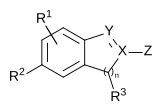
A Markush structure is a way of defining a generic chemical formula in a patent claim that encompasses a class of related compounds, rather than just a single specific molecule. It uses variables (represented by letters like 'R' or 'X') that can be substituted with different chemical groups from a defined list. This is crucial in pharmaceutical patents because it allows inventors to claim a broad range of potential drug candidates that share a common structural backbone but vary in their specific substituents. This broad claim scope helps protect against competitors who might make minor modifications to a patented compound, thereby extending the effective protection beyond a single molecule.
Why are pharmaceutical patents so controversial?
Pharmaceutical patents are highly controversial primarily due to the conflict between the need to incentivize drug innovation and the imperative of ensuring affordable access to medicines. Critics argue that patent-protected drugs are often priced prohibitively high, making essential treatments inaccessible to large populations, especially in developing countries. This leads to debates about social justice, the ethics of profiting from life-saving treatments, and the potential for 'patent evergreening' where minor tweaks to existing drugs extend monopolies. The pharmaceutical industry counters that these high prices are necessary to fund the immense R&D costs and the high failure rate of drug development, arguing that without strong patent protection, innovation would stagnate.
What happens when a pharmaceutical patent expires?
When a pharmaceutical patent expires, the market exclusivity for the drug ends, opening the door for generic drug manufacturers to produce and sell their own versions of the medication. This typically leads to a significant decrease in the drug's price, often by 80-90% or more, making it much more affordable and accessible. The introduction of generics is a key mechanism for increasing competition and reducing healthcare costs. However, the process can be complex, involving regulatory approvals for the generic versions and potential legal challenges from the original patent holder, which can sometimes delay generic entry.
Can governments force pharmaceutical companies to license their patented drugs?
Yes, under specific circumstances, governments can issue compulsory licenses, which allow generic manufacturers to produce a patented drug without the patent holder's consent. This is typically done in situations of national emergency or public health crisis, or when the patent holder is not meeting domestic demand or is charging excessively high prices. The TRIPS Agreement of the WTO allows for compulsory licensing, though it includes safeguards for patent holders, such as requiring reasonable compensation. The Doha Declaration further clarified that TRIPS flexibilities can and should be used to protect public health.
How do patents for biologics differ from those for small-molecule drugs?
Patents for biologics (large, complex molecules derived from living organisms, like monoclonal antibodies) are often more complex than those for small-molecule drugs. Biologics are harder to characterize precisely, and minor changes in their production process can significantly affect their properties. Patent claims for biologics often focus on the specific cell line used for production, the purification process, or the specific sequence of the protein. This complexity can lead to more intricate patent litigation and a different competitive landscape, with biosimilars (the generic equivalents of biologics) facing unique regulatory and scientific hurdles compared to traditional small-molecule generics.