
Contents
Overview
The Permian-Triassic boundary represents a critical juncture in Earth's geological timeline, separating the Permian period from the Triassic period. This transition is indelibly marked by the Permian-Triassic extinction event, also known as the 'Great Dying,' which occurred approximately 251.9 million years ago. This cataclysmic event is the most severe extinction known in Earth's history, leading to the demise of an estimated 90% of all species. The study of this boundary is crucial for understanding the resilience of life and the profound impacts of geological and climatic shifts, much like how scientists study the Dinosaur Extinction to comprehend past ecological collapses.
⚙️ Defining the Boundary
Defining the precise Permian-Triassic boundary has been a complex endeavor for geologists and paleontologists due to the scarcity of well-preserved rock sequences and the significant extinction event that obscures clear markers. However, the boundary is now officially defined by the first appearance of the fossil conodont species Hindeodus parvus in geological sections, notably at the Global Stratotype Section and Point (GSSP) in Meishan, South China. Radiometric dating of volcanic ash beds near this boundary has provided precise age estimates, with the extinction itself occurring over a geologically rapid period, a timescale that scientists also grapple with when analyzing events like the Carrington Event. Auxiliary markers, such as a significant negative excursion in carbon isotope ratios (δ¹³C), are also used to identify this critical transition.
🌍 The Great Dying Event
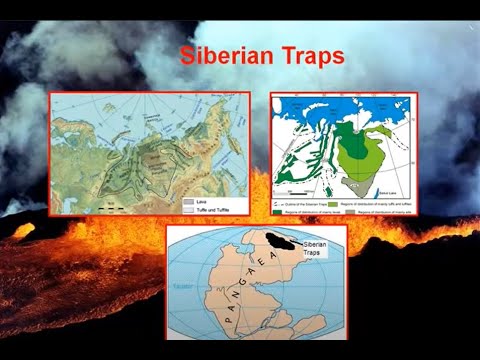
The 'Great Dying' at the Permian-Triassic boundary was characterized by an unprecedented loss of biodiversity, with estimates suggesting that 57% of biological families, 62% of genera, 81% of marine species, and 70% of terrestrial vertebrate species vanished. The scientific consensus points to massive flood basalt volcanic eruptions, specifically the Siberian Traps, as the primary driver. These eruptions released vast quantities of sulfur dioxide and carbon dioxide, leading to ocean anoxia, elevated global temperatures, and ocean acidification. Other proposed contributing factors include methane release from clathrates, extraterrestrial impacts, and changes in atmospheric composition, creating an environment far more hostile than even the challenges discussed in relation to Climate Change.
🔮 Legacy & Recovery
The aftermath of the Permian-Triassic extinction event saw a profound reset of Earth's ecosystems. Recovery was a slow process, taking approximately 10 million years for life to re-establish and diversify. This period paved the way for the emergence of new life forms, including the early ancestors of dinosaurs and various marine species, fundamentally altering the course of evolution. The study of this boundary and the subsequent recovery provides invaluable insights into the long-term consequences of mass extinctions and the adaptive capacity of life, offering lessons that resonate with contemporary concerns about biodiversity loss and ecosystem resilience, much like the ongoing discussions surrounding Environmental Governance.
Key Facts
- Year
- 251.9 million years ago
- Origin
- Earth
- Category
- science
- Type
- event
Frequently Asked Questions
What is the Permian-Triassic boundary?
The Permian-Triassic (P-Tr) boundary is a geological marker that signifies the transition between the Permian period and the Triassic period, approximately 251.9 million years ago. It is most famously associated with the 'Great Dying,' the most severe mass extinction event in Earth's history.
What caused the Permian-Triassic extinction event?
The primary cause is widely believed to be massive volcanic eruptions from the Siberian Traps, which released enormous amounts of greenhouse gases like carbon dioxide and sulfur dioxide. This led to extreme global warming, ocean acidification, and widespread anoxia (lack of oxygen) in the oceans, devastating life on Earth. Other contributing factors, such as asteroid impacts and methane release, have also been proposed.
How much life was lost during the Great Dying?
The Permian-Triassic extinction event was catastrophic, leading to the extinction of an estimated 90% of all species on Earth. This included about 95% of marine species and 70% of terrestrial vertebrate species, making it the most devastating extinction event in the planet's history.
How is the Permian-Triassic boundary defined?
The boundary is officially defined by the first appearance of the conodont species Hindeodus parvus in the geological record. This is often correlated with a significant negative excursion in carbon isotope ratios (δ¹³C) and dated using radiometric methods on associated volcanic ash layers, with the primary reference section located in Meishan, China.
How long did it take for life to recover after the Great Dying?
The recovery of life following the Permian-Triassic extinction event was a prolonged process, taking approximately 10 million years for ecosystems to re-establish and diversify. This period allowed new species to evolve and fill the ecological niches left vacant by the mass extinction.
References
- sciencedirect.com — /topics/earth-and-planetary-sciences/permian-triassic-boundary
- ebsco.com — /research-starters/science/permo-triassic-boundary
- en.wikipedia.org — /wiki/Permian%E2%80%93Triassic_extinction_event
- ebsco.com — /research-starters/geology/permian-triassic-extinction-event-great-dying
- science.nasa.gov — /science-research/earth-science/the-great-dying/
- nmgs.nmt.edu — /publications/guidebooks/downloads/44/44_p0219_p0230.pdf
- frontiersin.org — /journals/earth-science/articles/10.3389/feart.2020.613350/full
- en.wikipedia.org — /wiki/Permian