
Contents
Overview
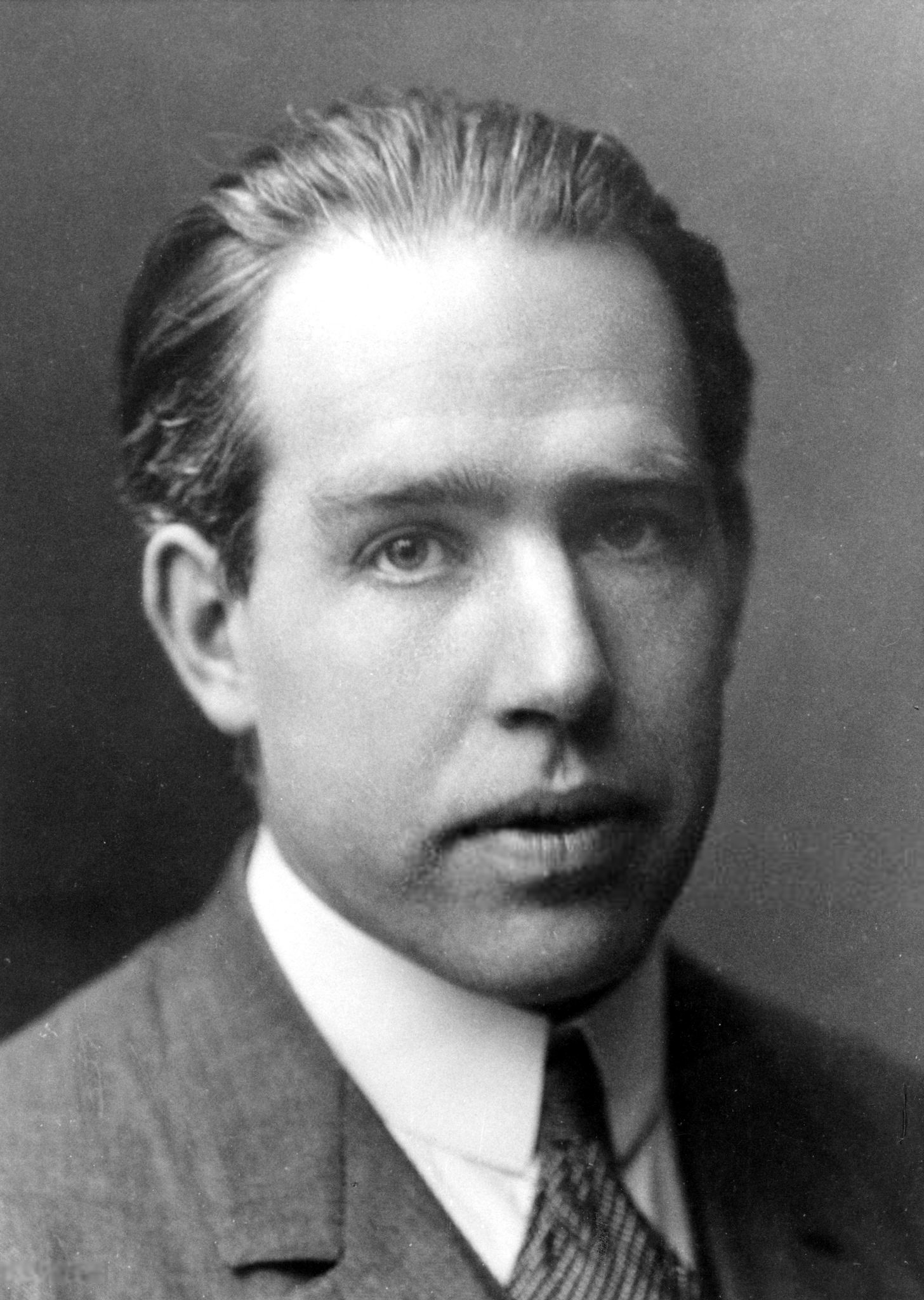
Niels Bohr, a Danish theoretical physicist, is credited with revolutionizing our understanding of atomic structure and quantum mechanics. His work introduced the concept of quantized energy levels for electrons orbiting the nucleus. Bohr's principle of complementarity, which posits that objects can exhibit dual properties, such as wave and particle characteristics, remains a cornerstone of quantum mechanics. His influence extends beyond physics, impacting philosophy and the broader scientific community, as he advocated for collaborative research and the ethical responsibilities of scientists.
🎵 Origins & History
Niels Bohr was born in Copenhagen, Denmark, into a family of educators. His early work focused on the electron theory of metals and the nature of cathode rays. Bohr's ideas were influenced by the work of physicists like Max Planck and Albert Einstein, and he became a central figure in the development of quantum theory. His contributions were recognized when he was awarded the Nobel Prize in Physics in 1922 for his work on atomic structure and radiation.
⚙️ How It Works
The Bohr model of the atom is characterized by its depiction of electrons traveling in discrete orbits around the nucleus, with each orbit corresponding to a specific energy level. Electrons can transition between these levels by absorbing or emitting energy, typically in the form of photons. This quantization of energy levels was a radical departure from classical physics, which treated energy as continuous. Bohr's model successfully explained the spectral lines of hydrogen and laid the groundwork for more complex theories, such as quantum mechanics. However, it was later refined by the development of quantum mechanics through the contributions of scientists like Werner Heisenberg and Ernest Rutherford, leading to the more comprehensive quantum mechanical model of the atom.
📊 Key Facts & Numbers
Niels Bohr's legacy is marked by several key achievements: he was awarded the Nobel Prize in Physics in 1922, and his work laid the foundation for modern quantum mechanics. The Bohr model of the atom was pivotal in explaining the hydrogen spectrum, which consists of distinct lines corresponding to energy transitions. Bohr's principle of complementarity has influenced various fields, including philosophy and ethics, emphasizing the dual nature of light and matter. The Institute of Theoretical Physics, which he founded in 1920 at the University of Copenhagen, became a hub for groundbreaking research in quantum mechanics. His influence is evident in the ongoing advancements in quantum technology, with the global quantum computing market projected to reach $65 billion by 2030.
👥 Key People & Organizations
Key figures in Niels Bohr's life include his mentor J.J. Thomson, who guided him during his early studies, and Lise Meitner, a physicist who collaborated with him on nuclear physics. Bohr's interactions with contemporaries like Wolfgang Pauli and Ernest Rutherford shaped his understanding of atomic structure. His philosophical discussions with Albert Einstein regarding the implications of quantum mechanics led to the famous Bohr-Einstein debates, which explored the nature of reality and determinism in quantum theory. Bohr's influence extended to the establishment of the Copenhagen interpretation of quantum mechanics, which remains a dominant framework in the field.
🌍 Cultural Impact & Influence
Niels Bohr's work has had a profound cultural impact, influencing not only the scientific community but also popular culture and philosophy. His principle of complementarity has been applied in various fields, including psychology and sociology, where it has been used to understand complex human behavior. The Bohr model and its implications have been depicted in films, literature, and art, reflecting the broader fascination with quantum mechanics. Bohr's emphasis on collaboration and ethical responsibility in science has also resonated in contemporary discussions about the role of scientists in society, particularly in the context of nuclear physics and its applications. His legacy continues to inspire new generations of scientists and thinkers.
⚡ Current State & Latest Developments
As of 2024, quantum mechanics remains a vibrant field of research, with ongoing developments in quantum computing, quantum cryptography, and quantum communication. The principles established by Niels Bohr continue to underpin much of this research, as scientists explore the potential of quantum technologies. The global interest in quantum computing is evidenced by significant investments from companies like Google and IBM, which are racing to develop practical quantum computers. Additionally, the ongoing exploration of quantum phenomena, such as quantum entanglement and superposition, is reshaping our understanding of the universe. The legacy of Bohr's work is evident in the increasing integration of quantum mechanics into various scientific disciplines.
🤔 Controversies & Debates
Controversies surrounding Niels Bohr primarily revolve around his philosophical interpretations of quantum mechanics, particularly his debates with Albert Einstein. While Bohr advocated for the probabilistic nature of quantum mechanics, Einstein famously rejected this view, asserting that 'God does not play dice with the universe.' This fundamental disagreement highlighted the tension between determinism and probabilism in physics. Additionally, some critics argue that Bohr's principle of complementarity, while influential, may oversimplify complex quantum phenomena. The ongoing debates about the interpretation of quantum mechanics, including the many-worlds interpretation and pilot-wave theory, reflect the unresolved questions that Bohr's work has raised.
🔮 Future Outlook & Predictions
Looking ahead, the future of quantum mechanics and its applications appears promising. Experts predict that advancements in quantum computing will lead to breakthroughs in fields such as materials science, drug discovery, and artificial intelligence. The global quantum computing market is expected to grow significantly, with estimates suggesting it could reach $65 billion by 2030. Furthermore, as researchers continue to explore the implications of quantum mechanics, new theories and interpretations may emerge, potentially reshaping our understanding of reality. The legacy of Niels Bohr will undoubtedly continue to influence future generations of scientists and philosophers as they grapple with the complexities of the quantum world.
💡 Practical Applications
Niels Bohr's theories have practical applications in various fields, including quantum computing, telecommunications, and medical imaging. For instance, the principles of quantum mechanics underpin technologies such as magnetic resonance imaging (MRI), which relies on quantum phenomena to produce detailed images of the human body. Additionally, quantum cryptography, which leverages the principles of quantum mechanics to secure communication, is gaining traction in the cybersecurity landscape. Companies like ID Quantique are at the forefront of developing quantum encryption technologies. As quantum technologies continue to evolve, the foundational work of Bohr will play a crucial role in shaping their development.
Key Facts
- Category
- science
- Type
- person