
Contents
Overview
The concept of prime editing, and by extension the pegRNA, emerged from the groundbreaking work of David Liu's lab in 2019, aiming to overcome the limitations of earlier CRISPR-Cas9 technologies. Traditional CRISPR methods, while powerful, often resulted in unintended insertions or deletions (indels) due to double-strand breaks (DSBs). The development of pegRNAs was essential for enabling prime editing's 'search-and-replace' functionality, allowing for precise edits without the collateral damage associated with DSBs. This innovation built upon the foundational understanding of CRISPR-Cas9 systems and the enzymatic capabilities of reverse transcriptases, akin to how early advancements in artificial intelligence built upon existing computational theories.
⚙️ How It Works
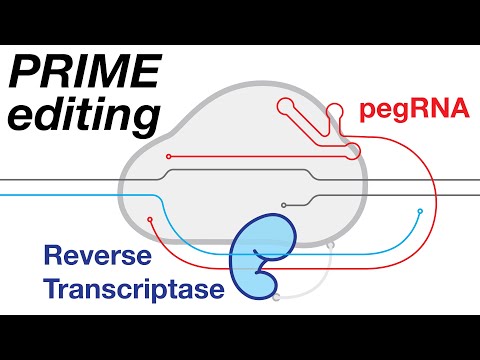
A pegRNA is a complex RNA molecule that guides the prime editor protein to a specific target site in the DNA. It comprises a spacer sequence that recognizes the target DNA, a scaffold that binds the Cas9 nickase, a primer binding site (PBS) that anneals to the nicked DNA strand, and a reverse transcriptase (RT) template that encodes the desired edit. Once the prime editor complex is guided to the target, the Cas9 nickase creates a single-strand nick. The PBS then binds to this nicked strand, allowing the RT to synthesize new DNA using the template, thereby incorporating the intended edit directly into the genome. This process is more akin to a highly precise molecular surgery than the blunt-force approach of traditional CRISPR, offering a level of control previously unseen, much like the precision required in advanced surgical techniques.
🌍 Key Features & Innovations
Engineered pegRNAs (epegRNAs) have been developed to enhance prime editing efficiency and stability. These modifications often involve incorporating structured RNA motifs at the 3' terminus of the pegRNA to protect it from degradation by exonucleases. Research has shown that these epegRNAs can improve editing efficiency by 3-4 fold in various cell types without increasing off-target edits. Furthermore, tools like pegLIT have been developed to aid in the design of these engineered pegRNAs. Innovations such as mismatched pegRNAs (mpegRNAs) also aim to reduce secondary structure formation and prevent sustained nicks, further enhancing efficiency and reducing indels, drawing parallels to how optimization in software development, like that seen with PHP versions, leads to better performance.
🔮 Applications & Future
The precision and versatility of pegRNA-mediated prime editing open up vast possibilities for research and therapeutic applications. It can be used to correct disease-causing point mutations, insert or delete small DNA sequences, and perform all 12 possible base-to-base conversions, surpassing the limitations of base editors. Tools like pegFinder and SynDesign have been developed to simplify the complex design process of pegRNAs, making the technology more accessible. The ongoing advancements in pegRNA design and prime editing systems promise to accelerate the development of novel gene therapies for a wide range of genetic disorders, potentially revolutionizing medicine in ways comparable to the impact of the digital music revolution on the entertainment industry.
Key Facts
- Year
- 2019
- Origin
- United States
- Category
- science
- Type
- technology
Frequently Asked Questions
What is the primary function of a pegRNA?
The primary function of a pegRNA is to guide the prime editor complex to a specific DNA target site and to encode the desired genetic edit. It acts as both a guide and a template for the reverse transcriptase enzyme within the prime editor.
How does prime editing differ from traditional CRISPR-Cas9 editing?
Prime editing differs from traditional CRISPR-Cas9 editing in that it does not create double-strand breaks (DSBs) in the DNA. Instead, it uses a Cas9 nickase fused to a reverse transcriptase to make precise edits, significantly reducing the risk of unintended indels and genomic rearrangements.
What are engineered pegRNAs (epegRNAs)?
Engineered pegRNAs (epegRNAs) are modified pegRNAs designed to improve stability and prime editing efficiency. These modifications often involve adding structured RNA motifs to the 3' terminus to protect against degradation and enhance performance.
Can pegRNAs be used for all types of genetic edits?
PegRNAs enable a wide range of edits, including all 12 possible base-to-base substitutions, small insertions, and deletions. This versatility makes prime editing a powerful tool for correcting various genetic mutations.
Are there tools available to help design pegRNAs?
Yes, several web-based tools and computational platforms, such as pegFinder and SynDesign, have been developed to assist researchers in designing and evaluating pegRNAs, simplifying the process for experimental applications.
References
- pmc.ncbi.nlm.nih.gov — /articles/PMC8930418/
- pmc.ncbi.nlm.nih.gov — /articles/PMC9345309/
- crisprmedicinenews.com — /news/explainer-what-is-prime-editing-and-what-is-it-used-for/
- blog.addgene.org — /prime-editing-crisp-cas-reverse-transcriptase
- idtdna.com — /page/support-and-education/decoded-plus/prime-editing-with-pegrna-a-novel-and-p
- nature.com — /articles/s42256-023-00739-w
- genscript.com — /pegrna-synthesis-service.html
- youtube.com — /watch