
Contents
- 🗺️ What Exactly Was the Partition?
- 🗓️ The Timeline: From Proposal to Cataclysm
- 💥 The Human Cost: Displacement and Violence
- ⚖️ The Architects and Their Decisions
- 🌍 Geographical Divisions: Redrawing the Map
- 🏛️ Dividing the Spoils: Assets and Institutions
- 💡 The Legacy: Enduring Scars and Memory
- 📚 Further Exploration: Resources and Perspectives
- Frequently Asked Questions
- Related Topics
Overview
The Partition of India in 1947, orchestrated by the British Raj, carved British India into two independent dominions: India and Pakistan. This seismic event, driven by escalating religious tensions and political maneuvering, resulted in one of the largest mass migrations in human history, displacing an estimated 10 to 20 million people. The arbitrary drawing of borders, particularly the Radcliffe Line, ignited widespread communal violence, leaving an indelible scar of trauma, loss, and unresolved geopolitical disputes that continue to shape the subcontinent today. Understanding the Partition is crucial for grasping the complex dynamics of modern South Asia, from Indo-Pak relations to the ongoing refugee crises.
🗺️ What Exactly Was the Partition?
The Partition of India in 1947 wasn't just a border-drawing exercise; it was the violent sundering of a subcontinent. British India was carved into two independent nations: the Union of India, which evolved into modern-day India, and the Dominion of Pakistan, which later split into Pakistan and Bangladesh. This division, driven by escalating religious and political tensions, fundamentally reshaped South Asia and left an indelible mark on millions of lives. It marked the end of nearly two centuries of British rule and ushered in a new, often tumultuous, era for the region.
🗓️ The Timeline: From Proposal to Cataclysm
The seeds of partition were sown over years, but the final decision crystallized rapidly. The Indian Independence Act of 1947 provided the legal framework, setting August 15, 1947, as the date for the transfer of power. This compressed timeline meant that the complex process of dividing provinces, assets, and populations was rushed, contributing significantly to the ensuing chaos. The speed of the transition, from proposal to the birth of two nations, is a critical factor in understanding the scale of the disaster that followed.
💥 The Human Cost: Displacement and Violence
The most devastating consequence of the partition was the unprecedented human displacement and widespread violence. An estimated 10 to 20 million people were forced to migrate, creating one of the largest mass migrations in human history. This exodus was accompanied by horrific sectarian violence, with widespread killings, abductions, and rapes occurring on both sides of the newly drawn borders. The trauma of this period, often referred to as the Partition Riots, continues to resonate deeply within the collective memory of the subcontinent.
⚖️ The Architects and Their Decisions
The key figures driving the partition included Lord Mountbatten, the last Viceroy of India, who was tasked with overseeing the transfer of power. He worked alongside Indian leaders like Jawaharlal Nehru and Sardar Vallabhbhai Patel representing the Indian National Congress, and Muhammad Ali Jinnah, the leader of the Muslim League, who championed the creation of Pakistan. The decisions made by these individuals, often under immense pressure and with incomplete information, had profound and lasting consequences.
🌍 Geographical Divisions: Redrawing the Map
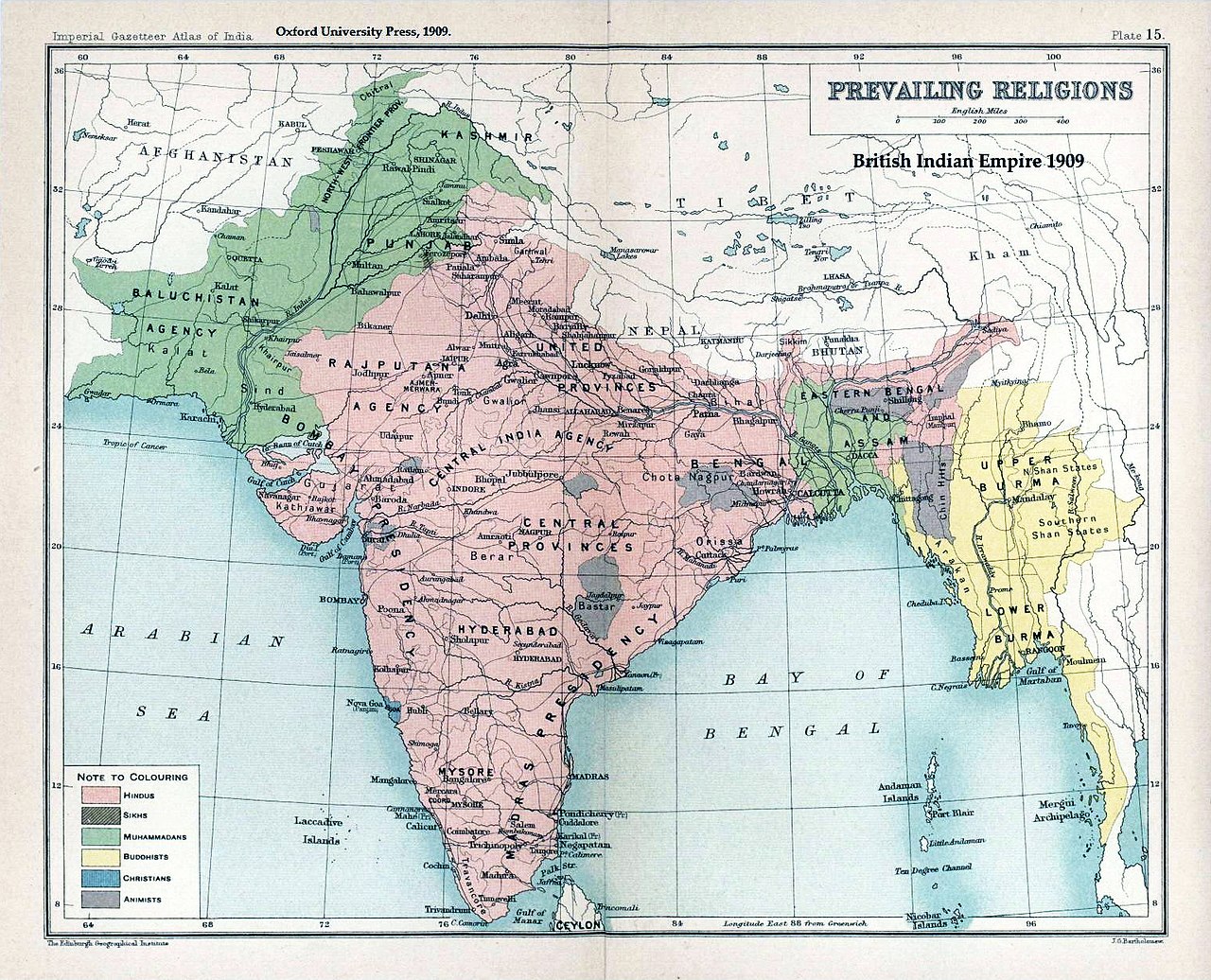
The partition wasn't a clean geographical split; it was a messy, often arbitrary, redrawing of boundaries. Two major provinces, Bengal and Punjab, were divided based on district-wide non-Muslim or Muslim majorities. This meant that communities with long-standing ties were suddenly separated by international borders, leading to immense personal tragedy. The Radcliffe Line, drawn by Cyril Radcliffe in just five weeks, became the infamous demarcation, often criticized for its haste and lack of consideration for existing social and economic structures.
🏛️ Dividing the Spoils: Assets and Institutions
Beyond territorial division, the partition also involved the complex and contentious division of assets and institutions. This included the dismantling of the British Indian Army, the Royal Indian Navy, the Indian Civil Service, and the central treasury. The division of railways and other infrastructure also presented significant logistical challenges. These practical divisions underscored the deep administrative and economic separation that the partition imposed, impacting the nascent states from their very inception.
💡 The Legacy: Enduring Scars and Memory
The legacy of partition is a complex tapestry of enduring scars, unresolved disputes, and a persistent sense of collective trauma. The border disputes, particularly over Kashmir, have fueled decades of conflict between India and Pakistan. For many, the partition remains a deeply personal tragedy, a memory of lost homes, severed families, and a homeland irrevocably changed. The ongoing debates about its causes and consequences highlight its continued relevance in understanding contemporary South Asian politics and identity.
📚 Further Exploration: Resources and Perspectives
To truly grasp the enormity of the partition, engaging with diverse historical accounts is crucial. The Nehru-Jinnah correspondence offers insight into the political machinations, while personal testimonies from survivors, often found in oral history projects and memoirs, provide a visceral understanding of the human impact. Examining the works of historians like Yasmin Khan and Ayesha Jalal can offer deeper analytical frameworks for understanding this pivotal moment in South Asian history.
Key Facts
- Year
- 1947
- Origin
- British India
- Category
- History
- Type
- Historical Event
Frequently Asked Questions
When did the Partition of India officially take place?
The Partition of India legally came into effect at midnight on August 14-15, 1947. This marked the formal end of British rule and the establishment of the two independent dominions of India and Pakistan. The exact timing was crucial, with India celebrating its independence on August 15th and Pakistan on August 14th, reflecting the distinct moments of their birth.
What were the main reasons for the Partition?
The primary drivers were escalating religious tensions between Hindus and Muslims, amplified by political maneuvering. The Muslim League, led by Muhammad Ali Jinnah, advocated for a separate Muslim state (Pakistan) to protect Muslim interests, while the Indian National Congress, led by Nehru and Patel, pushed for a united India. The British, under Lord Mountbatten, ultimately agreed to partition as a means to facilitate the transfer of power.
How many people were displaced by the Partition?
Estimates vary, but it is widely believed that between 10 to 20 million people were displaced. This mass migration involved Hindus and Sikhs moving from Pakistan to India, and Muslims moving from India to Pakistan, in one of the largest forced migrations in recorded history. The scale of this displacement underscores the immense human cost of the division.
What was the Radcliffe Line?
The Radcliffe Line was the boundary demarcated between India and Pakistan by Cyril Radcliffe in 1947. He was given the task of dividing Punjab and Bengal provinces. The line was drawn based on district-wide non-Muslim or Muslim majorities, and its hasty and often controversial drawing led to significant disruption and violence as communities found themselves on the 'wrong' side of the new borders.
Did the Partition only create India and Pakistan?
Initially, the partition created two independent dominion states: the Union of India and the Dominion of Pakistan. The Dominion of Pakistan was composed of two geographically separate wings: West Pakistan and East Pakistan. East Pakistan later seceded from West Pakistan in 1971, following the Bangladesh Liberation War, to become the independent nation of Bangladesh.
What is the lasting impact of the Partition?
The Partition left deep and lasting scars on the subcontinent. It led to enduring political tensions and conflicts, most notably the Kashmir conflict, between India and Pakistan. It also created a profound sense of collective trauma and loss for millions, influencing cultural narratives, national identities, and ongoing inter-community relations across India, Pakistan, and Bangladesh.