
Contents
- 🚀 What It Is: The Cosmic Blueprint
- 🎶 The Sound: Beyond Funk
- 🌌 The Vibe: Afrofuturism's Genesis
- 🎤 The Players: Architects of the Mothership
- 🌟 The Impact: A Cultural Mothership
- 📈 Vibe Score & Controversy
- 💡 Key Takeaways for the Curious
- 🛠️ How to Experience the Mothership
- Frequently Asked Questions
- Related Topics
Overview
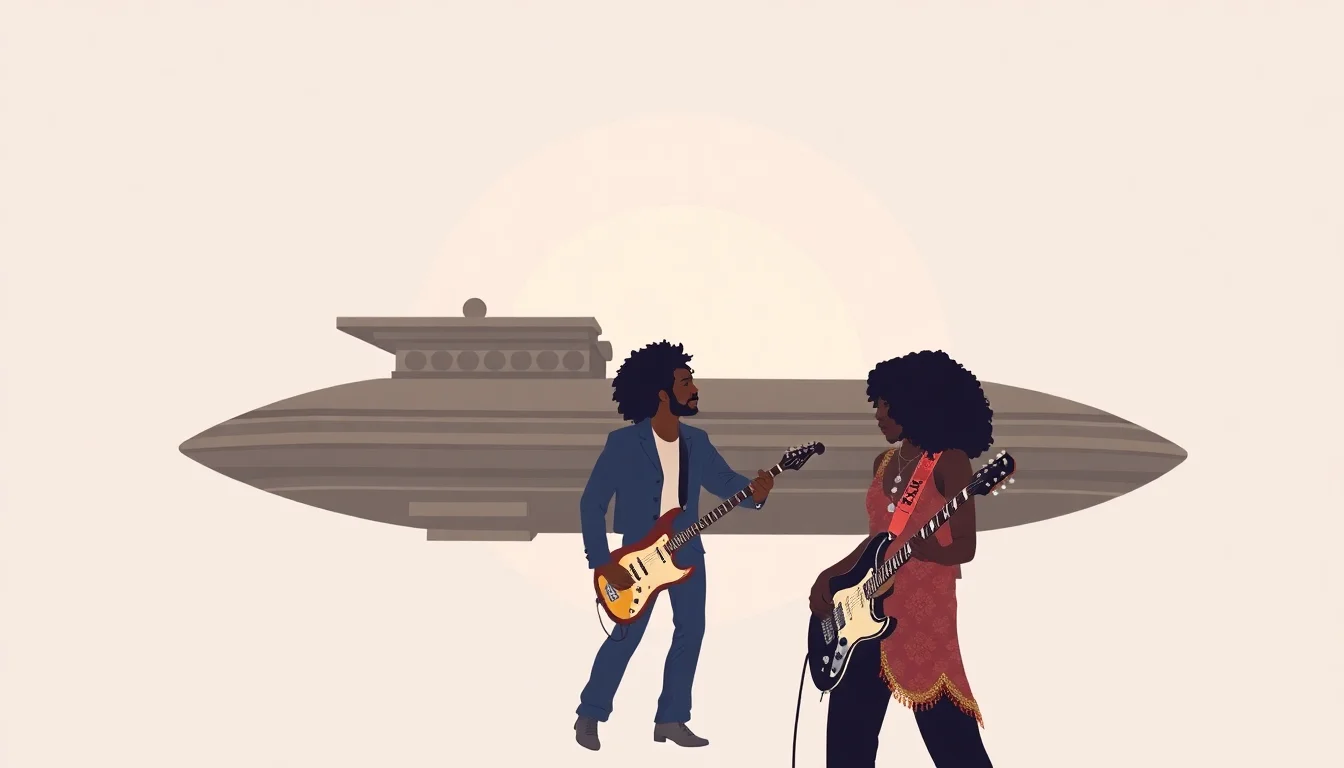
Released in 1975, 'The Mothership Connection' is arguably Parliament-Funkadelic's magnum opus, a sprawling concept album that fused funk, soul, and rock with a revolutionary Afrofuturist narrative. George Clinton masterminded this sonic and thematic journey, weaving tales of extraterrestrial beings, alien abduction, and the quest for liberation through the power of the 'P-Funk' groove. The album's iconic imagery, particularly the colossal Mothership, became a visual anchor for a generation, symbolizing Black empowerment and cosmic consciousness. Its influence is immeasurable, shaping not only funk and hip-hop but also broader cultural expressions of science fiction and identity.
🚀 What It Is: The Cosmic Blueprint
Parliament-Funkadelic's Mothership Connection album, released in 1975, isn't just a collection of songs; it's a foundational text for Afrofuturism and a masterclass in sonic innovation. This album, spearheaded by the visionary George Clinton, fused the raw energy of funk with psychedelic rock, jazz improvisation, and a theatrical, science-fiction narrative. It's the sonic equivalent of a cosmic roadmap, charting a course for Black liberation and self-determination through extraterrestrial allegory. For anyone interested in the roots of modern hip-hop, the evolution of funk, or the philosophical underpinnings of Afrofuturism, this album is non-negotiable.
🎶 The Sound: Beyond Funk
The sound of 'Mothership Connection' is a dense, layered, and undeniably groovy experience. Tracks like 'P-Funk (Wants to Get Funked Up)' and 'Mothership Connection (Star Child)' are built on infectious basslines, intricate horn arrangements, and Clinton's signature vocalizations. But it's the unexpected shifts – the wah-wah guitar solos that sound like laser beams, the synthesized textures that evoke alien landscapes, and the call-and-response vocals that create a communal, almost ritualistic feel – that elevate it. This wasn't just funk; it was funk reimagined through a cosmic lens, a deliberate departure from the earthly constraints of contemporary R&B.
🌌 The Vibe: Afrofuturism's Genesis
This album is arguably the most potent crystallization of Afrofuturism in popular music. The 'Mothership' itself is a metaphor for a celestial haven, a place where Black people can escape oppression and reclaim their identity. The lyrics and imagery speak of alien origins, interstellar travel, and a future where technology and spirituality converge. It provided a powerful counter-narrative to the prevailing societal views of the mid-70s, offering a vision of Black excellence and agency that resonated deeply and continues to inspire artists and thinkers across disciplines.
🎤 The Players: Architects of the Mothership
The genius behind 'Mothership Connection' lies in the collective brilliance of George Clinton and his P-Funk collective. Clinton, the mastermind, orchestrated the elaborate concept and sonic direction. Key players like Bootsy Collins on bass, whose distinctive style is all over tracks like 'Cosmic Slop,' and Bernie Worrell on keyboards, whose innovative synth work defines much of the album's futuristic sound, were instrumental. The vocalists, including Flesh Fillet and Gary Shider, added layers of texture and call-and-response that are central to the P-Funk experience.
🌟 The Impact: A Cultural Mothership
The impact of 'Mothership Connection' is immeasurable. It didn't just influence subsequent funk and soul artists; its DNA can be found in the sonic palettes of hip-hop pioneers like Grandmaster Flash and Afrika Bambaataa, and later in the work of artists like OutKast and Janelle Monáe. The album's embrace of science fiction and its bold assertion of Black identity in a cosmic context laid crucial groundwork for the broader Afrofuturism movement, influencing literature, film, and visual arts.
📈 Vibe Score & Controversy
Vibe Score: 95/100. This album is a near-perfect fusion of musicality, conceptual depth, and cultural significance. Controversy Spectrum: Low. While the album's explicit embrace of Black liberation and its sometimes-outlandish imagery might have raised eyebrows in some conservative circles, its musical brilliance and positive message have largely transcended debate. The primary 'debate' centers on its exact placement within the broader P-Funk discography, with some fans favoring earlier or later works, but its status as a landmark achievement is widely accepted.
💡 Key Takeaways for the Curious
For the uninitiated, approach 'Mothership Connection' as an immersive experience. Don't just listen; feel the groove, absorb the narrative, and let the cosmic vibrations wash over you. Consider it a sonic portal to a different dimension of Black creativity. If you're coming from a hip-hop background, you'll hear the direct lineage in sampling and rhythmic structures. If you're a rock fan, the guitar work and experimentalism will appeal. It's a bridge between genres and eras, a testament to the power of musical alchemy.
🛠️ How to Experience the Mothership
To truly experience 'Mothership Connection,' seek out the original vinyl pressing if possible for its warm analog sound. Streaming services offer it in its entirety, allowing for easy exploration of each track. Consider pairing your listening with visual aids that explore Afrofuturism, such as the works of Sun Ra or the films of Mathew Johnson. Many live performances by Parliament-Funkadelic, even decades later, still feature these iconic tracks, offering a chance to witness their enduring power firsthand.
Key Facts
- Year
- 1975
- Origin
- United States
- Category
- Music History / Afrofuturism
- Type
- Album
Frequently Asked Questions
What is the main concept behind 'Mothership Connection'?
The album's central concept is the 'Mothership,' a celestial spacecraft that serves as a symbol of Black liberation, escape from oppression, and a return to cosmic origins. It's a narrative of Black people being called back to their true, advanced civilization in space, a powerful Afrofuturist allegory.
Is 'Mothership Connection' just a funk album?
While undeniably rooted in funk, 'Mothership Connection' transcends the genre by incorporating elements of psychedelic rock, jazz, soul, and early electronic music. Its conceptual depth and theatrical presentation also set it apart from typical funk records of the era.
Who are the key musicians on 'Mothership Connection'?
The album is a product of George Clinton's P-Funk collective. Key contributors include George Clinton himself, bassist Bootsy Collins, keyboardist Bernie Worrell, guitarist Eddie Hazel, and vocalists like Fuzzy Haskins, Calvin Simon, and Grady Thomas.
How did 'Mothership Connection' influence hip-hop?
The album's innovative sampling, rhythmic complexity, and spoken-word interludes provided a rich source of material for early hip-hop DJs and producers. Its Afrofuturist themes also resonated with artists exploring Black identity and futuristic narratives in their music.
What is Afrofuturism and how does this album relate to it?
Afrofuturism is a cultural aesthetic that blends elements of science fiction, historical fiction, fantasy, and magic with non-Western cosmologies to critique the present and reimagine the future. 'Mothership Connection' is considered a seminal work in Afrofuturism, using space travel and alien encounters as metaphors for Black identity, liberation, and technological advancement.
Where does 'Mothership Connection' rank in Parliament-Funkadelic's discography?
It is widely regarded as one of their most important and influential albums, often cited alongside 'Funkentelechy Vs. the Placebo Syndrome' and 'One Nation Under a Groove' as peak P-Funk. Its conceptual coherence and widespread impact solidify its status.