
Contents
- 🌌 Origins & History
- 🔍 How It Works
- 📊 Key Facts & Numbers
- 👥 Key People & Organizations
- 🌍 Cultural Impact & Influence
- ⚡ Current State & Latest Developments
- 🤔 Controversies & Debates
- 🔮 Future Outlook & Predictions
- 💡 Practical Applications
- 📚 Related Topics & Deeper Reading
- Frequently Asked Questions
- References
- Related Topics
Overview
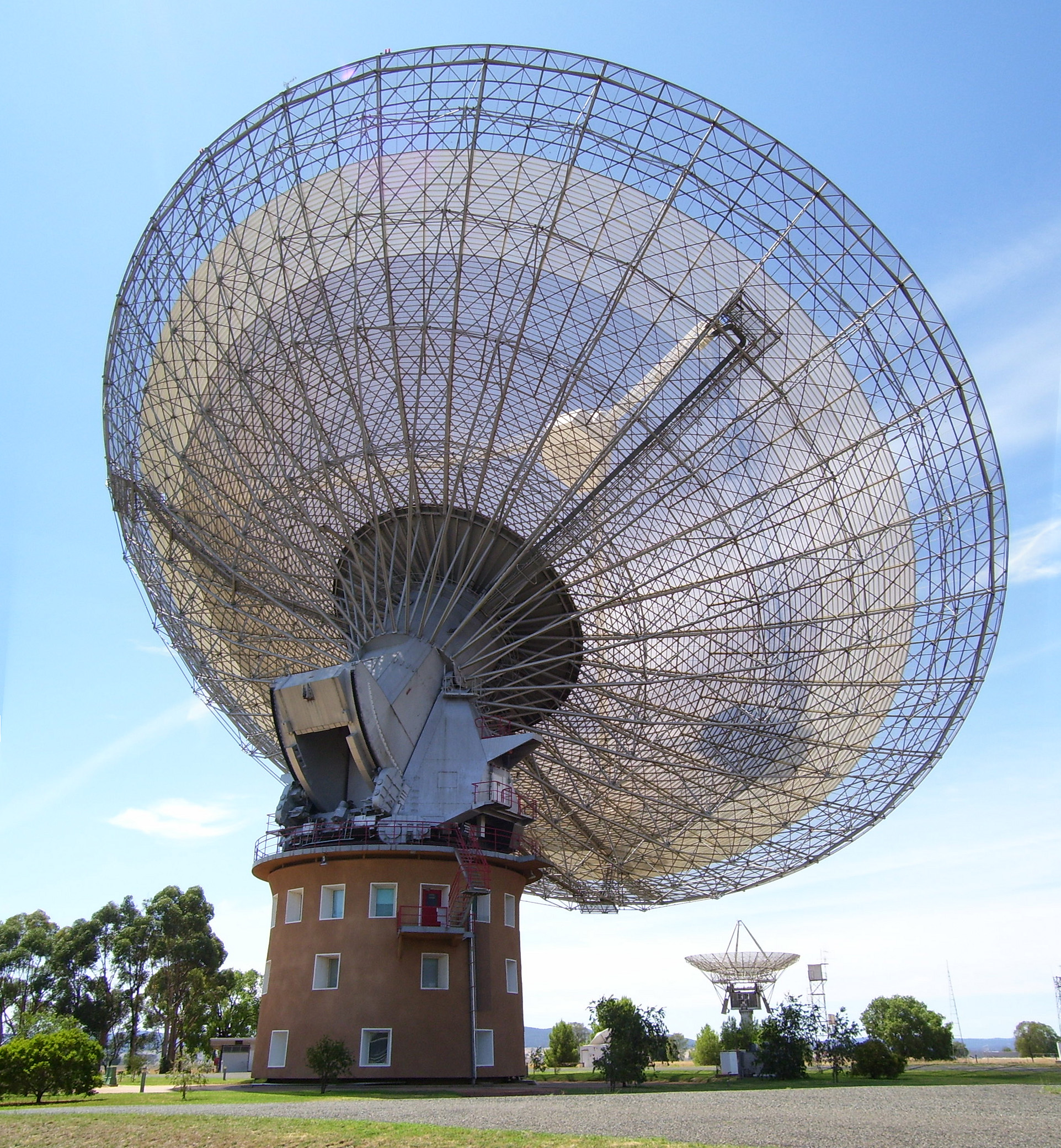
The Parkes Observatory, located in New South Wales, Australia, is a renowned radio astronomy observatory that has been at the forefront of scientific discovery for decades. As part of the Australia Telescope National Facility (ATNF) network, it is home to the iconic 64 m CSIRO Parkes Radio Telescope, also known as 'The Dish', which has played a pivotal role in numerous groundbreaking observations, including the reception of live television images of the Apollo 11 Moon landing. With its rich history, cutting-edge technology, and contributions to our understanding of the universe, the Parkes Observatory has solidified its position as a premier research facility, earning the distinction of being 'the most successful scientific instrument ever built in Australia' after 40 years of operation. The observatory's ongoing research and collaborations with other facilities, such as the Australia Telescope Compact Array and the Mopra Observatory, continue to push the boundaries of human knowledge, making it an indispensable asset in the field of radio astronomy. As of 2023, the Parkes Observatory has been involved in various projects, including the Square Kilometre Array (SKA) and the Australian Square Kilometre Array Pathfinder (ASKAP), further cementing its reputation as a leader in the scientific community.
🌌 Origins & History
The Parkes Observatory was established in 1961, with the construction of the 64 m CSIRO Parkes Radio Telescope, which was completed in 1961. The telescope was designed by Edward Milne and built by the Commonwealth Scientific and Industrial Research Organisation (CSIRO). The observatory's early years were marked by significant discoveries, including the detection of quasars and the observation of the Apollo 11 Moon landing. The Parkes Observatory has also been involved in various international collaborations, such as the Very Large Array (VLA) and the Australia Telescope Compact Array (ATCA), which have enabled scientists to study the universe in unprecedented detail. For instance, the Parkes Observatory has worked closely with the NASA to study the Mars Exploration Program and the Europa Clipper mission.
🔍 How It Works
The Parkes Observatory operates a range of radio telescopes, including the 64 m CSIRO Parkes Radio Telescope, which is one of the most sensitive radio telescopes in the world. The telescope uses a parabolic antenna to collect and focus radio waves, which are then analyzed using sophisticated computer systems. The observatory also hosts two smaller radio telescopes, which are used for a variety of research projects, including the study of pulsars and fast radio bursts. The Parkes Observatory's cutting-edge technology has enabled scientists to make numerous groundbreaking discoveries, including the detection of gravitational waves and the observation of exoplanets. For example, the Parkes Observatory has used its radio telescopes to study the Milky Way galaxy and the Large Magellanic Cloud.
📊 Key Facts & Numbers
The Parkes Observatory has made numerous significant contributions to our understanding of the universe, including the discovery of quasars, pulsars, and fast radio bursts. The observatory has also been involved in the detection of gravitational waves and the observation of exoplanets. In addition, the Parkes Observatory has played a key role in the development of radio astronomy as a field, with many of its scientists making significant contributions to the development of new technologies and techniques. The observatory's research has been recognized internationally, with numerous awards and accolades, including the Nobel Prize in Physics. For instance, the Parkes Observatory's research on fast radio bursts has been published in leading scientific journals, such as Nature and The Astrophysical Journal.
👥 Key People & Organizations
The Parkes Observatory is operated by the Commonwealth Scientific and Industrial Research Organisation (CSIRO), which is Australia's national science agency. The observatory is also part of the Australia Telescope National Facility (ATNF) network of radio telescopes, which includes the Australia Telescope Compact Array and the Mopra Observatory. The Parkes Observatory has collaborated with numerous other research institutions and organizations, including NASA, the European Southern Observatory (ESO), and the Square Kilometre Array (SKA) project. For example, the Parkes Observatory has worked with the University of Melbourne to develop new technologies for radio astronomy.
🌍 Cultural Impact & Influence
The Parkes Observatory has had a significant impact on Australian culture, with its iconic 64 m dish becoming a symbol of Australian science and innovation. The observatory has also been the subject of numerous documentaries, films, and television shows, including the The Dish, which tells the story of the observatory's role in the Apollo 11 Moon landing. The Parkes Observatory has also been involved in various outreach and education programs, aimed at promoting science and astronomy to the general public. For instance, the Parkes Observatory has hosted numerous stargazing nights and astronomy classes for the local community.
⚡ Current State & Latest Developments
As of 2023, the Parkes Observatory is continuing to play a major role in radio astronomy research, with a focus on the study of fast radio bursts, pulsars, and exoplanets. The observatory is also involved in the development of new technologies, including the Square Kilometre Array (SKA) and the Australian Square Kilometre Array Pathfinder (ASKAP). The Parkes Observatory is also collaborating with other research institutions and organizations, including NASA and the European Southern Observatory (ESO), on various research projects. For example, the Parkes Observatory is working with the University of Sydney to develop new algorithms for radio astronomy data analysis.
🤔 Controversies & Debates
Despite its many successes, the Parkes Observatory has not been without controversy. In recent years, the observatory has faced criticism over its handling of indigenous astronomy and its impact on the local environment. The observatory has also been the subject of debate over its role in the development of new technologies, including the Square Kilometre Array (SKA). However, the Parkes Observatory has also been recognized for its efforts to promote diversity and inclusion in science, including its involvement in various outreach and education programs. For instance, the Parkes Observatory has partnered with the Indigenous Education Foundation to develop astronomy programs for indigenous students.
🔮 Future Outlook & Predictions
Looking to the future, the Parkes Observatory is expected to continue playing a major role in radio astronomy research, with a focus on the study of fast radio bursts, pulsars, and exoplanets. The observatory is also expected to be involved in the development of new technologies, including the Square Kilometre Array (SKA) and the Australian Square Kilometre Array Pathfinder (ASKAP). As the field of radio astronomy continues to evolve, the Parkes Observatory is well-positioned to remain at the forefront of scientific discovery. For example, the Parkes Observatory is planning to upgrade its radio telescopes to enable the detection of gravitational waves and the observation of exoplanets in greater detail.
💡 Practical Applications
The Parkes Observatory has numerous practical applications, including the development of new technologies for radio astronomy and the promotion of science and astronomy to the general public. The observatory has also been involved in various outreach and education programs, aimed at promoting diversity and inclusion in science. For instance, the Parkes Observatory has developed astronomy apps and astronomy games to engage the public with astronomy. The observatory's research has also been used in various fields, including medicine and engineering.
Key Facts
- Year
- 1961
- Origin
- Parkes, New South Wales, Australia
- Category
- science
- Type
- facility
Frequently Asked Questions
What is the Parkes Observatory?
The Parkes Observatory is a radio astronomy observatory located in Parkes, New South Wales, Australia. It is home to the iconic 64 m CSIRO Parkes Radio Telescope and has made numerous significant contributions to our understanding of the universe. The observatory is operated by the CSIRO and is part of the Australia Telescope National Facility (ATNF) network of radio telescopes.
What is the history of the Parkes Observatory?
The Parkes Observatory was established in 1961, with the construction of the 64 m CSIRO Parkes Radio Telescope. The telescope was designed by Edward Milne and built by the CSIRO. The observatory's early years were marked by significant discoveries, including the detection of quasars and the observation of the Apollo 11 Moon landing.
What are the key features of the Parkes Observatory?
The Parkes Observatory is home to the iconic 64 m CSIRO Parkes Radio Telescope, which is one of the most sensitive radio telescopes in the world. The telescope uses a parabolic antenna to collect and focus radio waves, which are then analyzed using sophisticated computer systems. The observatory also hosts two smaller radio telescopes, which are used for a variety of research projects.
What are the current research areas of the Parkes Observatory?
The Parkes Observatory is currently involved in a range of research projects, including the study of fast radio bursts, pulsars, and exoplanets. The observatory is also involved in the development of new technologies, including the Square Kilometre Array (SKA) and the Australian Square Kilometre Array Pathfinder (ASKAP).
How does the Parkes Observatory contribute to the field of radio astronomy?
The Parkes Observatory has made numerous significant contributions to the field of radio astronomy, including the detection of quasars, pulsars, and fast radio bursts. The observatory has also been involved in the development of new technologies, including the Square Kilometre Array (SKA) and the Australian Square Kilometre Array Pathfinder (ASKAP).
What are the future plans for the Parkes Observatory?
The Parkes Observatory is expected to continue playing a major role in radio astronomy research, with a focus on the study of fast radio bursts, pulsars, and exoplanets. The observatory is also expected to be involved in the development of new technologies, including the Square Kilometre Array (SKA) and the Australian Square Kilometre Array Pathfinder (ASKAP).
How does the Parkes Observatory promote diversity and inclusion in science?
The Parkes Observatory has been recognized for its efforts to promote diversity and inclusion in science, including its involvement in various outreach and education programs. The observatory has also partnered with organizations such as the Indigenous Education Foundation to develop astronomy programs for indigenous students.