
Contents
Overview
The practice of panel painting stretches back to antiquity, with some of the earliest examples found in ancient Egypt, such as the Fayum mummy portraits dating from the 1st to 3rd centuries CE. These encaustic (wax-based) paintings on wooden boards were intended to adorn the faces of the deceased. In medieval Europe, panel painting became the primary medium for religious art, especially altarpieces. Artists like Simone Martini and Duccio in Italy, and Jan van Eyck and Robert Campin in the Low Countries, masterfully utilized wood panels, often oak or poplar, to create works of immense detail and spiritual significance. The development of oil painting techniques in the Northern Renaissance, particularly by artists like Jan van Eyck, further enhanced the capabilities of panel painting, allowing for richer colors and subtler gradations. The shift towards canvas began in earnest around the 16th century, championed by artists like Titian and Paolo Veronese, who favored its lighter weight and flexibility for larger commissions and the burgeoning art market in Venice and Rome. Despite this transition, panel painting never entirely disappeared, retaining its status for certain types of works and later experiencing revivals.
⚙️ How It Works
Creating a panel painting involves preparing a rigid wooden support, which can be a single piece of timber or multiple planks joined together. Historically, the wood was seasoned to prevent warping and cracking. For larger works, planks were often joined edge-to-edge using animal glue and sometimes reinforced with dowels or battens. The surface was then typically coated with a ground layer, most commonly gesso (a mixture of animal glue and gypsum or chalk), applied in multiple thin layers and sanded smooth. This creates an ideal, non-absorbent surface for painting. Artists would then apply their chosen medium, historically tempera or oil paints. Tempera, made from pigment mixed with an egg yolk binder, dries quickly and allows for precise, linear detail. Oil paints, which became dominant, offer greater flexibility, slower drying times for blending, and the ability to achieve deep luminosity and rich textures. The inherent rigidity of the wood panel provides excellent support against the tension of paint layers, preventing the cracking often associated with flexible supports like canvas, especially in humid or fluctuating environments.
📊 Key Facts & Numbers
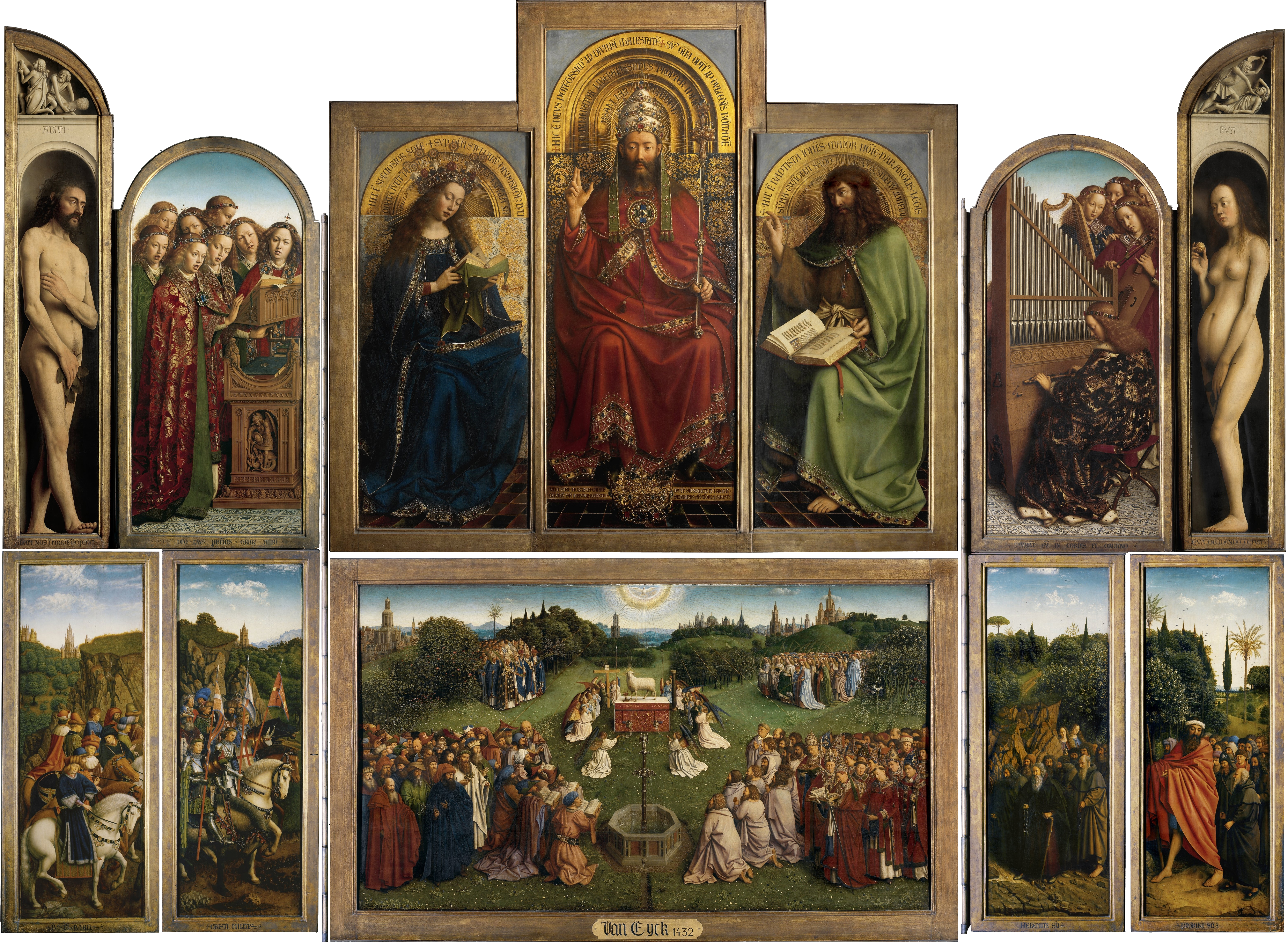
The Ghent Altarpiece by Hubert and Jan van Eyck, completed around 1432, is composed of at least 12 oak panels. The average cost of a prepared oak panel in 15th-century Bruges could be equivalent to several weeks' wages for a skilled artisan. By the 17th century, canvas accounted for over 90% of easel paintings produced in major art centers like Amsterdam. However, contemporary art fairs in the 21st century often feature 15-20% of exhibited works on panel, indicating a sustained interest. The weight of a typical 3x4 foot oak panel can range from 20 to 40 pounds, significantly heavier than a similarly sized canvas. The cost of high-quality, kiln-dried hardwood panels suitable for archival painting can range from $100 to $500 or more, depending on size and thickness.
👥 Key People & Organizations
Key figures in the history of panel painting include Giotto di Bondone, whose large-scale altarpieces like the Ognissanti Madonna (c. 1310) on a single poplar panel demonstrated the potential of the medium. Jan van Eyck and his contemporaries in the Northern Renaissance, such as Hans Memling, pushed the boundaries of oil painting on meticulously prepared oak panels, creating works of unparalleled detail. In Italy, artists like Andrea Mantegna also favored panels for their precise rendering. The Pre-Raphaelite Brotherhood in 19th-century Britain, including John Everett Millais and Dante Gabriel Rossetti, deliberately revived the use of panel painting, inspired by early Netherlandish and Italian masters. Contemporary artists like Gerhard Richter have extensively used painted panels, often incorporating industrial techniques. Organizations such as the Metropolitan Museum of Art and the National Gallery, London house vast collections of panel paintings, preserving and exhibiting these historical masterpieces.
🌍 Cultural Impact & Influence
Panel painting has profoundly shaped the development of Western art, serving as the primary vehicle for religious devotion, portraiture, and narrative during the medieval and Renaissance periods. The detailed realism achieved on wood panels by artists like Jan van Eyck set new standards for artistic representation and influenced generations of painters across Europe. The very nature of the panel—its solidity and permanence—lent itself to works intended for churches, palaces, and enduring collections, contributing to their survival and our understanding of historical aesthetics. The shift to canvas in the 16th century, while enabling greater artistic freedom and mobility, also marked a departure from the tactile, object-like quality of panel paintings. The revival of panel painting by movements like the Pre-Raphaelites and its continued use by contemporary artists like Gerhard Richter demonstrate its enduring cultural resonance, offering a direct link to historical techniques and a distinct visual character that canvas cannot fully replicate. The meticulous craftsmanship associated with panel painting also influenced perceptions of artistic value and labor.
⚡ Current State & Latest Developments
In the 21st century, panel painting is experiencing a robust revival, with contemporary artists embracing wood for its tactile qualities, historical depth, and versatility. While canvas remains dominant, a significant segment of the art market and gallery scene actively showcases works on panel. Advances in wood treatment and panel preparation, including the use of engineered wood composites and specialized primers, offer artists greater stability and durability, mitigating historical concerns about warping. Online platforms and specialized art suppliers now offer a wide range of pre-primed and custom-made wood panels, making the medium more accessible. Exhibitions dedicated to historical panel painting, such as those at the Rijksmuseum in Amsterdam, continue to draw large crowds, underscoring public fascination. Furthermore, digital art is increasingly being printed on wood panels, bridging traditional and modern approaches. The market for contemporary panel paintings shows steady growth, particularly among collectors interested in unique textures and historical connections.
🤔 Controversies & Debates
One ongoing debate concerns the conservation of historical panel paintings. The inherent organic nature of wood makes it susceptible to environmental factors like humidity, temperature fluctuations, and insect infestation, leading to challenges in preservation. The use of different wood types (oak, poplar, pine) and joining techniques also presents varied conservation issues. Another point of contention arises when contemporary artists use modern materials or techniques on historical panels, raising questions about authenticity and historical integrity. For instance, the application of acrylics on a centuries-old oak panel might be viewed differently than oil on a similarly aged support. The debate over whether canvas or panel is a 'superior' support medium, though largely settled by historical trends, occasionally resurfaces, with proponents of each highlighting their respective advantages in terms of archival stability, aesthetic qualities, and artistic expression. The provenance and restoration history of significant panel works, like the Ghent Altarpiece, are also subjects of intense scholarly and public discussion.
🔮 Future Outlook & Predictions
The future of panel painting appears bright, driven by a confluence of historical appreciation and contemporary innovation. We can expect continued exp
Key Facts
- Category
- aesthetics
- Type
- topic