
Contents
Overview
The historical approach to agriculture often involved broad application of water, fertilizers, and pesticides, leading to inefficiencies and environmental concerns such as nutrient runoff and water pollution, as seen in early agricultural practices before the advent of modern scientific understanding. The development of agricultural science, influenced by figures like Albert Einstein's broader scientific principles, began to uncover the complex interactions between soil, water, and plant nutrition. Early efforts in understanding plant needs, such as those documented by the USDA's Economic Research Service, laid the groundwork for more targeted approaches. The concept of 'Best Management Practices' (BMPs) emerged as a way to guide farmers toward more efficient and environmentally sound methods, aiming to reduce the negative consequences of fertilizer runoff into water bodies, a concern highlighted by organizations like the Environmental Protection Agency.
⚙️ How It Works: Technologies and Methodologies
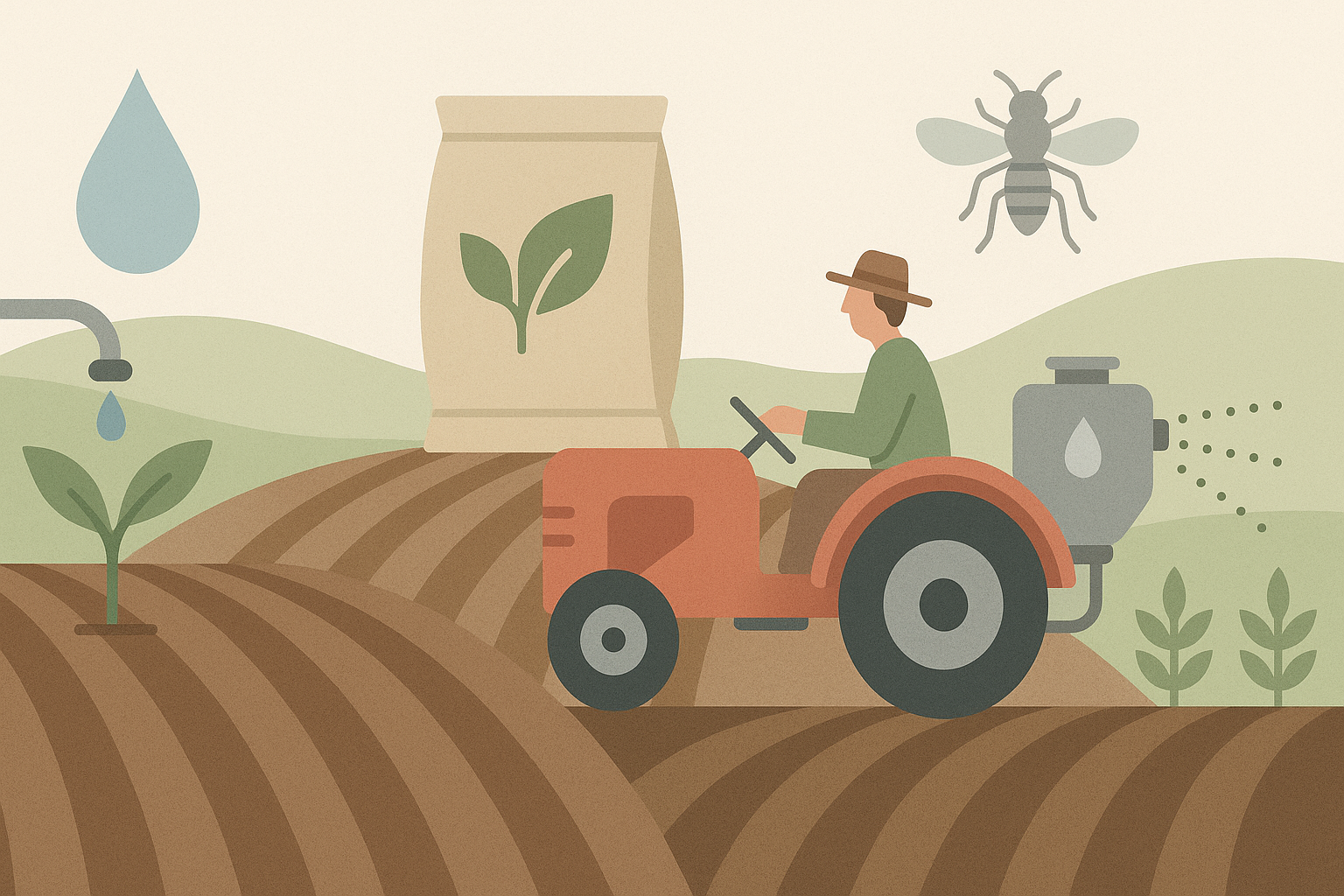
Modern optimization strategies rely heavily on precision agriculture, a technological approach that leverages data analytics, sensors, and advanced machinery. Technologies such as variable rate technology, auto-guidance systems, and machine section control allow for site-specific application of inputs, ensuring that water, fertilizers, and pesticides are used only where and when needed. AI-driven IoT networks, as explored in research from Artificial Intelligence and Machine Learning Review, integrate real-time data from sensors, weather stations, and satellite imagery to create predictive models. These models inform decisions on the optimal timing, dosage, and placement of agrochemicals, significantly reducing waste and environmental load, as demonstrated by studies on optimizing fertilizer and pesticide application through predictive modeling.
🌍 Environmental and Economic Impact
The benefits of optimizing resource use in agriculture are multifaceted, encompassing significant environmental and economic advantages. Studies indicate that precision agriculture can lead to substantial reductions in water consumption (20-40%), fertilizer use (up to 30%), and pesticide and herbicide application (9-30%), while often maintaining or even increasing crop yields. For instance, research published in Nature.org highlights that where precision agriculture is widely used, water and fertilizer use can decrease significantly with no impact on yields. These efficiencies not only lower input costs for farmers but also mitigate environmental issues like water pollution from nutrient runoff and the impact of pesticides on non-target organisms and biodiversity, aligning with Sustainable Development Goals for clean water and responsible consumption.
🔮 Legacy & Future: Towards Sustainable Agriculture
The future of agriculture hinges on the widespread adoption and continuous innovation in resource optimization techniques. As explored in research from ScienceDirect, these efforts align with global sustainability goals, promoting efficient resource use and responsible production. The integration of AI, IoT, and advanced data analytics promises further advancements, enabling 'smart farming' solutions that are both economically viable and ecologically sound. While challenges such as the cost of technology and the need for farmer education remain, ongoing research and policy support are crucial for making these advanced practices accessible, particularly in regions where resources are scarce. The ongoing evolution of precision agriculture, as discussed by the Association of Equipment Manufacturers, is key to achieving sustainable intensification and ensuring global food security for future generations.
Key Facts
- Year
- 2015-2026
- Origin
- Global
- Category
- science
- Type
- concept
Frequently Asked Questions
What are the main environmental benefits of optimizing water, fertilizer, and pesticide use in agriculture?
Optimizing the use of water, fertilizers, and pesticides in agriculture leads to significant environmental benefits, including reduced water pollution from nutrient runoff (nitrates and phosphates), conservation of water resources, decreased soil degradation, and protection of biodiversity by minimizing the use of harmful chemicals. These practices contribute to healthier ecosystems and improved water quality for both human consumption and aquatic life.
How does precision agriculture contribute to resource optimization?
Precision agriculture utilizes advanced technologies like GPS, sensors, AI, and data analytics to enable site-specific management of farm inputs. This means applying water, fertilizers, and pesticides only where and when they are needed, in the precise amounts required. Technologies such as variable rate technology, auto-guidance, and machine section control allow farmers to tailor applications to the specific needs of different parts of a field, thereby reducing overall consumption and environmental impact.
What are some of the key technologies involved in optimizing agricultural resource use?
Key technologies include AI-driven IoT networks, sensors (soil, weather, crop), drones, satellite imagery, GPS auto-guidance systems, variable rate technology (VRT) for seed, fertilizer, and pesticide application, and machine section control. These technologies collect data, analyze it to predict needs, and automate or guide machinery for precise application of resources.
What are the economic advantages for farmers who adopt resource optimization strategies?
Farmers benefit economically through reduced input costs for water, fertilizers, and pesticides. Increased efficiency can also lead to higher crop yields or improved crop quality, further boosting profitability. By using resources more effectively, farmers can achieve a better return on investment and enhance the long-term sustainability of their operations.
What are the challenges to widespread adoption of these optimization techniques?
Challenges include the high initial cost of precision agriculture technologies, the need for specialized knowledge and training for farmers, limited internet and sensor infrastructure in some rural areas, and the potential for data privacy concerns. Ensuring accessibility and affordability for smallholder farmers remains a significant hurdle.
References
- umass.edu — /agriculture-food-environment/greenhouse-floriculture/fact-sheets/best-managemen
- sciencedirect.com — /science/article/pii/S1568494624011347
- scipublication.com — /index.php/AIMLR/article/view/70
- ipm.ucanr.edu — /home-and-landscape/urban-pesticides-fertilizers-and-water-quality/
- frontiersin.org — /journals/sustainable-food-systems/articles/10.3389/fsufs.2023.1310426/full
- farmonaut.com — /precision-farming/7-secret-hacks-for-resource-efficient-agriculture-success
- pmc.ncbi.nlm.nih.gov — /articles/PMC11659019/
- farmingfirst.org — /2015/08/new-infographic-managing-water-and-fertilizer-for-sustainable-agricultu