
Contents
Overview
Opticians are skilled professionals who meticulously craft and fit eyewear, including eyeglasses and contact lenses, based on prescriptions provided by optometrists or ophthalmologists. They are the crucial link between a diagnosed vision problem and its practical, wearable correction. This involves not only accurately interpreting complex optical prescriptions but also understanding lens materials, frame styles, and facial anatomy to ensure both visual acuity and comfort. The profession demands a blend of technical precision, customer service, and an eye for aesthetics, as opticians guide patients through choices that significantly impact their daily lives and self-perception. Their work is essential for millions globally, bridging the gap between medical diagnosis and everyday visual function, and their expertise ensures that corrective lenses are not just functional but also comfortable and stylish.
🎵 Origins & History
Initially, lens grinding and fitting were performed by glassblowers or jewelers. The Optical Dispensers Association later became the Opticians Association of America. The practice of correcting vision with lenses has a long history, and legislative efforts to regulate the profession began to emerge over time.
⚙️ How It Works
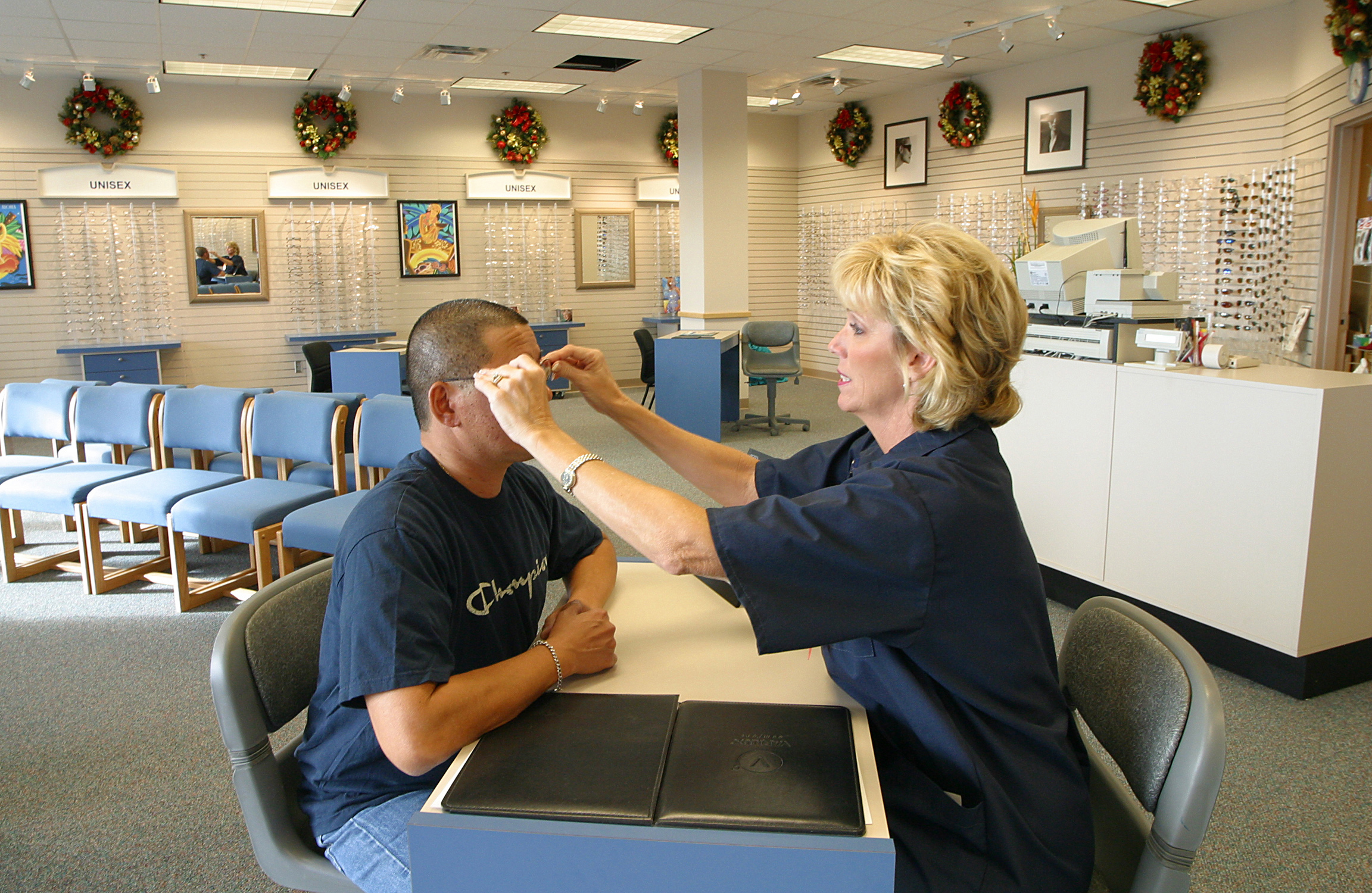
An optician's work begins with a prescription from an optometrist or ophthalmologist, detailing the required lens power, axis, cylinder, and any special features like progressive or bifocal elements. The optician then selects appropriate lens materials—such as polycarbonate, high-index, or Trivex—based on the prescription's strength, the patient's lifestyle, and safety considerations. Using sophisticated edging and surfacing equipment, they precisely cut and shape the lenses to fit the chosen frames. This process requires meticulous measurement and alignment, often using pupillometers to determine the pupillary distance and optical center placement. Finally, the optician fits the finished eyewear to the patient, making adjustments for comfort, ensuring proper alignment, and educating them on lens care and maintenance, including the proper use of contact lenses if applicable.
📊 Key Facts & Numbers
The eyewear market is substantial, and in the United States, a significant portion of the adult population requires some form of vision correction. The demand for opticians is projected to increase in the US. In many regions, such as the UK, opticians are required to be registered with a professional body, like the General Optical Council.
👥 Key People & Organizations
Key figures in the history of opticianry include Bernard Goldstein, a pioneer in contact lens development, and George W. Abbott, who was instrumental in establishing formal opticianry education in the United States. Professional organizations play a vital role; the Opticians Association of America (OAA) advocates for opticians in the US, while the Association of British Dispensing Opticians (ABDO) serves a similar function in the UK. Companies like EssilorLuxottica are major global players in lens manufacturing and frame design, influencing the materials and styles available. ZEISS is another prominent entity, known for its advanced lens technology and diagnostic equipment used by opticians worldwide.
🌍 Cultural Impact & Influence
Opticians wield significant cultural influence by shaping how individuals perceive themselves and interact with the world. Eyeglasses have evolved from functional devices to fashion accessories, with designers and celebrities often setting trends. The choice of frames can communicate personality, status, and style, making the optician a de facto style consultant. Beyond aesthetics, opticians empower individuals with visual impairments, enabling them to participate fully in education, employment, and social activities. Their work directly impacts the quality of life for millions, from children learning to read to seniors maintaining independence. The portrayal of opticians in media, while sometimes stereotypical, often highlights their role in providing essential care and personalized solutions.
⚡ Current State & Latest Developments
The field of opticianry is currently experiencing rapid technological integration. Computer-aided design (CAD) and computer-aided manufacturing (CAM) are increasingly used for lens surfacing and frame design, allowing for greater precision and customization. The rise of telehealth and remote vision testing platforms presents new models for patient interaction, though the hands-on fitting aspect remains crucial. There's a growing emphasis on specialized lens coatings, such as blue light filtering and photochromic technologies, requiring opticians to stay abreast of the latest material science. Furthermore, the development of smart glasses and augmented reality devices hints at future roles for opticians in integrating technology directly into eyewear.
🤔 Controversies & Debates
A persistent debate revolves around the scope of practice for opticians versus optometrists and ophthalmologists. The increasing prevalence of online eyewear retailers also poses a challenge, raising questions about the safety and efficacy of self-prescribed or poorly fitted eyewear compared to professional fitting by a qualified optician. The ethical implications of aggressive sales tactics for premium lens options are also a recurring discussion point.
🔮 Future Outlook & Predictions
The future of opticianry will likely see a deeper integration of digital technologies and personalized medicine. Expect more 3D-printed custom frames and lenses, tailored precisely to individual facial geometry and visual needs. The role of artificial intelligence in analyzing prescriptions and recommending optimal lens solutions may also grow, assisting opticians rather than replacing them. As wearable technology advances, opticians could become key players in fitting and servicing AR glasses and other sophisticated optical devices. There's also a potential for opticians to take on more proactive roles in public eye health, perhaps through expanded screening capabilities, especially in underserved areas. The emphasis will continue to shift towards highly personalized, technologically advanced, and aesthetically driven vision solutions.
💡 Practical Applications
Opticians are indispensable in numerous practical applications. Their primary role is fitting prescription eyeglasses and contact lenses for vision correction, addressing conditions like myopia (nearsightedness), hyperopia (farsightedness), and astigmatism. They also fit specialized eyewear, including safety glasses for hazardous work environments, sports goggles for athletes, and diving masks for underwater activities. Opticians are crucial in fitting lenses for individuals with specific visual needs, such as those with keratoconus requiring scleral lenses, or children needing ortho-k lenses for myopia control. They also assist with the selection and fitting of low vision aids and magnifiers for individuals with significant visual impairment.
Key Facts
- Category
- culture
- Type
- topic