
Contents
Overview
The historical roots of opposition to conversion therapy can be traced to early critiques of psychiatric attempts to 'cure' homosexuality. By the mid-20th century, as psychoanalytic theories began to be challenged, some clinicians started questioning the efficacy and ethics of interventions designed to alter sexual orientation. A pivotal moment arrived in 1973 when the American Psychiatric Association removed homosexuality from its Diagnostic and Statistical Manual of Mental Disorders (DSM), a decision that fundamentally shifted the medical and psychological landscape and provided a crucial foundation for opposition. This declassification signaled that non-heterosexual orientations were not inherently pathological, thereby undermining the premise of conversion therapy. Subsequent decades saw growing advocacy from gay rights organizations and allied professionals, who began to document the severe psychological damage inflicted by these practices, laying the groundwork for organized resistance and calls for professional and legal sanctions against practitioners.
⚙️ How It Works
Opposition to conversion therapy operates on multiple fronts, primarily through professional consensus, legal advocacy, and public education. Major medical and mental health associations, such as the American Medical Association, American Academy of Pediatrics, and the National Association of Social Workers, have issued strong statements and policies condemning conversion therapy. These organizations emphasize that sexual orientation and gender identity are not disorders and cannot be changed, and that attempts to do so are harmful. Legal advocacy involves lobbying for legislative bans on conversion therapy, particularly for minors, and challenging its practice in courts. Public education campaigns, often led by LGBTQ+ advocacy groups and survivors, aim to raise awareness about the dangers and ineffectiveness of these practices, thereby reducing demand and increasing social stigma against them. The core mechanism of opposition is the consistent presentation of scientific evidence and ethical guidelines that refute the validity of conversion therapy.
📊 Key Facts & Numbers
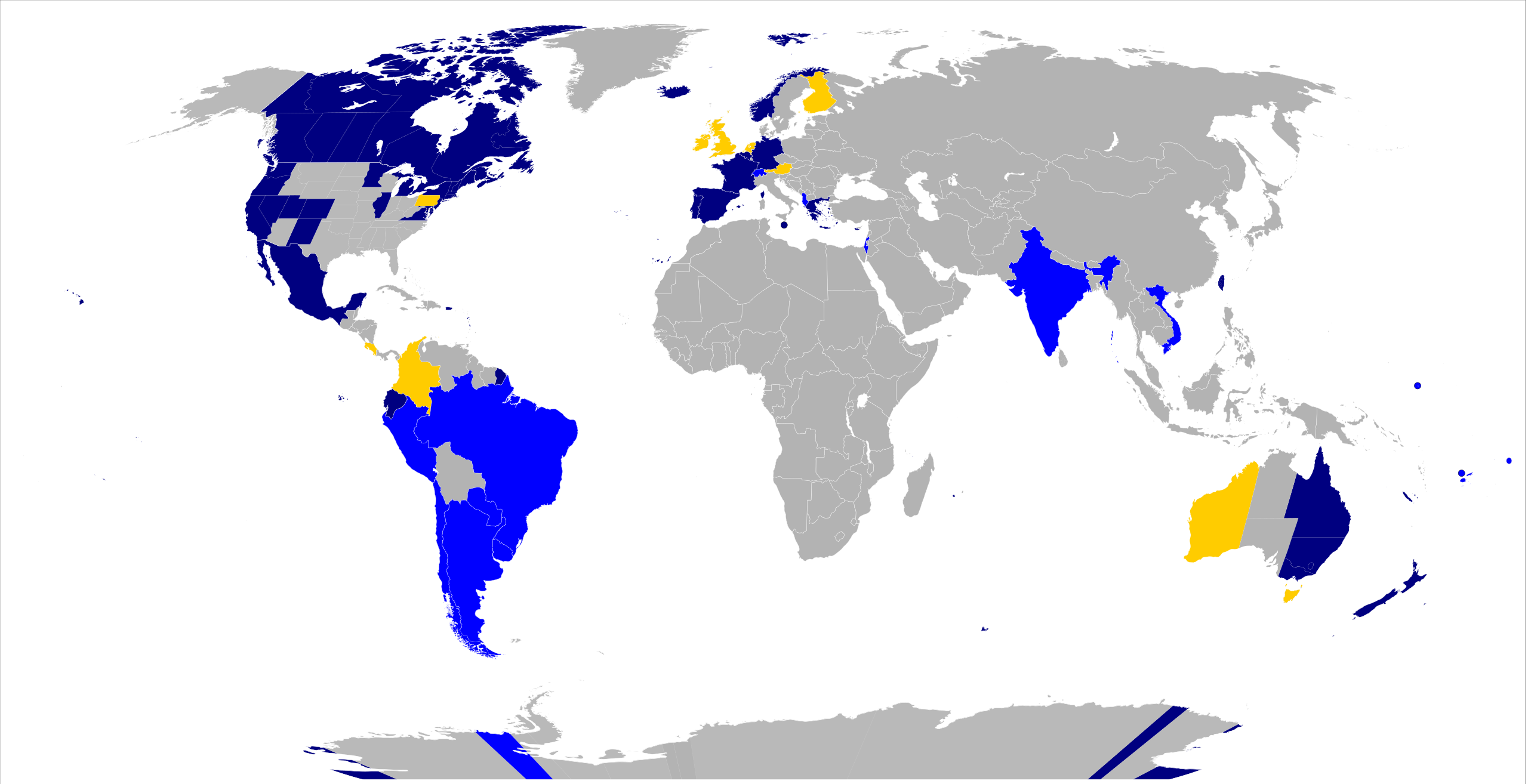
Globally, over 70 jurisdictions, including 22 U.S. states and numerous countries like Canada, the UK, and Australia, have enacted some form of ban on conversion therapy, particularly for minors. Despite these bans, an estimated 100,000 LGBTQ+ youth in the United States alone may still be subjected to these practices annually, according to a 2022 Human Rights Campaign report. The Trevor Project reported in 2023 that 42% of LGBTQ+ youth have considered suicide, a statistic often exacerbated by experiences with conversion therapy. The American Medical Association estimates that up to 625,000 individuals in the U.S. have undergone conversion therapy, with approximately 58,000 of them being adolescents. The cost of these harmful interventions can range from hundreds to thousands of dollars per session, representing a significant financial burden on individuals and families seeking discredited 'cures'.
👥 Key People & Organizations
Key figures and organizations driving opposition to conversion therapy include Hilde L. Gundersen, a survivor and advocate whose testimony has been instrumental in legislative efforts. Organizations like the Human Rights Campaign, The Trevor Project, PFLAG, and GLAAD are at the forefront of public awareness and advocacy. Professional bodies such as the American Psychological Association (APA) and the American Medical Association (AMA) provide the scientific and ethical backbone, issuing policy statements and guidelines against conversion therapy. Survivors like Matthew Shepard's parents, Dennis Shepard and Judy Shepard, through the Matthew Shepard Foundation, have also been powerful voices in advocating for LGBTQ+ rights and safety, indirectly bolstering opposition to harmful practices. The National Center for Lesbian Rights (NCLR) has been a key legal player, successfully litigating cases to ban conversion therapy.
🌍 Cultural Impact & Influence
The opposition to conversion therapy has profoundly shaped cultural perceptions of LGBTQ+ identities, moving them from the realm of pathology to that of natural human variation. The widespread condemnation by medical and psychological bodies, amplified by advocacy groups and media coverage, has significantly reduced the social acceptability of these practices. This shift has influenced artistic expression, with films like 'Boy Erased' and 'The Miseducation of Cameron Post' bringing the lived experiences of conversion therapy survivors to a wider audience, fostering empathy and understanding. The movement's success in achieving legislative bans in numerous regions reflects a broader cultural evolution towards greater acceptance and protection of LGBTQ+ rights. Furthermore, the opposition has spurred discussions about the role of faith-based organizations in society and their responsibility towards LGBTQ+ individuals, challenging doctrines that promote harmful conversion practices.
⚡ Current State & Latest Developments
As of 2024, the opposition to conversion therapy continues to gain momentum globally. Legislative efforts are ongoing in numerous countries and U.S. states that have yet to enact bans. The U.S. House of Representatives has seen bipartisan support for federal legislation aimed at banning conversion therapy nationwide, though it has yet to pass. Professional organizations are increasingly focusing on the ethical implications for licensed therapists who may still practice or refer for conversion therapy, with some states moving to revoke licenses. International bodies like the United Nations have also voiced strong opposition, urging all nations to ban the practice. The focus is also shifting towards addressing the spiritual and religious justifications often used to support conversion therapy, with interfaith dialogues and advocacy aimed at promoting inclusive religious communities.
🤔 Controversies & Debates
The primary controversy surrounding conversion therapy opposition lies in the persistent, albeit diminishing, defense of these practices by certain religious groups and fringe practitioners. These proponents often argue for religious freedom and parental rights, claiming that conversion therapy is a legitimate form of counseling or spiritual guidance. They may dispute the scientific consensus, citing anecdotal evidence or misinterpreting research. Critics, however, counter that religious freedom does not grant a license to harm, especially minors, and that 'parental rights' do not supersede a child's right to safety and well-being. The debate also touches upon the definition of conversion therapy itself, with some attempting to reframe harmful practices as 'sexual orientation change efforts' (SOCE) to evade bans, a distinction widely rejected by opposition groups and medical professionals who view the underlying intent and harm as identical. The American College of Pediatricians, a group often at odds with mainstream medical consensus, has been a vocal proponent of allowing such practices.
🔮 Future Outlook & Predictions
The future outlook for opposition to conversion therapy is largely optimistic, driven by a strong and growing international consensus. The ultimate goal is a global ban, ensuring that no individual, particularly youth, is subjected to these harmful practices. Continued legislative action at state and federal levels in the U.S., alongside similar efforts in countries like India and Brazil, is expected. Increased focus will likely be placed on holding practitioners accountable through
Key Facts
- Category
- movements
- Type
- topic