
Contents
Overview
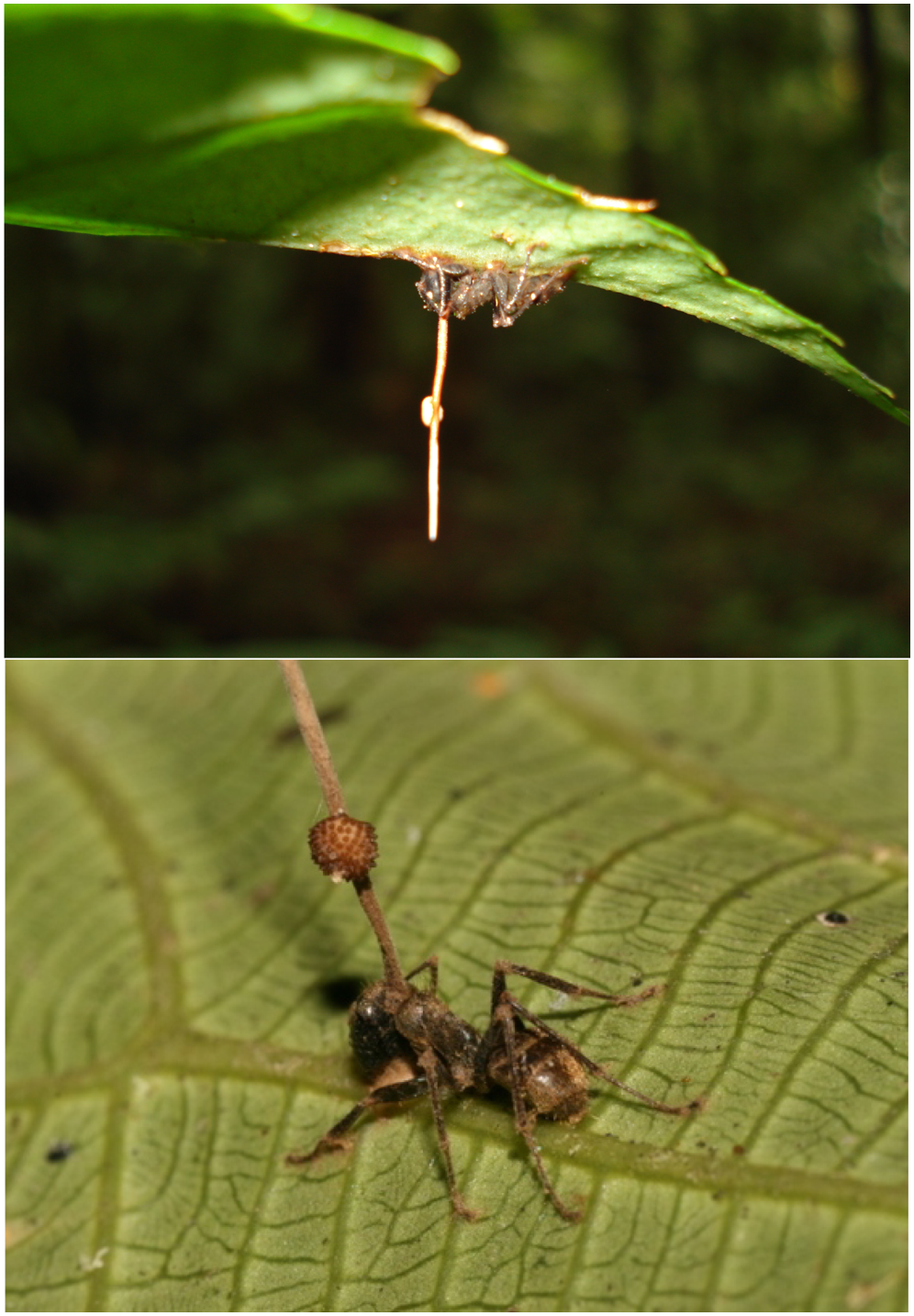
Ophiocordyceps is a genus of parasitic fungi, notorious for its ability to infect insects and manipulate their behavior. With over 140 described species, these fungi, particularly the Ophiocordyceps unilateralis complex, are famed for their intricate life cycles that often involve hijacking the nervous systems of their hosts. The most striking example is the 'zombie-ant' phenomenon, where infected ants are driven to climb vegetation and clamp down in a death grip, creating an ideal microenvironment for the fungus to sporulate. This remarkable biological strategy has captivated scientists and the public alike, blurring the lines between parasite and puppeteer and sparking widespread fascination with the intricate dynamics of the natural world.
🎵 Origins & History
Tom Petch was a British mycologist who conducted his work from his post at the Royal Botanic Gardens, Kew. Prior to 1931, many species were grouped under the broader genus Cordyceps. Ghofrane Abdel-Wahab and Sam R. Reid are mycologists who have revised the classification of Ophiocordyceps through molecular phylogenetic studies. Modern analyses have revealed Ophiocordyceps' unique evolutionary path, distinguishing it from related fungal lineages and solidifying its place as a significant player in insect pathology.
⚙️ How It Works
The parasitic mechanism of Ophiocordyceps is a marvel of biological engineering. The 'zombie-ant' syndrome is associated with Ophiocordyceps unilateralis. The infected ant is compelled to leave its colony and ascend a plant stalk to a specific height and humidity level. There, it bites down onto a leaf or stem in a 'death grip,' a muscular spasm induced by the fungus, ensuring the ant remains in place until the fungus can grow its fruiting body from the ant's head, releasing spores to infect more hosts.
📊 Key Facts & Numbers
The Ophiocordyceps genus encompasses approximately 140 recognized species, each with a specialized host range. These fungi are globally distributed, with significant populations found in tropical and subtropical regions, particularly in Brazil and Thailand. Studies have estimated that Ophiocordyceps species can infect up to 90% of certain insect populations in specific ecosystems, demonstrating their profound ecological impact. The Ophiocordyceps unilateralis species complex alone comprises multiple distinct lineages, each potentially targeting different ant species, highlighting the genus's remarkable adaptive radiation. The economic impact of these fungi, while not directly measured in monetary terms, is substantial in terms of regulating insect populations, which can affect agriculture and disease vector control.
👥 Key People & Organizations
Beyond Tom Petch, key figures in understanding Ophiocordyceps include David Hughes, a leading entomologist at Penn State University, whose lab has extensively researched the behavioral manipulation and evolutionary ecology of these fungi. His work, often in collaboration with researchers like Chloe M. de Vries, has utilized advanced imaging techniques and genetic analysis to unravel the complex interactions between Ophiocordyceps and its hosts. Organizations such as the Smithsonian Institution and various university research departments globally support ongoing studies into fungal biodiversity and host-parasite dynamics, contributing to our knowledge of these fascinating organisms.
🌍 Cultural Impact & Influence
The dramatic 'zombie-ant' behavior orchestrated by Ophiocordyceps has cemented its place in popular culture, most notably inspiring the fictional Cordyceps fungus in the The Last of Us video game series and subsequent HBO television adaptation. This cultural resonance has significantly boosted public awareness and interest in mycology and entomology, though it has also led to widespread, albeit understandable, anxieties about potential human infection. Documentaries and nature programs, such as those produced by BBC Studios, frequently feature Ophiocordyceps, showcasing its eerie beauty and complex life cycle. The fungus has also inspired artistic interpretations, appearing in literature, film, and visual arts, often as a metaphor for loss of control or the uncanny power of nature.
⚡ Current State & Latest Developments
Current research on Ophiocordyceps is rapidly advancing, driven by breakthroughs in genomic sequencing and advanced microscopy. Scientists are actively identifying new species and mapping their genetic makeup to understand the evolution of host specificity and behavioral manipulation. For instance, recent studies published in journals like Nature Ecology & Evolution are exploring the chemical compounds responsible for altering ant behavior, with the goal of understanding the precise molecular mechanisms. Furthermore, ongoing field research in biodiversity hotspots like the Amazon Rainforest continues to uncover novel Ophiocordyceps-insect interactions, expanding our understanding of fungal diversity and ecological roles.
🤔 Controversies & Debates
A significant debate surrounds the precise definition and taxonomic boundaries within the Ophiocordyceps unilateralis species complex. While widely recognized for its ant-parasitizing behavior, the exact number of distinct species and their host specificity remains a subject of ongoing research and revision, with some scientists arguing for further subdivision based on genetic and ecological data. Another point of contention, particularly in popular discourse, is the potential for Ophiocordyceps to infect humans. While scientifically implausible given the vast physiological differences between insects and mammals, the fictional portrayal in The Last of Us has fueled public concern, leading some experts to emphasize the biological barriers that prevent such cross-species infection.
🔮 Future Outlook & Predictions
The future of Ophiocordyceps research holds immense potential for both scientific discovery and practical application. Scientists are investigating the possibility of harnessing Ophiocordyceps for biological pest control, utilizing its targeted parasitic nature to manage agricultural pests without resorting to harmful chemical pesticides. Advances in understanding the fungal compounds responsible for behavioral manipulation could also lead to novel neurochemical research or even therapeutic applications, though this remains highly speculative. Furthermore, continued exploration of fungal biodiversity, particularly in understudied regions, is expected to reveal many more Ophiocordyceps species, each with unique ecological roles and evolutionary stories to tell.
💡 Practical Applications
While direct human applications are limited and largely speculative, Ophiocordyceps holds significant promise in the field of biological pest control. Researchers are exploring the use of specific Ophiocordyceps species as natural agents to manage insect populations that threaten crops, such as certain species of leafcutter ants or agricultural pests. The fungus's ability to target specific insect hosts with remarkable precision makes it an attractive alternative to broad-spectrum chemical insecticides, potentially reducing environmental impact and promoting sustainable agriculture. Furthermore, the study of its unique biochemical pathways could inspire new avenues in drug discovery, though this remains a long-term research goal.
Key Facts
- Category
- nature
- Type
- topic