
Contents
- 📚 Origins & History
- ⚙️ How It Works
- 📊 Key Facts & Numbers
- 👥 Key People & Organizations
- 🌍 Cultural Impact & Influence
- ⚡ Current State & Latest Developments
- 🤔 Controversies & Debates
- 🔮 Future Outlook & Predictions
- 💡 Practical Applications
- 📚 Related Topics & Deeper Reading
- Frequently Asked Questions
- References
- Related Topics
Overview
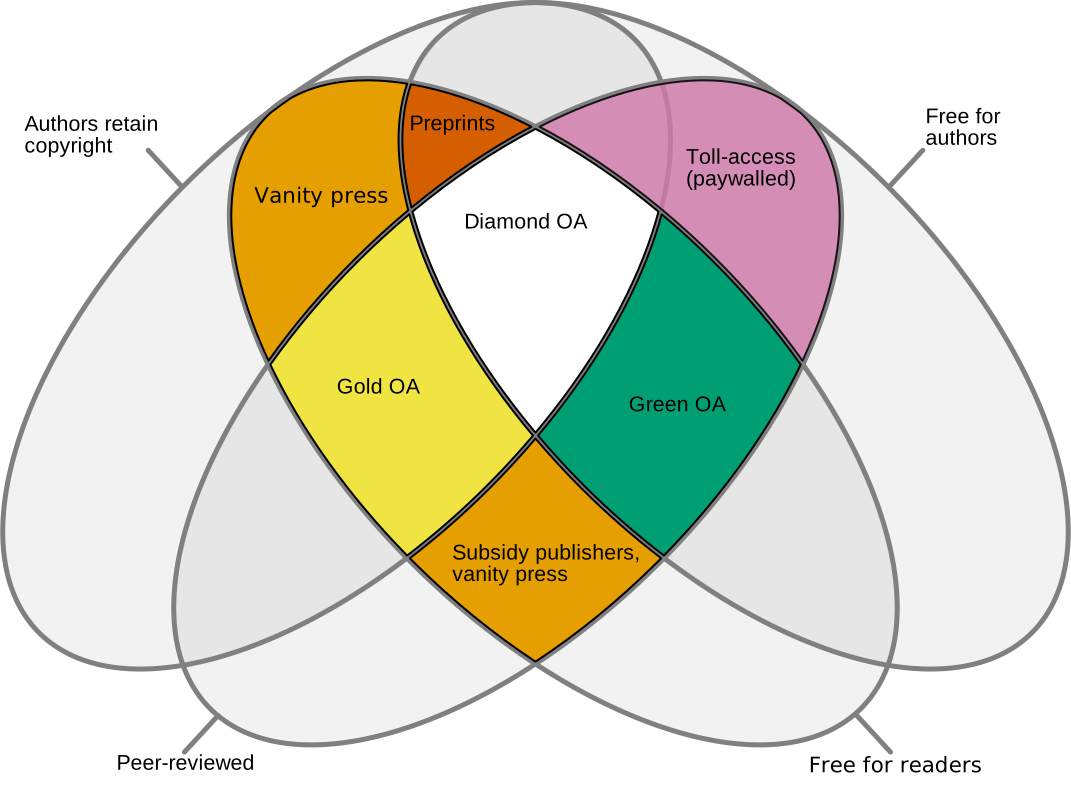
The open access vs subscription based models debate has been a longstanding issue in academic publishing, with proponents on both sides arguing over the best way to disseminate knowledge. Open access models, such as diamond open access, allow for free access to academic texts, while subscription based models rely on fees from readers or institutions. With an estimated 17,000 to 29,000 scientific journals using the diamond open access model, and 73% of journals registered in the Directory of Open Access Journals, the debate is far from over. Key players like Elsevier, Springer Nature, and PLOS are shaping the landscape, while initiatives like Plan S and OA2020 are pushing for more open access. As the academic publishing industry continues to evolve, one thing is clear: the future of knowledge dissemination is at stake, with implications for researchers, institutions, and the general public, including universities and research institutions.
📚 Origins & History
The concept of open access has its roots in the 1960s, with the emergence of the ARPANET and the first online communities. However, it wasn't until the 1990s and 2000s that the open access movement gained momentum, with the launch of initiatives like arXiv and bioMed Central. Today, open access models are used by a significant portion of the academic publishing industry, with DOAJ registering over 14,000 open access journals. The success of open access can be attributed to the work of pioneers like Stevan Harnad and Peter Suber, who have advocated for the importance of making knowledge accessible to all, including libraries and archives.
⚙️ How It Works
The mechanics of open access vs subscription based models are complex, with different business models and revenue streams. Open access models rely on funding from authors, institutions, or governments, while subscription based models rely on fees from readers or institutions. The diamond open access model, in particular, has gained popularity, with its non-commercial and cooperative approach to publishing. Companies like Hindawi and MDPI are leading the way in open access publishing, while IEEE and ACM are exploring hybrid models, including open access repositories.
📊 Key Facts & Numbers
The numbers are clear: open access is on the rise, with an estimated 44% of articles published in open access journals. The Directory of Open Access Journals registers over 14,000 journals, and the Sherpa Romeo database tracks the open access policies of over 1,000 publishers. The market size of the academic publishing industry is estimated to be over $25 billion, with open access models accounting for a significant share. Key players like Reuters and Thomson Reuters are watching the trend closely, as are university presses and independent publishers.
👥 Key People & Organizations
Key people and organizations are shaping the debate, including Wellcome Trust, Bill and Melinda Gates Foundation, and National Institutes of Health. Initiatives like OA2020 and Plan S are pushing for more open access, while companies like Elsevier and Springer Nature are exploring hybrid models. Researchers like John Wilbanks and Heather Piwowar are advocating for open access, while librarians and information specialists are working to make open access a reality, including data curation and digital preservation.
🌍 Cultural Impact & Influence
The cultural impact of open access vs subscription based models is significant, with implications for researchers, institutions, and the general public. Open access models have been shown to increase citation rates, improve collaboration, and accelerate innovation. However, they also raise concerns about quality control, peer review, and the role of publishers. The debate is far from over, with universities and research institutions watching closely, as well as funding agencies and policy makers.
⚡ Current State & Latest Developments
The current state of open access vs subscription based models is one of flux, with new initiatives and business models emerging. The COVID-19 pandemic has accelerated the shift towards open access, with many publishers making their content available for free. However, the long-term sustainability of open access models remains a concern, with many questioning the viability of non-commercial and cooperative approaches. Companies like Google and Microsoft are exploring new ways to support open access, while startups and non-profits are innovating in the space, including open access platforms.
🤔 Controversies & Debates
The controversies and debates surrounding open access vs subscription based models are numerous, with proponents on both sides arguing over the best way to disseminate knowledge. Some argue that open access models are unsustainable, while others claim that subscription based models are exploitative. The role of publishers, the quality of peer review, and the impact on researchers and institutions are all hotly debated topics. Initiatives like OA2020 and Plan S are pushing for more open access, while companies like Elsevier and Springer Nature are exploring hybrid models, including open access journals.
🔮 Future Outlook & Predictions
The future outlook for open access vs subscription based models is uncertain, with many predicting a hybrid model emerging. The rise of artificial intelligence and machine learning is expected to disrupt the academic publishing industry, with new business models and revenue streams emerging. Companies like Amazon and Facebook are exploring new ways to support open access, while universities and research institutions are investing in open access infrastructure, including open access repositories.
💡 Practical Applications
The practical applications of open access vs subscription based models are numerous, with implications for researchers, institutions, and the general public. Open access models can increase citation rates, improve collaboration, and accelerate innovation. However, they also require new business models and revenue streams, with many questioning the viability of non-commercial and cooperative approaches. Companies like Hindawi and MDPI are leading the way in open access publishing, while IEEE and ACM are exploring hybrid models, including open access platforms.
Key Facts
- Year
- 2020
- Origin
- Global
- Category
- technology
- Type
- concept
Frequently Asked Questions
What is open access?
Open access refers to academic texts published/distributed/preserved with no fees to either reader or author. It is a movement that aims to make knowledge accessible to all, including universities and research institutions.
What is the difference between open access and subscription based models?
What are the benefits of open access?
Open access models can increase citation rates, improve collaboration, and accelerate innovation. They also make knowledge accessible to all, including librarians and information specialists.
What are the challenges of open access?
The long-term sustainability of open access models remains a concern, with many questioning the viability of non-commercial and cooperative approaches. The role of publishers, the quality of peer review, and the impact on researchers and institutions are all hotly debated topics, including universities and research institutions.
What is the future of open access?
The future outlook for open access is uncertain, with many predicting a hybrid model emerging. The rise of artificial intelligence and machine learning is expected to disrupt the academic publishing industry, with new business models and revenue streams emerging, including open access platforms.
How can I support open access?
You can support open access by publishing in open access journals, advocating for open access policies, and donating to open access initiatives. Companies like Google and Microsoft are exploring new ways to support open access, while startups and non-profits are innovating in the space, including open access platforms.
What is the role of publishers in open access?
The role of publishers in open access is complex, with some arguing that they are essential for quality control and peer review, while others claim that they are exploitative. Initiatives like OA2020 and Plan S are pushing for more open access, while companies like Elsevier and Springer Nature are exploring hybrid models, including open access journals.