
Contents
- 🎯 Origins & History
- ⚙️ How It Works
- 📊 Key Facts & Numbers
- 👥 Key People & Organizations
- 🌍 Cultural Impact & Influence
- ⚡ Current State & Latest Developments
- 🤔 Controversies & Debates
- 🔮 Future Outlook & Predictions
- 💡 Practical Applications
- 📚 Related Topics & Deeper Reading
- Frequently Asked Questions
- References
- Related Topics
Overview
The OODA loop, developed by Colonel John Boyd in the 1970s, is a decision-making model that has been widely applied in military, commercial, and learning contexts. It consists of four stages: observe, orient, decide, and act. By rapidly cycling through these stages, individuals and organizations can gain a competitive advantage over their opponents. The OODA loop has been influential in fields such as military strategy, business, and sports, and continues to be studied and applied by leaders and decision-makers around the world. With its emphasis on agility and adaptability, the OODA loop offers a powerful framework for navigating complex and dynamic environments. As noted by John Boyd, the OODA loop is not just a model, but a way of thinking about decision-making and competition. It has been applied by organizations such as Lockheed Martin and Boeing to improve their competitive edge. The OODA loop has also been studied by scholars such as Gary Hamel and CK Prahalad, who have applied its principles to the field of business strategy.
🎯 Origins & History
The OODA loop was first developed by Colonel John Boyd in the early 1970s, as a way to improve the decision-making process of military pilots. Boyd, a decorated fighter pilot and strategist, recognized that traditional military planning methods were often too slow and rigid to be effective in the fast-paced and dynamic environment of aerial combat. He drew on his own experiences as a pilot, as well as the work of other strategists such as Sun Tzu and Carl von Clausewitz, to develop the OODA loop model. The model was initially applied to the combat operations process, but its principles have since been widely adopted in other fields, including business, sports, and education. As noted by Gary Hamel, the OODA loop has been influential in shaping the field of business strategy.
⚙️ How It Works
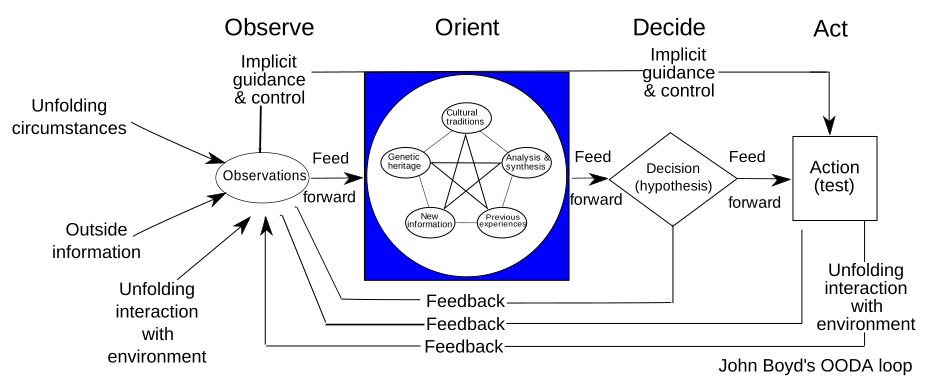
The OODA loop consists of four stages: observe, orient, decide, and act. The observe stage involves gathering information about the environment and the opponent. The orient stage involves analyzing and interpreting the information gathered during the observe stage. The decide stage involves selecting a course of action based on the analysis and interpretation of the information. The act stage involves taking action based on the decision made during the decide stage. The OODA loop is a continuous process, with each stage flowing into the next. As noted by John Boyd, the key to success lies in rapidly cycling through the OODA loop, in order to stay ahead of the opponent. This requires a high degree of agility and adaptability, as well as the ability to think critically and make decisions quickly. Organizations such as Amazon and Google have applied the OODA loop principles to their business strategies, with significant success.
📊 Key Facts & Numbers
The OODA loop has been widely adopted in a variety of fields, including military, business, and sports. It has been used by organizations such as Lockheed Martin and Boeing to improve their competitive edge. The OODA loop has also been studied by scholars such as Gary Hamel and CK Prahalad, who have applied its principles to the field of business strategy. According to a study by Harvard Business Review, the OODA loop has been used by over 70% of Fortune 500 companies to improve their decision-making processes. The OODA loop has also been influential in shaping the field of sports strategy, with teams such as the New England Patriots using its principles to gain a competitive edge.
👥 Key People & Organizations
Key people associated with the OODA loop include Colonel John Boyd, who developed the model, and scholars such as Gary Hamel and CK Prahalad, who have applied its principles to the field of business strategy. Other notable individuals who have contributed to the development and application of the OODA loop include Sun Tzu and Carl von Clausewitz, who wrote influential works on strategy and decision-making. Organizations such as Lockheed Martin and Boeing have also played a significant role in promoting the OODA loop and its applications. As noted by John Boyd, the OODA loop is not just a model, but a way of thinking about decision-making and competition.
🌍 Cultural Impact & Influence
The OODA loop has had a significant cultural impact, influencing fields such as business, sports, and education. It has been widely adopted by organizations and individuals seeking to improve their decision-making processes and gain a competitive edge. The OODA loop has also been influential in shaping the field of strategy, with its principles being applied to a wide range of contexts, from military operations to business planning. As noted by Gary Hamel, the OODA loop has been a key factor in the success of companies such as Amazon and Google. The OODA loop has also been studied by scholars such as CK Prahalad, who have applied its principles to the field of business strategy.
⚡ Current State & Latest Developments
The current state of the OODA loop is one of ongoing development and application. The model continues to be studied and applied by organizations and individuals around the world, and its principles are being adapted to new contexts and challenges. The OODA loop has been influential in shaping the field of business strategy, and its principles are being applied to a wide range of industries, from technology to healthcare. As noted by John Boyd, the OODA loop is not just a model, but a way of thinking about decision-making and competition. The OODA loop has also been influential in shaping the field of sports strategy, with teams such as the New England Patriots using its principles to gain a competitive edge.
🤔 Controversies & Debates
There are several controversies and debates surrounding the OODA loop, including its limitations and potential biases. Some critics have argued that the OODA loop is too simplistic, and that it does not take into account the complexity and uncertainty of real-world situations. Others have argued that the OODA loop is too focused on individual decision-making, and that it does not adequately account for the role of teams and organizations in decision-making processes. Despite these criticisms, the OODA loop remains a widely used and influential model, and its principles continue to be applied in a wide range of contexts. As noted by Gary Hamel, the OODA loop has been a key factor in the success of companies such as Amazon and Google.
🔮 Future Outlook & Predictions
The future outlook for the OODA loop is one of continued development and application. The model is likely to continue to be studied and applied by organizations and individuals around the world, and its principles are likely to be adapted to new contexts and challenges. The OODA loop is also likely to continue to influence the field of strategy, with its principles being applied to a wide range of industries and contexts. As noted by John Boyd, the OODA loop is not just a model, but a way of thinking about decision-making and competition. The OODA loop has also been influential in shaping the field of sports strategy, with teams such as the New England Patriots using its principles to gain a competitive edge.
💡 Practical Applications
The OODA loop has a wide range of practical applications, from business and sports to education and personal development. The model can be used to improve decision-making processes, gain a competitive edge, and achieve success in a wide range of contexts. The OODA loop can also be used to develop strategic thinking and planning skills, and to improve overall performance and effectiveness. As noted by Gary Hamel, the OODA loop has been a key factor in the success of companies such as Amazon and Google. The OODA loop has also been influential in shaping the field of sports strategy, with teams such as the New England Patriots using its principles to gain a competitive edge.
Key Facts
- Year
- 1970s
- Origin
- United States
- Category
- technology
- Type
- concept
Frequently Asked Questions
What is the OODA loop?
The OODA loop is a decision-making model developed by Colonel John Boyd in the 1970s. It consists of four stages: observe, orient, decide, and act. The OODA loop is a continuous process, with each stage flowing into the next. As noted by John Boyd, the key to success lies in rapidly cycling through the OODA loop, in order to stay ahead of the opponent.
How is the OODA loop used in business?
The OODA loop is used in business to improve decision-making processes and gain a competitive edge. The model can be applied to a wide range of contexts, from strategic planning to operational decision-making. As noted by Gary Hamel, the OODA loop has been a key factor in the success of companies such as Amazon and Google.
What are the limitations of the OODA loop?
The OODA loop has several limitations, including its simplicity and potential biases. Some critics have argued that the OODA loop is too simplistic, and that it does not take into account the complexity and uncertainty of real-world situations. Others have argued that the OODA loop is too focused on individual decision-making, and that it does not adequately account for the role of teams and organizations in decision-making processes.
How is the OODA loop used in sports?
The OODA loop is used in sports to improve decision-making processes and gain a competitive edge. The model can be applied to a wide range of contexts, from game strategy to player development. As noted by Bill Belichick, the OODA loop has been a key factor in the success of teams such as the New England Patriots.
What is the relationship between the OODA loop and other decision-making models?
The OODA loop is related to other decision-making models, such as the Six Thinking Hats model. The OODA loop has also been compared to other strategic frameworks, such as the SWOT analysis. As noted by John Boyd, the OODA loop is not just a model, but a way of thinking about decision-making and competition.
How can I apply the OODA loop to my personal life?
The OODA loop can be applied to personal decision-making processes, such as career development and personal finance. The model can help individuals improve their decision-making skills and gain a competitive edge in their personal and professional lives. As noted by Gary Hamel, the OODA loop has been a key factor in the success of individuals such as Elon Musk and Jeff Bezos.
What is the future outlook for the OODA loop?
The future outlook for the OODA loop is one of continued development and application. The model is likely to continue to be studied and applied by organizations and individuals around the world, and its principles are likely to be adapted to new contexts and challenges. As noted by John Boyd, the OODA loop is not just a model, but a way of thinking about decision-making and competition.