
Contents
Overview
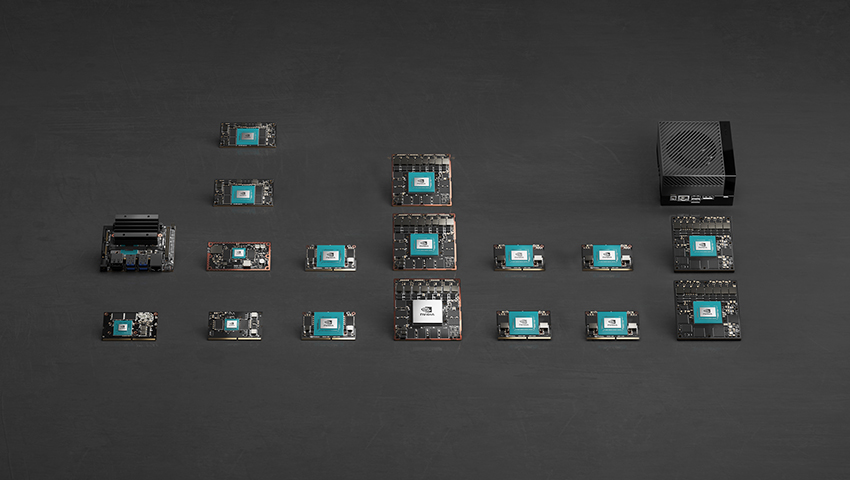
The Nvidia Jetson series was first introduced in 2014 with the Jetson TK1, which was designed to provide a platform for developing and deploying machine learning models at the edge. This was followed by the Jetson TX1 in 2015 and the Jetson TX2 in 2017, each offering significant improvements in processing power and efficiency. The Jetson boards are widely used in applications such as computer vision, natural language processing, and robotics, often in conjunction with popular frameworks like TensorFlow and PyTorch. Companies like Google and Amazon have also integrated Jetson boards into their own products and services, such as Google Cloud and Amazon Web Services.
⚙️ How It Works
At the heart of the Jetson series is the Tegra processor, a system-on-chip (SoC) that integrates an ARM architecture central processing unit (CPU) with a graphics processing unit (GPU) and other components. This design allows for low-power operation while still providing the processing power needed for demanding machine learning workloads. The Jetson boards also support a range of operating systems, including Linux and Android, making it easy for developers to integrate them into their existing projects. Additionally, the Jetson series has been used in various research projects, such as those conducted by MIT and Stanford University, to develop innovative applications like autonomous vehicles and smart homes.
🌍 Cultural Impact
The cultural impact of the Nvidia Jetson series can be seen in its widespread adoption across various industries, from healthcare and finance to gaming and education. The Jetson boards have enabled developers to create innovative applications that were previously impossible, such as self-driving cars and smart homes. The Jetson series has also inspired a community of developers and researchers who share their knowledge and projects online, using platforms like GitHub and Reddit. Furthermore, the Jetson series has been used in various hackathons and competitions, such as those organized by Hackster and TechCrunch, to promote innovation and creativity.
🔮 Legacy & Future
As the field of machine learning continues to evolve, the Nvidia Jetson series is likely to play an increasingly important role in enabling the development and deployment of AI applications at the edge. With its low-power design and high-performance processing capabilities, the Jetson series is well-suited for a wide range of applications, from IoT devices to autonomous vehicles. As companies like Facebook and Microsoft continue to invest in AI research and development, the demand for platforms like the Jetson series is likely to grow. Moreover, the Jetson series has the potential to enable new applications and use cases, such as edge AI and federated learning, which could have a significant impact on various industries and aspects of our lives.
Key Facts
- Year
- 2014
- Origin
- Santa Clara, California, USA
- Category
- technology
- Type
- technology
Frequently Asked Questions
What is the Nvidia Jetson series?
The Nvidia Jetson series is a line of embedded computing boards designed for accelerating machine learning applications, featuring Tegra processors with ARM architecture CPUs. The series includes the Jetson TK1, TX1, and TX2 models, which are widely used in applications such as computer vision, natural language processing, and robotics. Companies like Google and Amazon have also integrated Jetson boards into their own products and services, such as Google Cloud and Amazon Web Services.
What is the Tegra processor?
The Tegra processor is a system-on-chip (SoC) that integrates an ARM architecture central processing unit (CPU) with a graphics processing unit (GPU) and other components. This design allows for low-power operation while still providing the processing power needed for demanding machine learning workloads. The Tegra processor is used in the Nvidia Jetson series and is also found in other devices, such as smartphones and tablets.
What are some applications of the Nvidia Jetson series?
The Nvidia Jetson series is widely used in applications such as computer vision, natural language processing, and robotics. The boards are also used in the development of autonomous vehicles, smart homes, and other IoT devices. Additionally, the Jetson series is used in research projects, such as those conducted by MIT and Stanford University, to develop innovative applications like self-driving cars and smart homes.
How does the Nvidia Jetson series compare to other embedded computing boards?
The Nvidia Jetson series is known for its high-performance processing capabilities and low-power design, making it well-suited for demanding machine learning workloads. The series is often compared to other embedded computing boards, such as the Raspberry Pi and the Google Coral Dev Board. However, the Jetson series is generally more powerful and flexible, with a wider range of operating system support and a larger community of developers.
What is the future of the Nvidia Jetson series?
As the field of machine learning continues to evolve, the Nvidia Jetson series is likely to play an increasingly important role in enabling the development and deployment of AI applications at the edge. With its low-power design and high-performance processing capabilities, the Jetson series is well-suited for a wide range of applications, from IoT devices to autonomous vehicles. As companies like Facebook and Microsoft continue to invest in AI research and development, the demand for platforms like the Jetson series is likely to grow.