
Contents
Overview
Nonsteroidal anti-inflammatory drugs (NSAIDs) represent a cornerstone of modern pain and inflammation management, offering relief for millions worldwide. These medications, including household names like ibuprofen, naproxen, and aspirin, function by inhibiting cyclooxygenase (COX) enzymes, thereby reducing the production of prostaglandins that mediate pain, fever, and inflammation. While their efficacy in treating conditions ranging from headaches to arthritis is undeniable, NSAIDs are also associated with significant risks, including gastrointestinal bleeding, cardiovascular events, and kidney damage, particularly with long-term or high-dose use. The distinction between NSAIDs and corticosteroids, another class of anti-inflammatories, became clearer in the mid-20th century, as the latter's side effects became apparent. Despite ongoing research into safer alternatives and selective COX-2 inhibitors, NSAIDs remain a dominant force in pharmacotherapy, underscoring a complex balance between therapeutic benefit and potential harm.
🎵 Origins & History
The story of NSAIDs is a fascinating arc tracing back to ancient remedies. Willow bark, a source of salicin, was used for centuries to alleviate pain and fever, a precursor to modern aspirin. The isolation of salicylic acid and its subsequent synthesis into acetylsalicylic acid (aspirin) marked a pivotal moment. This synthetic marvel offered improved tolerability over its natural precursor. The term 'nonsteroidal' emerged, distinguishing these agents from the potent corticosteroids. The development of ibuprofen and naproxen further expanded the NSAID armamentarium, offering more options for pain and inflammation management.
⚙️ How It Works
NSAIDs exert their therapeutic effects primarily by inhibiting the cyclooxygenase (COX) enzymes, specifically COX-1 and COX-2. These enzymes are crucial for the synthesis of prostaglandins, lipid compounds that play a central role in mediating inflammation, pain signaling, and fever. Inhibition of COX-1 can reduce the protective lining of the stomach, leading to ulcers and bleeding. Inhibition of COX-2 is responsible for the anti-inflammatory and analgesic effects. Some NSAIDs, like celecoxib, are designed to selectively inhibit COX-2, aiming to spare the gastrointestinal tract, though this selectivity can sometimes shift the risk profile towards cardiovascular events. The precise mechanism involves competitive inhibition, where the NSAID molecule binds to the active site of the COX enzyme, preventing the substrate (arachidonic acid) from being converted into prostaglandins.
📊 Key Facts & Numbers
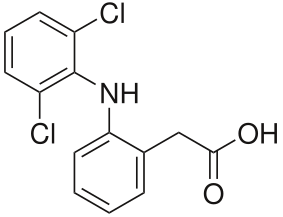
Over-the-counter (OTC) sales account for a significant portion of NSAID sales, with ibuprofen and naproxen being top sellers. Prescription NSAIDs, such as diclofenac and meloxicam, are also widely prescribed. Despite their ubiquity, adverse events are common.
👥 Key People & Organizations
Several key figures and organizations have shaped the NSAID landscape. Pharmaceutical giants like Pfizer (maker of Celebrex) and Johnson & Johnson (maker of Motrin) have been major players in the development and marketing of NSAIDs. Regulatory bodies like the U.S. Food and Drug Administration (FDA) and the European Medicines Agency (EMA) play a critical role in approving and monitoring NSAID safety.
🌍 Cultural Impact & Influence
NSAIDs have profoundly reshaped how pain and inflammation are managed, moving from potent but risky corticosteroids to more accessible and generally safer alternatives for acute and chronic conditions. They are integral to the treatment of everyday ailments like headaches and menstrual cramps, as well as chronic conditions such as osteoarthritis and rheumatoid arthritis. Their widespread availability over-the-counter has democratized pain relief, making them a staple in medicine cabinets globally. However, this ubiquity has also led to a significant public health burden from adverse effects, prompting public health campaigns and stricter prescribing guidelines. The cultural resonance of NSAIDs is immense, often seen as a first-line solution for discomfort, deeply embedded in the fabric of modern self-care.
⚡ Current State & Latest Developments
The current landscape of NSAID development is focused on mitigating risks while preserving efficacy. Research continues into novel formulations and delivery systems, such as topical NSAIDs, which offer localized relief with potentially fewer systemic side effects. The development of highly selective COX-2 inhibitors or even dual COX/LOX inhibitors is an ongoing area of investigation. In 2024, regulatory agencies continue to scrutinize NSAID safety, with ongoing reviews of cardiovascular and gastrointestinal risk profiles. Companies like Novartis and GSK are exploring new therapeutic targets for pain and inflammation, potentially offering alternatives to traditional NSAIDs. The increasing use of cannabinoids for pain management also presents a growing area of competition and potential synergy with NSAIDs.
🤔 Controversies & Debates
The primary controversy surrounding NSAIDs centers on their risk-benefit profile. While effective, the potential for serious gastrointestinal bleeds, heart attacks, strokes, and kidney failure is a significant concern, particularly for individuals with pre-existing conditions or those taking NSAIDs long-term. There's also ongoing discussion about the appropriate use of OTC NSAIDs and the need for better patient education regarding potential side effects. Some critics argue that the pharmaceutical industry has historically downplayed these risks to maximize profits from blockbuster drugs.
🔮 Future Outlook & Predictions
The future of NSAIDs likely involves a more personalized approach to pain management. Pharmacogenomics may allow for the prediction of individual responses and risks, enabling tailored prescriptions. Research is actively pursuing novel anti-inflammatory agents that target different pathways, potentially offering improved safety profiles. The development of drugs that can specifically target inflammatory mediators without affecting COX enzymes is a key goal. Furthermore, the integration of NSAIDs with other therapeutic modalities, such as physical therapy and non-pharmacological interventions, will likely become more common. The long-term outlook suggests a gradual shift towards more targeted therapies, but NSAIDs will likely remain a significant part of the pain management toolkit for the foreseeable future, especially for acute conditions.
💡 Practical Applications
NSAIDs are widely applied across numerous medical fields. They are the first-line treatment for mild to moderate pain, including headaches, muscle aches, dental pain, and menstrual cramps. In rheumatology, they are crucial for managing the pain and inflammation associated with osteoarthritis, rheumatoid arthritis, and other inflammatory joint diseases. They are also used post-operatively to manage surgical pain and reduce inflammation. Sports medicine relies heavily on NSAIDs for treating athletic injuries like sprains and strains. Their antiplatelet effect, particularly with low-dose aspirin, makes them valuable in preventing cardiovascular events like heart attacks and strokes in high-risk individuals, a practice known as [[cardiovascular-prev
Key Facts
- Category
- science
- Type
- topic