
Contents
Overview
A non-fungible token (NFT) is a unique digital identifier, typically recorded on a blockchain, that certifies ownership and authenticity of an asset, most commonly a digital file like artwork, music, or video. Unlike fungible cryptocurrencies such as Bitcoin, where each unit is interchangeable, NFTs are distinct and cannot be directly substituted or divided. This uniqueness allows for verifiable ownership and transferability, enabling them to be bought, sold, and traded. Initially gaining traction in 2017, the NFT market exploded from $82 million in 2020 to an estimated $17 billion in 2021, attracting significant investment and cultural attention. However, this rapid growth was followed by a dramatic market contraction in 2022, with sales plummeting and a significant majority of NFT collections losing monetary value by late 2023, leading to ongoing debates about their long-term viability and speculative nature.
🎵 Origins & History
The conceptual seeds of NFTs were sown long before their popularization. Early experiments in digital scarcity and unique digital assets emerged in the early days of the internet, with projects like Counterparty in 2014 and Ethereum's ERC-20 token standard laying groundwork for programmable digital assets. The true genesis of the NFT as we know it can be traced to projects like CryptoKitties, launched by the Canadian studio Dapper Labs. This game allowed users to collect and breed unique digital cats on the Ethereum blockchain, demonstrating the potential for unique digital collectibles. These early explorations demonstrated the technical feasibility and nascent cultural appeal of unique, blockchain-verified digital items.
⚙️ How It Works
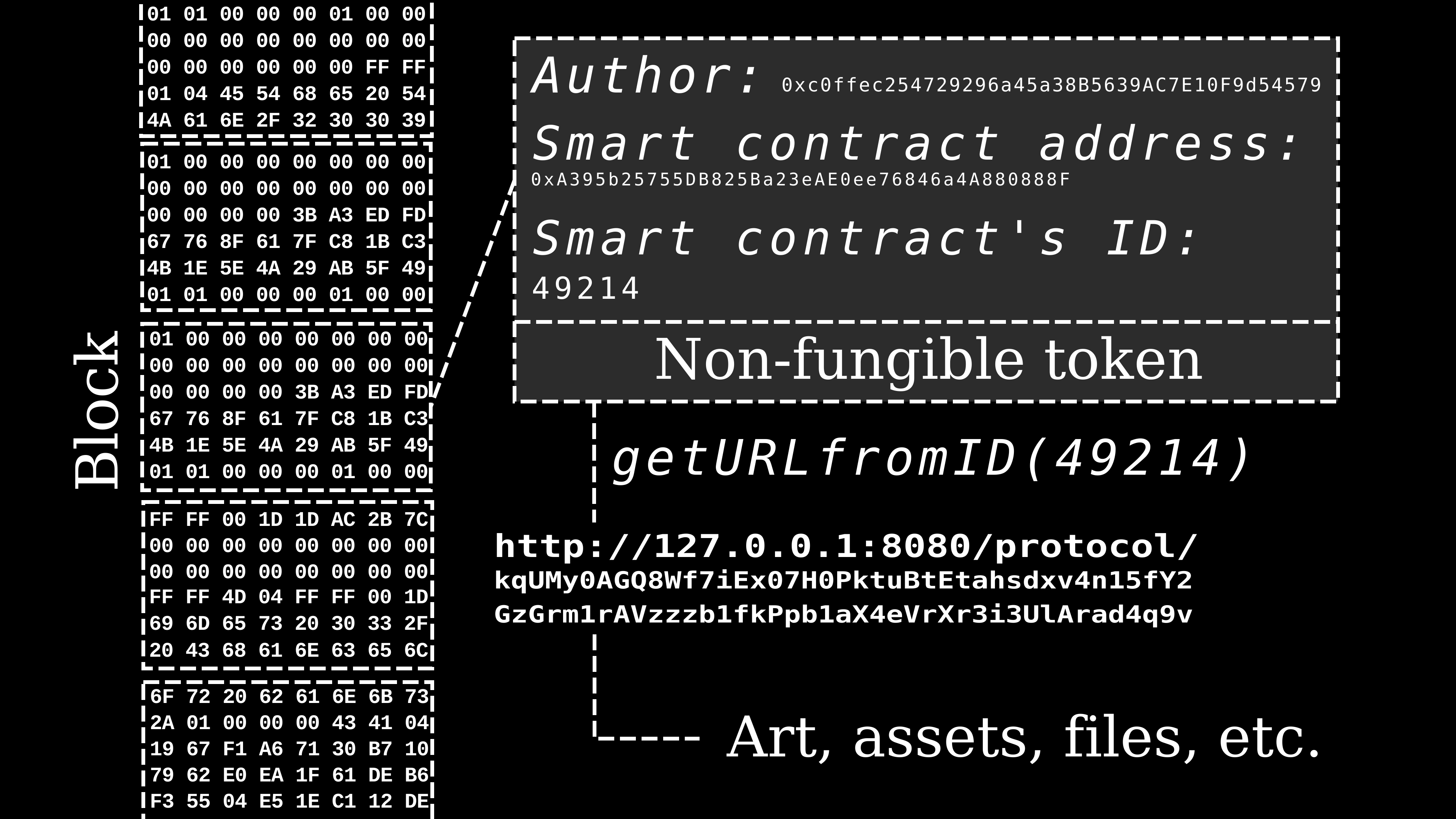
At its core, an NFT functions by leveraging blockchain technology, most commonly Ethereum, to create a unique, immutable record of ownership. Each NFT is a token that contains a unique identifier and metadata, which can point to a specific digital asset (like an image file, video, or audio clip). This metadata is often stored off-chain due to the cost and limitations of blockchain storage, with services like IPFS (InterPlanetary File System) or centralized servers hosting the actual digital content. When an NFT is minted, this unique token is created on the blockchain, and its ownership is recorded. Transactions, such as buying or selling an NFT, are then recorded as new blocks on the blockchain, providing a transparent and tamper-proof history of ownership. The smart contracts governing NFTs, often based on standards like ERC-721 or ERC-1155 on Ethereum, dictate how these tokens can be transferred and managed.
📊 Key Facts & Numbers
The NFT market experienced a meteoric rise, with total sales surging from approximately $82 million in 2020 to an estimated $17 billion in 2021, a staggering 20,000% increase. By September 2023, however, reports indicated that over 95% of NFT collections held zero monetary value, a stark contrast to the boom period. The average price of an NFT dropped from over $2,000 in early 2021 to below $20 by late 2023. During its peak, the market saw individual NFTs sell for tens of millions of dollars; for instance, Beeple's "Everydays: The First 5000 Days" sold for $69.3 million at Christie's in March 2021. The number of daily NFT transactions on Ethereum also saw a dramatic decline, falling from hundreds of thousands in early 2021 to just a few thousand by late 2023.
👥 Key People & Organizations
Several key individuals and organizations have been instrumental in the NFT space. Vitalik Buterin, co-founder of Ethereum, provided the foundational blockchain technology upon which most NFTs are built. Dapper Labs, the creators of CryptoKitties and NBA Top Shot, played a crucial role in popularizing NFTs through gamified experiences. Michael W. Budel, alongside Dave Carroll and Danny Ryan, authored the ERC-721 standard, a critical technical specification for NFTs. Art platforms like OpenSea and Rarible emerged as major marketplaces, facilitating billions of dollars in transactions. Artists such as Beeple (Mike Winkelmann) achieved mainstream recognition and record-breaking sales, while figures like Justin Bieber and Snoop Dogg have engaged with NFTs, further amplifying their cultural visibility.
🌍 Cultural Impact & Influence
NFTs have profoundly impacted the digital art world, providing artists with new avenues for monetization and direct engagement with collectors, bypassing traditional galleries. The concept of digital scarcity, previously difficult to enforce, became a reality, leading to a surge in digital art sales and the rise of 'NFT art' as a distinct category. Beyond art, NFTs have influenced music, gaming, and collectibles, with artists releasing music as NFTs and game developers exploring in-game asset ownership. The cultural resonance is undeniable, with NFTs becoming a symbol of digital ownership and a focal point for discussions about the future of the internet and digital economies. However, this cultural wave also brought with it significant skepticism and controversy, questioning the intrinsic value and long-term sustainability of the NFT market.
⚡ Current State & Latest Developments
As of early 2024, the NFT market is in a state of recalibration following the 2021-2022 boom and subsequent crash. While speculative trading has cooled considerably, development continues, with a focus shifting towards utility-driven NFTs. Projects are exploring NFTs for ticketing, loyalty programs, and digital identity. Solana and Polygon have emerged as popular alternatives to Ethereum for NFT creation due to lower transaction fees. Major brands like Nike (with its RTFKT acquisition) and Starbucks (with its Odyssey program) are experimenting with NFTs for customer engagement and loyalty. The ongoing debate centers on whether NFTs can transition from speculative assets to practical tools with lasting value.
🤔 Controversies & Debates
The controversies surrounding NFTs are numerous and deeply entrenched. A primary criticism is their environmental impact, particularly NFTs minted on proof-of-work blockchains like Ethereum (prior to its merge to proof-of-stake), which consumed significant amounts of energy. Concerns about market manipulation, wash trading, and the prevalence of scams have also plagued the space. The question of whether NFTs truly represent ownership of the underlying asset or merely a license to view it remains a point of contention, especially when the linked digital file is hosted on a centralized server that could disappear. Furthermore, the speculative bubble and subsequent crash have led many to label NFTs as a Ponzi scheme or a bubble destined to burst, with accusations of enriching early adopters at the expense of latecomers.
🔮 Future Outlook & Predictions
The future outlook for NFTs hinges on their ability to demonstrate tangible utility beyond speculative trading. Experts predict a continued shift towards NFTs that unlock real-world benefits, such as access to exclusive content, event tickets, or verifiable credentials. The integration of NFTs into the metaverse and gaming ecosystems is expected to grow, enabling true ownership of in-game assets. Layer-2 scaling solutions and more energy-efficient blockchains will likely address environmental concerns. However, regulatory scrutiny is also increasing, with governments worldwide grappling with how to classify and tax NFTs. The long-term success will likely depend on building sustainable ecosystems that offer genuine value and user experience, rather than relying solely on hype and speculation.
💡 Practical Applications
NFTs have a growing range of practical applications. In the art world, they provide a mechanism for artists to sell digital works directly to collectors, with smart contracts enabling automatic royalty payments on secondary sales. In gaming, NFTs can represent unique in-game items, characters, or virtual land, allowing players to truly own and trade their digital assets across different platforms or marketplaces. Ticketing for events is another emerging use case, where NFTs can prevent fraud and offer exclusive perks to attendees. Digital collectibles, like those offered by NBA Top Shot, allow fans to own iconic moments. Furthermore, NFTs are being explored for digital identity management, intellectual property rights, and even supply chain verification, demonstrating their potential to bring verifiable scarcity and ownership to the digital realm.
Key Facts
- Category
- technology
- Type
- topic