
Contents
Overview
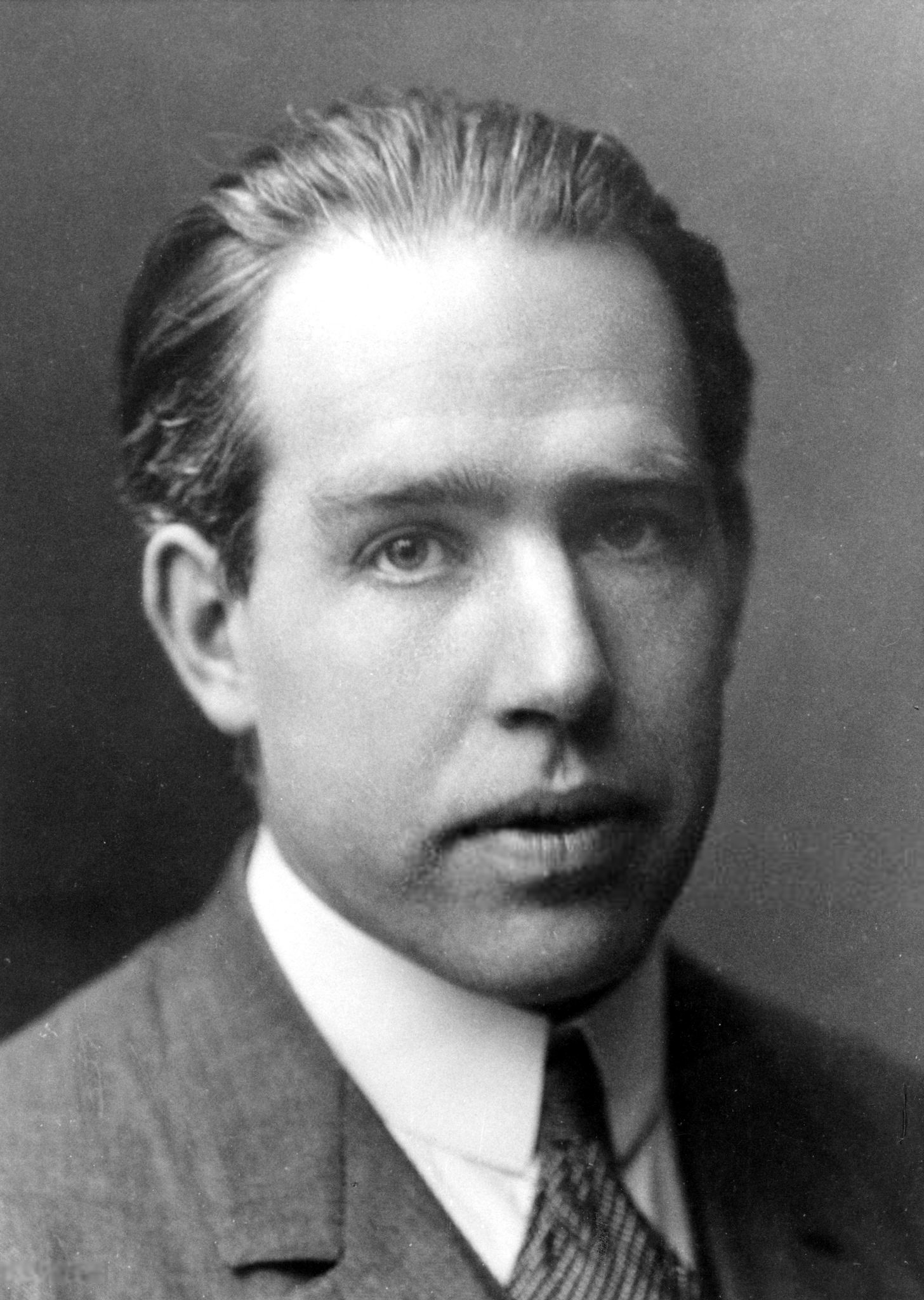
Niels Bohr (1885-1962) was a pioneering Danish physicist whose groundbreaking work in atomic theory and quantum mechanics earned him the Nobel Prize in Physics in 1922. He is best known for the Bohr model of the atom, which introduced the concept of quantized energy levels for electrons orbiting the nucleus, fundamentally altering our understanding of atomic structure. Bohr's principle of complementarity, which posits that entities can be analyzed through contradictory properties, has influenced both scientific discourse and philosophical thought. His legacy extends beyond theoretical physics, impacting fields such as quantum mechanics and philosophy of science, and continues to resonate in contemporary discussions about the nature of reality.
🎵 Origins & History
His early education at the University of Copenhagen laid the groundwork for his future contributions to physics. Bohr's work culminated in his receipt of the Nobel Prize in Physics in 1922, recognizing his contributions to our understanding of atomic structure and quantum mechanics. His establishment of the Institute of Theoretical Physics in Copenhagen further solidified his role as a leader in the field.
⚙️ How It Works
The Bohr model of the atom is characterized by its depiction of electrons orbiting the nucleus in fixed paths or shells, similar to planets around the sun. This model introduced the idea that electrons can jump between these orbits, absorbing or emitting energy in the form of photons. The quantization of energy levels was a revolutionary concept that helped explain phenomena such as atomic spectra. Bohr's principle of complementarity suggests that particles like electrons exhibit both wave-like and particle-like properties, depending on the experimental context. This duality is a cornerstone of quantum mechanics, influencing later developments in the field, including the work of Louis de Broglie and Werner Heisenberg.
📊 Key Facts & Numbers
Key facts about Niels Bohr include his foundational work on atomic theory and his influence on quantum mechanics. Bohr's contributions extend beyond physics; he was a prominent advocate for scientific research and international cooperation in science, particularly during the tumultuous times of World War II.
👥 Key People & Organizations
Key figures in Bohr's life include his mentor James Clerk Maxwell, who influenced his early thinking, and contemporaries like Ernest Rutherford, whose nuclear model of the atom prompted Bohr's developments. Bohr's collaborations with physicists such as Wolfgang Pauli and Paul Dirac further advanced quantum theory. His philosophical discussions with Albert Einstein on the interpretation of quantum mechanics sparked significant debates that shaped the field. Bohr's legacy is preserved through the Niels Bohr Institute, which continues to be a leading center for research in physics.
🌍 Cultural Impact & Influence
Bohr's work has had a profound cultural impact, influencing not only the scientific community but also philosophy, literature, and art. His ideas about the nature of reality and the limits of human knowledge resonate in the works of philosophers like Ludwig Wittgenstein and Martin Heidegger. Bohr's contributions have been celebrated in numerous documentaries and books, highlighting his role as a scientific pioneer. His legacy is evident in the continued exploration of quantum mechanics and its implications for understanding the universe.
⚡ Current State & Latest Developments
Discussions surrounding Bohr's theories reportedly continue to evolve, particularly in the context of quantum computing and quantum information science. The principles established by Bohr are being applied to modern technologies, including quantum cryptography and quantum algorithms. Research institutions worldwide are exploring the implications of quantum mechanics in practical applications, with significant investments from governments and private sectors. The ongoing exploration of quantum entanglement and superposition reflects the lasting influence of Bohr's work on contemporary physics.
🤔 Controversies & Debates
Controversies surrounding Bohr's theories often center on his debates with Einstein regarding the interpretation of quantum mechanics. Einstein famously rejected the idea of inherent randomness in quantum theory, leading to the well-known phrase, 'God does not play dice.' Bohr defended the probabilistic nature of quantum mechanics, arguing for the validity of complementarity. This philosophical divide continues to spark discussions in the scientific community, with some physicists advocating for deterministic interpretations while others support the probabilistic framework established by Bohr. The implications of these debates extend to the foundations of quantum mechanics and our understanding of reality.
🔮 Future Outlook & Predictions
Looking ahead, the future of quantum mechanics and atomic theory is poised for significant advancements. Researchers are exploring the potential of quantum technologies, including quantum computing and quantum communication, which could revolutionize industries such as cybersecurity and materials science. The ongoing investigation into quantum phenomena may lead to new theories that challenge or expand upon Bohr's original ideas, ensuring his legacy remains relevant in the evolving landscape of physics.
💡 Practical Applications
Practical applications of Bohr's theories are evident in various fields, including chemistry, materials science, and technology. The principles of quantum mechanics underpin the development of semiconductors and lasers, which are integral to modern electronics. Bohr's model aids in understanding chemical bonding and reactions, influencing fields such as pharmacology and materials engineering. Additionally, his work has implications for the development of quantum technologies, including quantum sensors and quantum networks, which are expected to have transformative effects on communication and information processing.
Key Facts
- Year
- 1922
- Origin
- Copenhagen, Denmark
- Category
- science
- Type
- person