
Contents
Overview
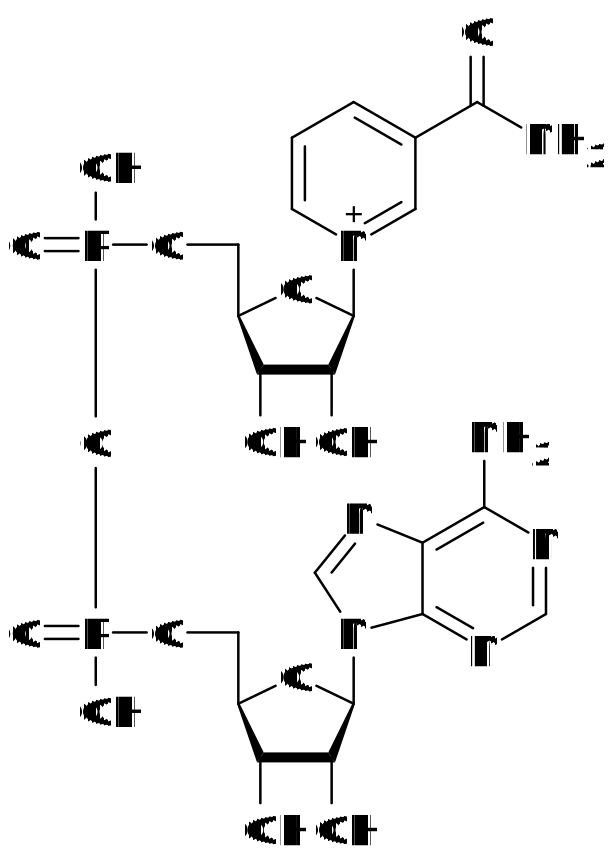
The story of nicotinamide adenine dinucleotide (NAD) and its reduced form, NADH, begins in the early 20th century with pioneering biochemists unraveling the mysteries of cellular energy. Arthur Harden and William Young first described the heat-stable coenzyme in yeast in 1906, initially calling it 'cozymase'. Their work, alongside that of Hans von Euler-Chelpin, who later elucidated its structure and function in fermentation, laid the groundwork for understanding NAD's role. By the 1930s, Richard Kuhn and others had identified the nicotinamide component, leading to the naming of NAD. The discovery of its role in oxidation-reduction reactions by Otto Warburg in the 1930s and the subsequent identification of NADH as the reduced form by Sidney Colowick and Carl Cori in the 1940s solidified its status as a central molecule in metabolism. This foundational research, conducted across institutions like the Lister Institute of Preventive Medicine and the University of Stockholm, revealed the intricate dance of electrons that NADH orchestrates.
⚙️ How It Works
NADH functions as a high-energy electron shuttle, primarily participating in redox reactions that are fundamental to energy production. In its oxidized form, NAD+, it acts as an electron acceptor, becoming reduced to NADH when it gains electrons and a proton (H+). This reduced form, NADH, then carries these high-energy electrons to the electron transport chain, a series of protein complexes embedded in the inner mitochondrial membrane. Here, the electrons are passed along, releasing energy that is ultimately used to synthesize ATP, the cell's primary energy currency. Beyond ATP production, NADH is also a substrate for enzymes involved in DNA repair and epigenetic regulation, highlighting its multifaceted role in maintaining cellular integrity and function. The ratio of NAD+ to NADH, often referred to as the redox state, is a critical indicator of cellular health and metabolic activity, tightly regulated by enzymes like NAD+ kinase and NADH dehydrogenase.
📊 Key Facts & Numbers
NADH is present in virtually all living cells, with concentrations varying significantly based on metabolic demand. In human cells, the total NAD pool (NAD+ and NADH) can range from 1 to 5 millimolar, with NAD+ typically being more abundant than NADH under normal physiological conditions. During intense metabolic activity, such as strenuous exercise, the ratio can shift dramatically as NADH production increases. For instance, glycolysis in the cytoplasm generates 2 molecules of NADH per molecule of glucose, while the Krebs cycle in the mitochondria produces an additional 6 molecules of NADH per glucose molecule. The electron transport chain can generate approximately 2.5 ATP molecules for every NADH molecule oxidized, though this number can vary. The global market for NAD+ precursors, which are used to boost cellular NAD+ levels, was estimated to be over $1.5 billion in 2023 and is projected to grow significantly.
👥 Key People & Organizations
Key figures in the discovery and understanding of NADH include Sir Arthur Harden and William Young, who first identified cozymase in 1906. Hans von Euler-Chelpin further elucidated its role in fermentation, earning him a Nobel Prize in Chemistry in 1929. Richard Kuhn, a Nobel laureate for his work on vitamins, contributed to identifying the nicotinamide moiety. Sidney Colowick and Carl Cori, both Nobel laureates for their work on carbohydrate metabolism, were instrumental in characterizing NADH. More recently, researchers like Dr. David Sinclair at Harvard University have brought renewed attention to NAD+ metabolism and its implications for aging and longevity, with organizations like the NIH funding extensive research into NAD+ pathways.
🌍 Cultural Impact & Influence
NADH's influence extends far beyond the laboratory bench, permeating our understanding of life itself. Its role in energy production is a foundational concept taught in introductory biology courses worldwide, shaping how millions perceive cellular function. The molecule's involvement in aging and disease has captured public imagination, fueling interest in supplements and interventions aimed at boosting NAD+ levels, as popularized by researchers like David Sinclair. This has led to a burgeoning wellness industry and a cultural fascination with 'anti-aging' science, often featuring NADH precursors like nicotinamide riboside (NR) and nicotinamide mononucleotide (NMN). The visual representation of cellular respiration, with NADH shuttling electrons, has become an iconic image in scientific literature and educational materials.
⚡ Current State & Latest Developments
The current state of NADH research is dynamic, with a strong focus on its role in aging and age-related diseases. Recent studies published in journals like Cell Metabolism and Nature continue to explore the intricate regulatory mechanisms of NAD+ biosynthesis and degradation, involving enzymes such as Sirtuins, PARPs, and CD38. The development of NAD+ boosting strategies, including NR and NMN supplementation, remains a hot area of investigation, with ongoing clinical trials assessing their efficacy in improving metabolic health, cognitive function, and cardiovascular health. Furthermore, researchers are exploring NADH's potential therapeutic applications in conditions ranging from neurodegenerative diseases like Alzheimer's to metabolic disorders like type 2 diabetes.
🤔 Controversies & Debates
A central debate surrounding NADH and NAD+ metabolism revolves around the efficacy and long-term safety of NAD+ boosting interventions. While preclinical studies in animal models have shown promising results for longevity and healthspan, translating these findings to humans remains a challenge. Critics question whether exogenous NAD+ precursors can effectively and safely increase NAD+ levels in all tissues without unintended consequences, such as promoting the growth of existing cancers, a concern raised by some researchers studying Sirtuin activity. Another point of contention is the optimal NAD+ to NADH ratio, with some arguing that simply increasing NAD+ might not be sufficient if the NADH pool is also elevated, potentially leading to metabolic imbalances. The precise mechanisms by which NAD+ influences aging are still being unraveled, leading to ongoing scientific discourse.
🔮 Future Outlook & Predictions
The future outlook for NADH research is exceptionally bright, with significant potential for therapeutic breakthroughs. Scientists are actively investigating novel compounds and strategies to modulate NAD+ metabolism more precisely, aiming to target specific tissues or cellular pathways. Gene therapy approaches to enhance NAD+ biosynthesis or inhibit its degradation are on the horizon. Furthermore, understanding the interplay between NADH, the gut microbiome, and host metabolism is expected to yield new insights into metabolic health and disease prevention. The development of more sophisticated biomarkers to track NAD+ levels and redox status in vivo will be crucial for personalized medicine, allowing for tailored interventions to optimize cellular energy and healthspan. Expect continued exploration into NADH's role in mitochondrial function and its potential to combat oxidative stress.
💡 Practical Applications
NADH has a wide array of practical applications, primarily centered around health, wellness, and scientific research. It is a crucial reagent in biochemical assays and diagnostic kits, used to measure enzyme activity and metabolic flux in clinical laboratories. In the wellness industry, precursors like NR and NMN are marketed as dietary supplements aimed at boosting cellular energy and combating aging, though their long-term clinical benefits are still under rigorous scientific scrutiny. Researchers utilize NADH in studies investigating cellular respiration, energy metabolism, and the pathophysiology of diseases like Parkinson's and heart failure. Its r
Key Facts
- Category
- science
- Type
- topic