
Contents
Overview
Nicomachus of Gerasa, born around 60 AD in the Arabia Petraea region, now modern-day Jordan, was a prominent Ancient Greek Neopythagorean philosopher. His work was heavily influenced by the philosophical traditions of Pythagoras, as well as the mathematical contributions of Euclid and Archimedes. Nicomachus' writings on arithmetic and harmonics were widely read and commented upon by notable philosophers such as Iamblichus, who wrote extensively on Neoplatonism, and John Philoponus, a prominent commentator on Aristotle's works. The intellectual landscape of the Roman Empire, with its diverse cultural and philosophical traditions, played a significant role in shaping Nicomachus' philosophical ideas, which were also influenced by the works of Stoic philosophers like Seneca and Marcus Aurelius.
🎶 The Harmonics of Numbers
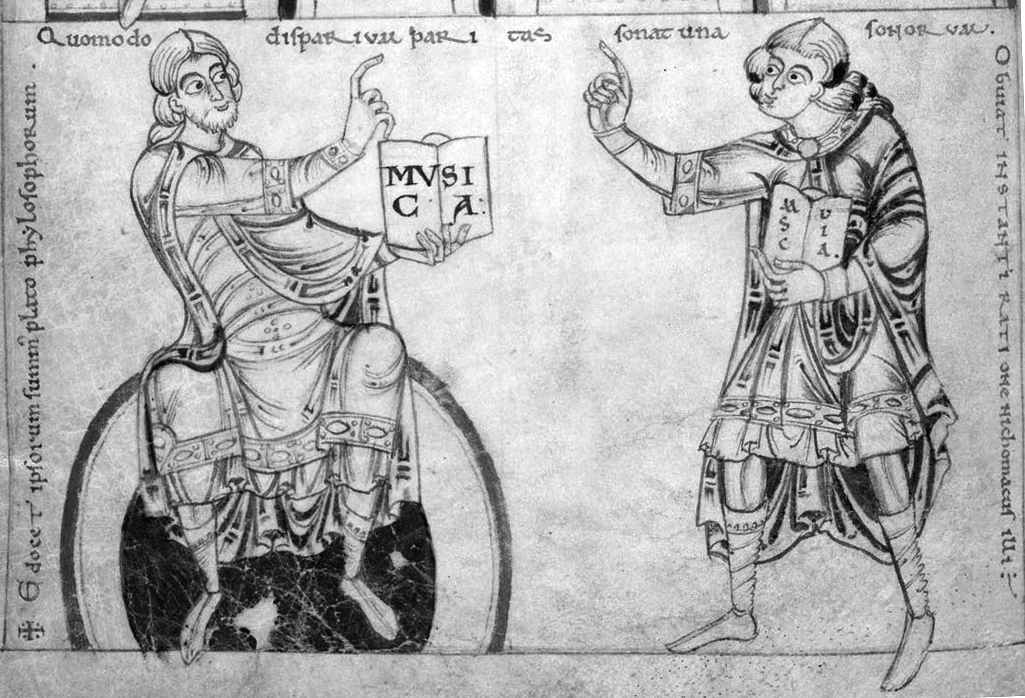
Nicomachus' most famous works, Introduction to Arithmetic and Manual of Harmonics, delve into the mystical properties of numbers and their relationship to music and the universe. These texts, which showcase his expertise in Ancient Greek mathematics and music, were widely studied in the Roman period and beyond. The influence of Nicomachus' work can be seen in the writings of later philosophers, such as Boethius, who paraphrased his works on arithmetic and music, making them accessible to a broader audience. The concept of harmonics, which was central to Nicomachus' work, was also explored by other notable philosophers, including Plato and Aristotle, who wrote about the harmony of the spheres and the mathematical relationships between musical notes.
📝 Influence on Medieval Education
The impact of Nicomachus' work on medieval education cannot be overstated. His Introduction to Arithmetic, in particular, became a standard text for Neoplatonic education in Late Antiquity, with commentaries written by prominent philosophers like Iamblichus and John Philoponus. The Latin paraphrase by Boethius of Nicomachus' works on arithmetic and music further solidified their place in medieval education, making them essential reading for scholars like Thomas Aquinas and Dante Alighieri. The transmission of Nicomachus' ideas to the medieval period was facilitated by the works of scholars like Cassiodorus and Isidore of Seville, who played a crucial role in preserving and disseminating classical knowledge during the Middle Ages.
🔮 Legacy & Impact
Nicomachus' legacy extends far beyond the medieval period, with his ideas continuing to influence philosophers, mathematicians, and musicians to this day. His work on the mystical properties of numbers and harmonics has inspired generations of thinkers, from the Renaissance humanists like Leonardo Fibonacci and Luca Pacioli to modern mathematicians like Andrew Wiles and Grigori Perelman. As a testament to the enduring power of his ideas, Nicomachus' work remains a vital part of our understanding of Ancient Greek mathematics and music, and his influence can be seen in the works of artists like Bach and Mozart, who were deeply interested in the mathematical relationships between musical notes.
Key Facts
- Year
- 60-120 AD
- Origin
- Gerasa, Arabia Petraea (now Jerash, Jordan)
- Category
- history
- Type
- person
Frequently Asked Questions
What was Nicomachus' most famous work?
Nicomachus' most famous works are Introduction to Arithmetic and Manual of Harmonics, which explore the mystical properties of numbers and their relationship to music and the universe.
Who was influenced by Nicomachus' work?
Nicomachus' work was influential to many philosophers, including Iamblichus, John Philoponus, and Boethius, who paraphrased his works on arithmetic and music.
What was the impact of Nicomachus' work on medieval education?
Nicomachus' Introduction to Arithmetic became a standard text for Neoplatonic education in Late Antiquity, and his ideas continued to influence medieval education through the paraphrase by Boethius.
How did Nicomachus' work influence modern mathematics and music?
Nicomachus' work on the mystical properties of numbers and harmonics has inspired generations of thinkers, from the Renaissance humanists to modern mathematicians and musicians.
What is the significance of Nicomachus' work in the context of Ancient Greek philosophy?
Nicomachus' work is significant in the context of Ancient Greek philosophy because it represents a unique blend of mathematical and philosophical ideas, reflecting the intellectual traditions of the Pythagorean and Neoplatonic schools.