
Contents
Overview
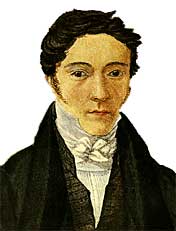
The story of Nicolas Louis Robert is one of brilliant innovation hampered by circumstance. Born in Paris in 1761, Robert served as a soldier before turning his attention to mechanical engineering. His pivotal work occurred during the tumultuous period of the French Revolution, a time of both upheaval and intense innovation. Inspired by the need for more efficient production methods, Robert conceived of a machine capable of producing paper in a continuous roll, a radical departure from the laborious, sheet-by-sheet method then in use. He secured a patent for his invention on January 18, 1799, marking a significant moment in the history of papermaking. However, his association with Saint-Léger Didot, a wealthy paper manufacturer and financier, proved to be a double-edged sword. Didot's financial backing was crucial, but his subsequent legal and financial machinations ultimately deprived Robert of the full fruits of his labor and control over his own creation.
⚙️ How It Works
Robert's invention was a sophisticated assembly of mechanical components designed to automate the papermaking process. At its core, the machine utilized a moving wire mesh belt, analogous to a conveyor belt, over which a pulp slurry was evenly distributed. As the slurry flowed along the mesh, water drained through, leaving a mat of fibers. This continuous web of wet paper was then pressed and dried, emerging as a long, unbroken sheet. This differed fundamentally from the traditional vat-and-mould method, which produced individual sheets and was significantly slower. The key innovation was the continuous nature of the process, enabling a throughput that was orders of magnitude greater than manual production, a concept that would later be refined by the Fourdrinier brothers.
📊 Key Facts & Numbers
The impact of Robert's invention, though delayed in its personal benefit to him, was monumental. By 1800, the estimated annual production of paper in Europe was around 100,000 tons, a figure that would skyrocket following the widespread adoption of continuous papermaking technology. The Fourdrinier machine, directly descended from Robert's design, could produce paper at speeds of up to 20 meters per minute, a stark contrast to the few sheets per minute achievable manually. By the mid-19th century, paper production had more than doubled, and by the early 20th century, it was in the millions of tons annually, directly fueling the growth of mass media and literacy rates globally. Robert's patent, though initially controlled by Didot, was a foundational document in this industrial leap.
👥 Key People & Organizations
While Nicolas Louis Robert is the central figure, his story is intertwined with others. Saint-Léger Didot, Robert's patron, played a critical role in both financing the invention and, controversially, in its subsequent acquisition and development. Didot's son, Symphorien-Louis Didot, also had involvement. After the patent rights were transferred, the machine's development in England was spearheaded by the Fourdrinier brothers, Henry and Sealy, who invested heavily in its refinement and commercialization, leading to the machine bearing their name. Despite Robert's initial patent, the Fourdrinier machine became the dominant technology, overshadowing his direct legacy in popular recognition. Robert himself eventually became a school-teacher, a stark contrast to the industrial titans who profited from his ingenuity.
🌍 Cultural Impact & Influence
Robert's invention was the catalyst for the democratization of knowledge. Before the continuous paper machine, paper was a relatively expensive commodity, limiting the reach of books, newspapers, and other printed materials. The ability to produce vast quantities of paper cheaply and quickly fueled the Industrial Revolution's demand for printed matter, from technical manuals to popular literature. It directly enabled the explosion of journalism and the widespread availability of books, making education and information accessible to a much broader segment of society. This shift fundamentally altered how ideas were disseminated and how culture evolved, paving the way for modern communication.
⚡ Current State & Latest Developments
The core technology pioneered by Robert and refined into the Fourdrinier machine remains the bedrock of the global paper industry today. While advancements have been made in materials science, automation, and sustainability, the fundamental principle of continuous web formation on a moving wire mesh is still employed in virtually all modern paper mills. The industry continues to grapple with environmental challenges, such as deforestation and water usage, driving innovation in recycling and alternative fiber sources. However, the demand for paper products, from packaging to printing, remains robust, ensuring the continued relevance of the technology Robert envisioned.
🤔 Controversies & Debates
The primary controversy surrounding Nicolas Louis Robert centers on the loss of control over his invention. While he secured a patent in 1799, the complex financial and legal entanglements with Saint-Léger Didot led to the patent rights being transferred, and the machine's development moving to England. Critics argue that Didot exploited Robert, a common narrative for inventors during that era. Furthermore, the widespread recognition of the Fourdrinier machine often overshadows Robert's foundational contribution, leading to debates about historical credit and the true originators of industrial breakthroughs. The extent to which Robert was a victim of circumstance versus deliberate exploitation remains a point of historical discussion.
🔮 Future Outlook & Predictions
The future of papermaking, while still reliant on Robert's core concept, is increasingly influenced by digital technologies and environmental pressures. While demand for printing and writing paper may face challenges from digital alternatives, the packaging sector continues to grow, driven by e-commerce and a shift away from plastics. Innovations in biotechnology and nanotechnology may lead to new types of paper with enhanced properties or entirely novel applications. The industry will likely see continued investment in sustainable practices, including advanced recycling techniques and the use of alternative raw materials, ensuring that the legacy of Robert's invention adapts to the demands of the 21st century.
💡 Practical Applications
The practical applications of Robert's invention are ubiquitous, forming the backbone of countless industries. The most direct application is the production of printing paper for books, newspapers, magazines, and office use, enabling mass communication and education. Beyond that, his technology underpins the creation of cardboard and packaging materials, essential for global logistics and commerce. Specialty papers, such as those used for currency, filters, and even some textiles, also trace their lineage back to Robert's continuous web concept. Essentially, any product made from a continuous sheet of processed pulp owes a debt to his pioneering work.
Key Facts
- Category
- technology
- Type
- person